

National Identity
- Official name
- Ukraine
- Official name (in Ukrainian)
- Україна
- Official name (in Ukrainian, Romanized)
- Ukrayina
- Name etymology
the name derives from the Old East Slavic or Old Russian word ukraina, meaning "borderland," which was used to describe the area on medieval Russia's border at the time of the Tatar invasion in the 13th century
Sources:- The Constitution of Ukraine ↗ - High Council of Justice
- The World Factbook: Ukraine - CIA
- National emblem
- National flag
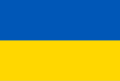
Translated from the Ukrainian Institute of National Remembrance The State Flag of Ukraine is a banner of two equal-sized horizontal stripes of blue and yellow colours, with a ratio of width to length of 2:3.
Unofficial translation by WorldometerTranslated from the Ukrainian Institute of National Remembrance The State Flag is a symbol of our country, the embodiment of national unity, honour and dignity, the traditions of state-building, of history and the present day.
Unofficial translation by WorldometerTranslated from the Ukrainian Institute of National Remembrance The origins of the colours of our State Flag go back to the era of the Kingdom of Ruthenia, when blue and yellow colours designated the state of King Danylo in the 13th century. One of the first mentions of the combination of blue and yellow colours on the “armorial flags” of the Ukrainian lands dates from the beginning of the 15th century. At the Battle of Grunwald in 1410, warriors from the Lviv Land went into battle under a blue flag with a yellow lion climbing a rock. In the 15th century, by then within the Kingdom of Poland, the lion continued to remain the coat of arms of the Ruthenian Voivodeship (the Lviv, Halych and other lands). Interestingly, the forms of this heraldic sign could have been different – the lion was both with a crown and without, with a rock and without. However, the colours were the same: the field of the shield – blue, and the lion and the rock – golden.
Unofficial translation by WorldometerTranslated from the Ukrainian Institute of National Remembrance The year 1848. In Europe the Spring of Nations is under way – a rise of democratic and liberation movements. It was then that the historical symbol of the Kingdom of Ruthenia – the lion – was revived. Together with the yellow and blue colours, it became the national sign of the Ukrainians of Galicia. At that time, local military detachments began to form spontaneously and on a mass scale. They needed flags. However, they could not make them quickly, so they asked the Supreme Ruthenian Council to help “to bring the Ruthenian standard from Lviv”. Thus, instead of the image of the lion, cloths “in Ruthenian colours” of two equal-sized blue and yellow stripes, simpler to make, began to spread.
Unofficial translation by WorldometerTranslated from the Ukrainian Institute of National Remembrance At the beginning of the 20th century, after the fall of tsarism in the Russian Empire and against the background of the national liberation movement, such a banner spread throughout all of Ukraine. Rallies of many thousands took place under blue-and-yellow flags. Under them, people set off for the front. Officially, this banner was approved in the Ukrainian People's Republic on 27 January 1918 in the Provisional Law on the Fleet. After the occupation of Ukraine by the Bolsheviks, people were punished for the blue-and-yellow. Despite this, the inherently Ukrainian colours remained our symbol. Important events of Ukrainian state-building, of the struggle for freedom, protest actions and acts of disobedience took place under the national banner.
Unofficial translation by WorldometerTranslated from the Ukrainian Institute of National Remembrance On 4 September 1991, the national blue-and-yellow flag flew over the Verkhovna Rada of Ukraine. On 28 January 1992, the State Flag of Ukraine was approved by the Verkhovna Rada of Ukraine.
Unofficial translation by WorldometerSource:- uinp.gov.ua ↗ - the Ukrainian Institute of National Remembrance
- National anthem
- Sche ne vmerla Ukrainy (Ще не вмерла України)1:20
- Title (in Ukrainian)
- Ще не вмерла України
- Title (in Ukrainian, Romanized)
- Sche ne vmerla Ukrainy
- Title (in English, translated)
- Ukraine’s Glory Hasn’t Perished
- Lyrics
Ще не вмерла України і слава, і воля, Ще нам, браття молодії, усміхнеться доля. Згинуть наші воріженьки, як роса на сонці. Запануєм і ми, браття, у своїй сторонці.
ChorusДушу й тіло ми положим за нашу свободу, І покажем, що ми, браття, козацького роду Душу й тіло ми положим за нашу свободу, І покажем, що ми, браття, козацького роду
Source: - Citizens
- Ukrainians
- Official name:The Constitution of Ukraine ↗ - High Council of Justice
- Official name, Citizens:The World Factbook: Ukraine - CIA
- National flag:uinp.gov.ua ↗ - the Ukrainian Institute of National Remembrance
- National anthem:nationalanthems.info ↗
Geography
- Location
- Total area
- 603,550 km²
- Land area
- 579,330 km²
- Water area
- 24,220 km²
- Land borders
- 5,581 km(7 countries)
- Coastline
- 2,782 km
- Terrain
Mostly fertile plains (steppes) and plateaus, with mountains found only in the west (the Carpathians) or in the extreme south of the Crimean Peninsula - Mean elevation
- 175 m
- Highest point
- 2,061 mHora Hoverla
- Lowest point
- 0 mBlack Sea
- Climate
Temperate continental Mediterranean only on the southern Crimean coast; precipitation disproportionately distributed, highest in west and north, lesser in east and southeast; winters vary from cool along the Black Sea to cold farther inland; warm summers across the greater part of the country, hot in the south - Avg. temperature
- 9.2 °C
- Avg. daily range
- 4.9 to 13.2 °C
- Annual precipitation
- 638 mm
Temperature °CMeanDaily rangePrecipitation mmMonthly climate normals Month Avg. high, °C Mean, °C Avg. low, °C Precipitation, mm January −0.8 −3.1 −5.7 45 February 0.7 −2.1 −5.3 40 March 6.3 2.6 −1.3 47 April 14.4 9.7 4.6 49 May 20.5 15.6 9.9 65 June 24.2 19.5 14 73 July 26.5 21.5 15.9 72 August 26.2 20.8 14.9 53 September 20.2 15.2 10.1 55 October 13.2 9 5 47 November 5.7 3.1 0.4 45 December 0.7 −1.5 −3.9 47 Country-wide averages over 1991–2020.
Sources:- The World Factbook: Ukraine - CIA
- Climate Change Knowledge Portal (ERA5 reanalysis) ↗ - World Bank
- Weather
- Loading
- Land use2023
- Arable56.8%Perm. crops1.5%Pasture13.0%Forest17.3%Other10.4%
- Arable land
- 32,924,000 hectares (56.8%)
- Permanent crops
- 853,000 hectares (1.5%)
- Permanent meadows & pastures
- 7,534,000 hectares (13.0%)
- Forest
- 10,014,000 hectares (17.3%)
- Other land
- 6,034,000 hectares (10.4%)
Source: - Natural hazards2026
- River floods6.1High#67/191Coastal floods5.0High#60/191Epidemics3.8Medium#131/191Drought2.4Very low#119/191Earthquakes1.9Very low#111/191Tsunamis0.0Very lowTropical cyclones0.0Very low
Scores out of 10, ranks out of 191 countries.
Source:- INFORM Risk Index ↗ - European Commission Joint Research Centre
- Location, Land borders, Coastline, Terrain, Mean elevation, Highest point, Lowest point, Climate, Major rivers:The World Factbook: Ukraine - CIA
- Climate:Climate Change Knowledge Portal (ERA5 reanalysis) ↗ - World Bank
- Land use:FAOSTAT Land Use domain ↗ - FAO
- Natural hazards:INFORM Risk Index ↗ - European Commission Joint Research Centre
Demographics
- Population change2026
- +1.43% per year+555,472 people/yearWorld Rank74thof 237
- Birth rate
- 6.1 per 1,000 population
- Death rate
- 13.3 per 1,000 population
- Net migration rate
- −0.2 per 1,000 population
- 2026
- 41.8 yearsWorld Rank48thof 237
- Age structure2026
- 0-14 years13.4%15-64 years67.5%65 years +19.1%
- Share aged 65 and over
- 19.1%
- Share aged under 18
- 16.9%
- Total dependency ratio
- 48
- Youth dependency ratio
- 20
- Elderly dependency ratio
- 28
- Sex ratio
- 0.87 male / female
MaleAgeFemalePopulation by age group, % of total population Age Male Female 80+ 1.1% 3.2% 70-79 3.0% 5.5% 60-69 5.8% 7.5% 50-59 6.0% 7.0% 40-49 7.8% 8.0% 30-39 7.6% 7.4% 20-29 5.5% 5.4% 10-19 5.8% 5.6% 0-9 4.0% 3.8% - 2026
- 1.10 below the replacement level for Ukraine ()1.00 births per womanreplacement 2.10123World Rank229thof 237
- 0.48 daughters per woman0.52 below replacement, long-run each generation smaller than the lastreplacement 1.000.511.5
- 2026
- −7.2 per 1,000 populationfor every 1,000 people, 7.2 more deaths than births a year
- 2026
- −0.2 per 1,000 population
- Urbanization2026
- 69.7% live in cities27,543,523 urban residents
- Largest cities2022
- Kyiv, Kharkiv, Odesa, DniproRankCityPopulation (2022 estimate)1Kyiv2,952,3012Kharkiv1,421,1253Odesa1,010,5374Dnipro968,5025Donetsk901,6456Lviv717,2737Zaporizhia710,0528Kryvyi Rih603,9049Sevastopol'485,38610Mykolaiv470,011Source:
- State Statistics Committee of Ukraine and Federal State Statistics Service, Russia (2022 estimate), via City Population by Thomas Brinkhoff ↗
- Population distribution
- Densest settlement in the eastern (Donbas) and western regions; notable concentrations in and around major urban areas of Kyiv, Kharkiv, Donets'k, Dnipropetrovs'k, and Odesa.The ongoing war with Russia has shifted significant portions of the population, particularly in the east.
- Ethnic groups2001
- Ukrainian77.8%Russian17.3%Belarusian0.6%Moldovan0.5%Crimean Tatar0.5%Bulgarian0.4%Hungarian0.3%Romanian0.3%Polish0.3%Jewish0.2%Other1.8%
- Religions2013
- Orthodox, Ukrainian Greek Catholic, Roman Catholic, Protestant, Muslim, Jewish
Orthodox includes the Orthodox Church of Ukraine (OCU), the Ukrainian Autocephalous Orthodox Church (UAOC) and the Ukrainian Orthodox Church of the Moscow Patriarchate (UOC-MP).Up to two thirds identify as Orthodox, many without specifying a branch.The OCU and the UOC-MP each represent less than a quarter of the population, the Ukrainian Greek Catholic Church 8-10%, and the UAOC 1-2%.Muslim and Jewish adherents each make up less than 1% of the population.
Source:- The World Factbook: Ukraine - CIA
- Languages
- Ukrainian (Українська)
- Population, Population change, Median age, Age structure, Total fertility rate, Net reproduction rate, Natural change, Net migration rate:UN World Population Prospects ↗
- Urbanization:UN World Urbanization Prospects ↗
- Largest cities:State Statistics Committee of Ukraine and Federal State Statistics Service, Russia (2022 estimate), via City Population by Thomas Brinkhoff ↗
- Population distribution, Ethnic groups, Religions:The World Factbook: Ukraine - CIA
Government & Administration
- Form of state
- RepublicThe President is elected by the citizens by universal, equal and direct suffrage, by secret ballot, for a five-year term (Art. 103).Source:
- System of government
- Semi-presidentialThe Verkhovna Rada (parliament) appoints the Prime Minister on the President's submission of the coalition's candidate; the Cabinet answers to the President and the Rada, which can vote no confidence (Arts. 87, 113, 114).Source:
- Конституція України (Constitution of Ukraine) ↗, Arts. 87, 113, 114
- Territorial organisation
- Unitary
- Territorial control
- ContestedThe Russian Federation controls Crimea and Sevastopol and parts of Donetsk, Luhansk, Zaporizhzhia and Kherson oblasts.
- Official websites
- Capital
- Kyiv3 million people(2022)
- Time
- EETEastern European TimeUTC+2 (UTC+3 in summer)
Ukraine spans multiple time zones, the capital's is shown here. All 2 time zones
- Currency
- Ukrainian Hryvnia (UAH)
- Entry requirements
- Official visa and entry information
- Calling code
- +380
- Internet TLD
- .ua
- ISO 3166-1 codes
- UA, UKR
- Infrastructure
- Passengers carried
- 452,344 by the country's airlines(2022)
- Heliports
- 44
- Aircraft departures
- 4,910 by the country's airlines(2022)
- Air freight
- 3.1 million tonne-km(2022)
- Aircraft registration prefix
- UR
Sources:- The World Factbook: Ukraine - CIA
- World Development Indicators ↗ - World Bank
- Passenger rail
- Ukrzaliznytsia
- 2025
- 36 / 100World Rank104thof 182
Significant improverUp 11 points since 2013, when it scored 25.
Confidence intervalCorruption index score by year Year Score Lower bound Upper bound 2012 26 24 29 2013 25 22 28 2014 26 23 29 2015 27 24 30 2016 29 25 32 2017 30 26 34 2018 32 28 36 2019 30 26.1 33.9 2020 33 30.8 35.2 2021 32 29.9 34.1 2022 33 30.6 35.4 2023 36 32.8 39.2 2024 35 31.6 38.4 2025 36 32.1 39.9 Source:- Corruption Perceptions Index 2025 ↗ - Transparency International, CC BY 4.0
- Form of state, System of government, Territorial organisation, Territorial control:Конституція України (Constitution of Ukraine) ↗ - Verkhovna Rada of Ukraine
- Infrastructure:The World Factbook: Ukraine - CIA
- Infrastructure:World Development Indicators ↗ - World Bank
- Corruption Perceptions Index:Corruption Perceptions Index 2025 ↗ - Transparency International, CC BY 4.0
Economy
- Upper middle income
- GDP growth (real)2026
- +1% per yearWorld Rank167thof 195
- GDP per capita (PPP)2026
- GDP per capita (nominal)
- $7,075 (112th in the world)
Source:- 2025
- Services61% of GDPIndustry17.9% of GDPAgriculture7.6% of GDPManufacturing8.3%part of industry
- Households
- +66.8%
- Government
- +38.9%
- Investment
- +20.8%
- Exports
- +25.3%
- Imports
- −51.8%
The shape of the economyGDP by end useSource:- World Development Indicators ↗ - World Bank
- Inflation2026
- 8.9%down 3.9 percentage points3.9pp from 2025
- Labor force2021
- 20.5 million (46% of population)
- Labor force participation2021
- 54.6% of people aged 15+
- Unemployment2021
- 9.8%
- Youth unemployment2021
- 19.1% ages 15 to 24
- Labor productivity2021
- $19.8 per hour worked at PPP
- Labor cost2018latest available
- UAH 72.84 per hour$2.68 (USD), $9.38 (PPP)
- Budget balance2026
- 11.3% of GDP deficit
- Current account
- 11% of GDP, $25.2 billion deficit
Source: - Debt
- Government debt202489.8% of GDPHousehold debt20233.6% of GDPCompany debt202341.1% of GDPInterest on debt20244% of GDP
- Trade2024
- Goods$39.3 billion69.4%
- Services$17.3 billion30.6%
- Total exports
- $56.6 billion
- Change from 2023
- up 9.7 percent on the previous year9.7%
Sources:- World Development Indicators ↗ - World Bank
- The World Factbook: Ukraine - CIA
- 2024
- +0.40World Rank53rdof 145
- Projected GDP growth
- +1% a year over the next 10 years
Source:- Atlas of Economic Complexity ↗ - Harvard Growth Lab
- Agricultural products2024
- Sunflower seed, Potatoes, Sugar beet, and 7 more
- 1Sunflower seed18.1×
- 2Potatoes4.7×
- 3Sugar beet3.8×
- 4Rape or colza seed3.5×
- 5Barley3.2×
- 6Wheat2.4×
- 7Maize (corn)1.9×
- 8Cabbages1.8×
- 9Soya beans1.4×
- 10Raw milk of cattle0.8×
ProductSource:- FAOSTAT ↗ - Food and Agriculture Organization
- Gold reserves2025
- 27.4 tonnesWorth $3.8 billion, 7% of total official reserves by value
- Industries
- industrial machinery, ferrous and nonferrous metals, automotive and aircraft components, electronics, chemicals, textiles, mining, construction
- Income level, GDP by sector, Trade, Gold reserves:World Development Indicators ↗ - World Bank
- GDP (nominal), GDP growth (real), GDP per capita (PPP), Inflation, Budget balance:IMF World Economic Outlook ↗
- Labor force, Labor force participation, Unemployment, Youth unemployment, Labor productivity, Labor cost:ILOSTAT ↗ - International Labour Organization
- Debt:IMF Global Debt Database ↗
- Debt:IMF Public Finances in Modern History ↗
- Trade, Industries:The World Factbook: Ukraine - CIA
- Economic Complexity Index:Atlas of Economic Complexity ↗ - Harvard Growth Lab
- Agricultural products:FAOSTAT ↗ - Food and Agriculture Organization
Cost of Living
- Cost of living index
- Loading
- Monthly costs (excluding rent)
- Loading
- Rent
- Loading
- Buying an apartment
- Loading
- Average gross salary2022
- UAH 14,847 per month$459 (USD), $1,540 (PPP)
- 2025
- UAH 8,000 per month, gross$192 (USD), $674 (PPP)
- Average gross salary, Minimum wage:ILOSTAT ↗ - International Labour Organization
Society
- 2023
- 0.779HighWorld Rank87thof 193UkraineWorld
Human Development Index by year Year Ukraine World 1990 0.750 0.608 1991 0.743 0.611 1992 0.733 0.614 1993 0.721 0.617 1994 0.706 0.620 1995 0.702 0.625 1996 0.701 0.631 1997 0.706 0.636 1998 0.710 0.641 1999 0.714 0.646 2000 0.716 0.651 2001 0.728 0.657 2002 0.736 0.662 2003 0.745 0.669 2004 0.751 0.675 2005 0.757 0.681 2006 0.762 0.688 2007 0.770 0.694 2008 0.776 0.698 2009 0.773 0.701 2010 0.782 0.707 2011 0.786 0.713 2012 0.789 0.717 2013 0.789 0.721 2014 0.788 0.726 2015 0.778 0.731 2016 0.780 0.735 2017 0.785 0.739 2018 0.784 0.741 2019 0.789 0.745 2020 0.783 0.742 2021 0.772 0.742 2022 0.772 0.752 2023 0.779 0.756 Source:- Human Development Report ↗ - United Nations Development Programme
- 2020
- 25.6
- Mean years of schooling2023
- 11.1 years
- Expected for a child today
- 13.3 years
Source:- Human Development Report ↗ - United Nations Development Programme
- Literacy2001latest available
- 99.4% of adults
- Education expenditure2021
- 5.1% of GDP
- Share of government spending
- 12.7%
Source:- World Development Indicators ↗ - World Bank
- Internet users2023
- 81.6% of the population
- Households with Internet access
- 85.1%
Source:- ITU DataHub ↗ - International Telecommunication Union
- Mobile subscriptions2023
- 50.3 million
- Fixed telephone lines
- 1,434,266
- Fixed broadband
- 21.4 subscriptions per 100 people
Counts subscriptions, not people.
Source:- ITU DataHub ↗ - International Telecommunication Union
- Credit-card ownership2024
- 41% of adults
- Debit-card ownership
- 82%
- Account at a bank or mobile-money provider
- 88%
- Made or received a digital payment
- 83%
Source:- Global Findex Database ↗ - World Bank
- Refugees hosted2025
- 2,397 people
- Asylum seekers
- 496
- Stateless persons
- 11,597
- Internally displaced persons
- 3,712,000All due to conflicts
- Refugees from Ukraine abroad
- 5,300,261
Sources:- Refugee Data Finder ↗ - UN Refugee Agency
- Global Internal Displacement Database ↗ - Internal Displacement Monitoring Centre
- Inbound tourists2024
- Official tourism site2.5 million arrivalsdown 82% against 201982% below 2019World Rank60thof 139
- Per resident
- 6.6 arrivals per 100 residents
- Same-day visitors
- 70,000 arrivals
- $1.2 billion
- Spending per arrival
- $472
- Residents' trips abroad
- 15.1 million overnight trips
- $13.1 billion
- Hotel beds
- 162,088(2020, latest available)
- Average hotel stay
- 2 nights(2020, latest available)
Overnight arrivals by year2010 to 2024A tourist stays at least one night. Arrivals count trips, not people.
Source:- UN Tourism Data Dashboard ↗ - UN Tourism
- UNESCO World Heritage Sites
- 8 sites7 cultural1 natural
Site Type Kyiv: Saint Sophia Cathedral and Related Monastic Buildings, Kyiv Pechersk Lavra Cultural Lviv Historic Center Cultural Residence of Bukovinian and Dalmatian Metropolitans, Chernivtsi Cultural Ancient City of Tauric Chersonese, Sevastopol Cultural Wooden Tserkvas of the Carpathian Region Cultural Ancient and Primeval Beech Forests of the Carpathians Natural Struve Geodetic Arc Cultural The Historic Centre of Odesa Cultural Source:- The World Factbook: Ukraine - CIA
- Human Development Index, Mean years of schooling:Human Development Report ↗ - United Nations Development Programme
- Income inequality (Gini), Education expenditure:World Development Indicators ↗ - World Bank
- Literacy:UIS Data Browser ↗ - UNESCO Institute for Statistics
- Internet users, Mobile subscriptions:ITU DataHub ↗ - International Telecommunication Union
- Credit-card ownership:Global Findex Database ↗ - World Bank
- Refugees hosted:Refugee Data Finder ↗ - UN Refugee Agency
- Refugees hosted:Global Internal Displacement Database ↗ - Internal Displacement Monitoring Centre
- Inbound tourists:UN Tourism Data Dashboard ↗ - UN Tourism
- UNESCO World Heritage Sites:The World Factbook: Ukraine - CIA
Crime & Safety
- Travel advisory (US)
- Loading
- Active humanitarian crisisAug 2026
- Very high9.1 out of 10Conflict and violenceSeverity by monthSep 2024 to Aug 2026What the score is made ofImpact of the crisis9.1Conditions of people affected9.7Complexity of the crisis8.1
Data reliability as rated by INFORM: Very high. Last updated Aug 31, 2026.
Source:- INFORM Severity Index ↗ - European Commission Joint Research Centre
- Homicide rate2021
- Medium by global standards3.8 per 100,000 peopleWorld Rank40thof 115
- Crime rates
- 7 offence categories
Offence Per 100,000 Count Year Homicide (victims) 3.8 1,673 2021 Serious assault 3.8 1,680 2020 Sexual violence 1.6 696 2020 Kidnapping 0.8 361 2020 Burglary 60.6 27,056 2020 Theft 269.9 120,589 2020 Vehicle theft 10.0 4,459 2020 A low figure can also mean weak recording.
Source:- UNODC Data Portal ↗ - UN Office on Drugs and Crime
- Prison population2023
- 116.7 per 100,000 people
- Persons held
- 44,024
Source:- UNODC Data Portal ↗ - UN Office on Drugs and Crime
- Active humanitarian crisis:INFORM Severity Index ↗ - European Commission Joint Research Centre
- Homicide rate, Crime rates, Prison population:UNODC Data Portal ↗ - UN Office on Drugs and Crime
Health
- Life expectancy2026
- 75.0 years
- Health expenditure2021
- 8.2% of GDP$370 per person
- Physicians2023
- 3.53 per 1,000 population
- Hospital beds2022
- 6.1 per 1,000 population
- Infant mortality2026
- 4.7 per 1,000 live births
- Maternal mortality2023
- 15 per 100,000 live births
- Alcohol consumption2022
- 7.4 litres of pure alcohol per adult per year
- Tobacco use2020
- 26.1% of adults
- Men
- 41%
- Women
- 11.1%
Source:- Global Health Observatory ↗ - World Health Organization
- Alcohol and Tobacco Spending2023
- 6.9% of household spendingWorld Rank10thof 105
- World median
- 3.1%
Source:- The World Factbook: Ukraine - CIA
- Road traffic deaths2019
- 10.2 per 100,000 population
- Life expectancy, Infant mortality:UN World Population Prospects ↗
- Health expenditure, Physicians, Hospital beds, Road traffic deaths:World Development Indicators ↗ - World Bank
- Maternal mortality:Maternal mortality estimates ↗ - UN Maternal Mortality Estimation Inter-agency Group
- Alcohol consumption, Tobacco use:Global Health Observatory ↗ - World Health Organization
- Alcohol and Tobacco Spending:The World Factbook: Ukraine - CIA
Environment
- CO₂ emissions2024
- 118.5 Mt per yeardown 2.6 percent on the previous year2.6% from 2023
- CO₂ per capita
- 2.8 t per personWorld Rank102ndof 207
- Share of global CO₂
- 0.30%
- Methane (CH₄)
- 60.7 Mt CO₂-eq
- Nitrous oxide (N₂O)
- 15.5 Mt CO₂-eq
- Fluorinated gases
- 2.28 Mt CO₂-eq
- All greenhouse gases
- 197 Mt CO₂-eq
Source:- Emissions Database for Global Atmospheric Research (EDGAR) ↗ - European Commission, Joint Research Centre
- 2024
- 11.8 µg/m³ of PM2.50.7 years of life expectancy lost against the WHO guidelineMost polluted119thof 236
- WHO guideline
- 5 µg/m³
- National standard
- 25 µg/m³
Source:- Air Quality Life Index ↗ - Energy Policy Institute at the University of Chicago
- Environmental issues
- air and water pollution
- land degradation
- solid waste management
- biodiversity loss
- deforestation
- radiation contamination in the northeast from 1986 nuclear accident in Chornobyl'
Source:- The World Factbook: Ukraine - CIA
- International agreements
- 16 of 20 landmark treaties in forceParty to 107 multilateral environmental agreements
Treaty Standing Joined Climate Paris Agreement in force 2016 UN Framework Convention on Climate Change in force 1997 Kyoto Protocol in force 2005 Ozone layer Montreal Protocol not a party Vienna Convention (Ozone Layer) not a party Biodiversity Convention on Biological Diversity in force 1995 CITES in force 2000 Convention on Migratory Species (Bonn) in force 1999 Cartagena Protocol on Biosafety in force 2003 Nagoya Protocol in force 2022 Land and heritage Ramsar Convention on Wetlands in force 1991 World Heritage Convention not a party UN Convention to Combat Desertification in force 2002 Chemicals and waste Basel Convention in force 2000 Rotterdam Convention (PIC) in force 2004 Stockholm Convention (POPs) in force 2007 Minamata Convention on Mercury in force 2023 Oceans UN Convention on the Law of the Sea in force 1999 High Seas Treaty (BBNJ) signed 2025, not ratified MARPOL 73/78 in force 1994 Source:- International Environmental Agreements Database ↗ - Université Laval
- CO₂ emissions:Emissions Database for Global Atmospheric Research (EDGAR) ↗ - European Commission, Joint Research Centre
- Air pollution:Air Quality Life Index ↗ - Energy Policy Institute at the University of Chicago
- Environmental issues:The World Factbook: Ukraine - CIA
- International agreements:International Environmental Agreements Database ↗ - Université Laval
Food & Water
- No access to safe drinking water2022
- 3.8% of the population
- Renewable water2022
- 175 billion m³ per year
- Per person
- 4,270 m³ per year
- Dependency ratio
- 69% originates outside the country
- Annual water withdrawal
- 4.9 billion m³ per year
- Withdrawn for agriculture
- 21%
- Water stress
- 6% of available freshwater withdrawn
Source:- AQUASTAT ↗ - Food and Agriculture Organization
- Undernourishment2022
- 5.3% of the population2.2 million people
- Obesity2024
- 22.8% of adults
- Men
- 19.4%
- Women
- 25.5%
Source:- Global Health Observatory ↗ - World Health Organization
- No access to safe drinking water, Renewable water:AQUASTAT ↗ - Food and Agriculture Organization
- Undernourishment:Food security indicators (FAOSTAT) ↗ - Food and Agriculture Organization
- Obesity:Global Health Observatory ↗ - World Health Organization
Energy
- Energy consumption2024
- Per capita
- 63.8 GJ per person
- Share of world total
- 0.38%
- Supply
- Deficitproduces 73% of what it consumes, 2024
Source:- International Energy Statistics ↗ - U.S. Energy Information Administration
- Electricity2024
- 97 TWh generated per year
- Generation
- 97 TWh per year
- Consumption
- 87 TWh per year
- Imports
- 0.8 TWh per year
- Exports
- 0.4 TWh per year
- Net
- −0.4 TWh per year
Source:- International Energy Statistics ↗ - U.S. Energy Information Administration
- Oil, gas & coal
- Deficitproduces 3.5% of what it consumes, 2024Oil reserves2025395 million barrelsWorld Rank50thof 99
Oil imports and exports count crude oil only.
- Energy consumption, Electricity, Oil, gas & coal:International Energy Statistics ↗ - U.S. Energy Information Administration
- Oil, gas & coal:Worldwide Oil and Gas Survey ↗ - Oil & Gas Journal
Defense
- Military expenditure2024
- 34.5% of GDP$64.7 billion, 54% of government spending
- Military personnel2025
- estimated 850,000–1 millionactive Defense Forces
Following the Russian invasion of Ukraine in February 2022, President Zelensky announced a general mobilization of the country; prior to the invasion, Ukraine had approximately 200,000 active Armed Forces troops, approximately 50,000 National Guard, and approximately 40,000 State Border Guard.
Source:- The World Factbook: Ukraine - CIA
- Military service2025
- Conscriptionmen 25+, 18–24 months; voluntary men and women 18+
Conscription was abolished in 2012, but reintroduced in 2014; following the Russian invasion in 2022, all non-exempt men ages 18-60 were required to register with their local recruitment offices and undergo medical screening for possible service; the Territorial Defense Forces accept volunteers, 18-60 years of age.In February 2025, the military implemented a new option for volunteers age 18-24 to sign one-year contracts in return for higher wages, a signing bonus, exemption from mobilization for 12 months, and other social benefits.Women have been able to volunteer for military service since 1993; as of 2024, nearly 70,000 women were serving in the armed forces in both uniformed and civilian positions.Since 2015, the Ukrainian military has allowed foreigners and stateless persons, 18-45 (in special cases up to 60), to join on 3-5-year contracts, based on qualifications; following the 2022 Russian invasion, the military began accepting medically fit foreign volunteers on a larger scale into an International Legion.
Source:- The World Factbook: Ukraine - CIA
- Space program2025
- State Space Agency of Ukraine (SSAU; established 1992 as the National Space Agency of Ukraine or NSAU and renamed in 2010)
The country inherited a large, well-developed space program when it gained independence in 1991, taking over all the former Soviet defense/space industry that was located on its territory; the modern program includes the production of satellite/space launch vehicles (SLVs)/rocket carriers, satellites, and related components; prior to the Russian invasion in 2022, the country was producing more than 100 SLVs, SLV stages, or SLV engines annually; has worked with numerous foreign space agencies and industries, including those of Brazil, Canada, China, Japan, Kazakhstan, Russia (curtailed after 2014), Turkey, and the US, as well as the ESA, the EU, and their member states (particularly Italy and Poland); has about 20 state-run space industries; in 2019, the Ukrainian Parliament began allowing private companies to engage in space activities
- 1995
- First domestically produced remote sensing (RS) satellite (Sich-1) launched on Ukrainian Tsyklon-3 rocket
- 1997
- First Ukrainian astronaut in space on US Space Shuttle
- 1999
- First launch of Dnipro-1, a domestically produced satellite launch vehicle (SLV)
- 2008
- First launch of Zenit-3SLB, a domestically produced SLV
- 2014
- Launched first domestically produced microsatellite (PolyITAN-1)
- 2020
- Signed US-led Artemis Accords for space and lunar exploration
- 2021
- First successful launch of joint Ukrainian-US commercial light SLV (Alpha)
- 2022
- Domestically produced RS microsatellite (Sich 2-30) launched by US
- 2024
- First Ukrainian woman to suborbital space on US commercial spacecraft
Key milestones
Dnipro, known as Ukraine's “Rocket City,” was one of the Soviet Union’s main centers for space, nuclear, and military industries and played a crucial role in the development and manufacture of both civilian and military rockets
Source:- The World Factbook: Ukraine - CIA
- Nuclear weapons2026
- None - no nuclear arsenal
- Military expenditure:SIPRI Military Expenditure Database ↗ - Stockholm International Peace Research Institute
- Military expenditure:World Development Indicators ↗ - World Bank
- Military personnel, Military service, Space program:The World Factbook: Ukraine - CIA
- Nuclear weapons:Status of World Nuclear Forces ↗ - Federation of American Scientists
