

National Identity
- Official name
- Russian Federation / Russia
- Official name (in Russian)
- Российская Федерация
- Official name (in Russian, Romanized)
- Rossiyskaya Federatsiya / Rossiya
- Name etymology
Russian lands were referred to as Muscovy until PETER I declared the Empire of All Russias in 1721; the new name aimed at identifying the new Russia with European political tradition; "Rus" was the Old Finnish name given to Varangians (eastern Vikings) who entered the area in the 9th century
Sources:- Article 1.2 - Constitution of the Russian Federation ↗ - Embassy of the Russian Federation in the Republic of Namibia
- The World Factbook: Russia - CIA
- Coat of arms
- National flag
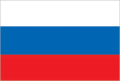
Translated from the Administration of the President of Russia The State Flag of the Russian Federation is a rectangular panel of three equal horizontal stripes: the upper one white, the middle one blue and the lower one red. The ratio of the width of the flag to its length is 2:3.
Unofficial translation by WorldometerTranslated from the Boris Yeltsin Presidential Library of the Russian Federation At present the colours of the State Flag have no official interpretation, but it is commonly held that white signifies peace, purity, innocence, perfection; blue – faith and fidelity, constancy; red – energy, strength, the blood shed for the Fatherland.
Unofficial translation by WorldometerTranslated from the Boris Yeltsin Presidential Library of the Russian Federation Many scholars associate the first use of the white-blue-red tricolour flag with the construction of the ship «Oryol» ("Eagle"), which was launched in 1668. It is known for certain that such a flag with a golden eagle in the middle was used by Peter I from 1693; the tsar himself drew the pattern of the flag and determined the order of the stripes. In 1705 it was officially approved as the flag of the Russian merchant fleet. Since then the tricolour was widely used, and the flags of various trading companies were created on its basis. In the 1880s Alexander III re-established it as the flag of commercial vessels, but at that time the official flag of the Russian Empire was considered to be the banner with horizontal black, orange and white stripes. However, Alexander III himself called the white-blue-red flag exclusively Russian and ordered it to be used to decorate houses during his coronation. And the very next emperor, Nicholas II, in 1896 recognised such a flag as national in all cases, and his coronation took place with the use of flags and ribbons in white-blue-red colours. In 1918 the Soviet authorities abandoned the tricolour, and it became one of the symbols of the White movement and of the emigration.
Unofficial translation by WorldometerTranslated from the Boris Yeltsin Presidential Library of the Russian Federation On 22 August 1991 the Extraordinary Session of the Supreme Soviet of the RSFSR restored the tricolour as the official symbol of Russia. By Decree of the President of the Russian Federation of 11 December 1993 the Regulations on the State Flag of the Russian Federation were approved. On 20 August 1994 the President signed the decree «On the Day of the State Flag of the Russian Federation». On 8 December 2000 the State Duma adopted the Federal Constitutional Law «On the State Flag of the Russian Federation», which determined the procedure for the use of the tricolour.
Unofficial translation by WorldometerSources:- kremlin.ru ↗ - the Administration of the President of Russia
- prlib.ru ↗ - the Boris Yeltsin Presidential Library of the Russian Federation
- prlib.ru ↗ - the Boris Yeltsin Presidential Library of the Russian Federation
- National anthem
- Gosudarstvenny Gimn Rossiyskoy Federatsii (Государственный гимн Российской Федерации)1:08
- Title (in Russian)
- Государственный гимн Российской Федерации
- Title (in Russian, Romanized)
- Gosudarstvenny Gimn Rossiyskoy Federatsii
- Title (in English, translated)
- National Anthem of the Russian Federation
- Lyrics
1Россия – священная наша держава, Россия – любимая наша страна. Могучая воля, великая слава – Твое достоянье на все времена!
ChorusСлавься, Отечество наше свободное, Братских народов союз вековой, Предками данная мудрость народная! Славься, страна! Мы гордимся тобой!
2От южных морей до полярного края Раскинулись наши леса и поля. Одна ты на свете! Одна ты такая – Хранимая Богом родная земля!
Славься, Отечество наше свободное,3Широкий простор для мечты и для жизни Грядущие нам открывают года. Нам силу дает наша верность Отчизне. Так было, так есть и так будет всегда!
Славься, Отечество наше свободное,Source: - Citizens
- Russians
- Official name:Article 1.2 - Constitution of the Russian Federation ↗ - Embassy of the Russian Federation in the Republic of Namibia
- Official name, Citizens:The World Factbook: Russia - CIA
- National flag:kremlin.ru ↗ - the Administration of the President of Russia
- National flag:prlib.ru ↗ - the Boris Yeltsin Presidential Library of the Russian Federation
- National flag:prlib.ru ↗ - the Boris Yeltsin Presidential Library of the Russian Federation
- National anthem:nationalanthems.info ↗
Geography
- Location
- North Asia bordering the Arctic Ocean, extending from Eastern Europe (the portion west of the Urals) to the North Pacific Ocean
- Total area
- 17,098,242 km²
- Land area
- 16,377,742 km²
- Water area
- 720,500 km²
- Land borders
- 22,407 km(14 countries)
- Kazakhstan
- 7,644 km
- China
- 4,179 kmsoutheast 4,133 kmsouth 46 km
- Mongolia
- 3,452 km
- Ukraine
- 1,944 km
- Belarus
- 1,312 km
- Finland
- 1,309 km
- Georgia
- 894 km
- Azerbaijan
- 338 km
- Latvia
- 332 km
- Estonia
- 324 km
- Lithuania
- 261 km(Kaliningrad Oblast)
- Poland
- 209 km(Kaliningrad Oblast)
- Norway
- 191 km
- North Korea
- 18 km
Source:- The World Factbook: Russia - CIA
- Coastline
- 37,653 km
- Terrain
Broad plain with low hills west of Urals; vast coniferous forest and tundra in Siberia; uplands and mountains along southern border regions - Mean elevation
- 600 m
- Highest point
- 5,642 mGora El'brus
- Lowest point
- −28 mCaspian Sea
- Climate
Ranges from steppes in the south through humid continental in much of European Russia; subarctic in Siberia to tundra climate in the polar north; winters vary from cool along Black Sea coast to frigid in Siberia; summers vary from warm in the steppes to cool along Arctic coast - Avg. temperature
- −3.4 °C
- Avg. daily range
- −7.9 to 0.6 °C
- Annual precipitation
- 584 mm
Temperature °CMeanDaily rangePrecipitation mmMonthly climate normals Month Avg. high, °C Mean, °C Avg. low, °C Precipitation, mm January −19.2 −22.5 −26.2 27 February −16.2 −20.2 −24.6 23 March −7.9 −12.5 −17.7 30 April 1.2 −3.3 −8.6 37 May 9.6 5.3 0.2 54 June 17.6 13 7.8 70 July 20.6 16.1 11 80 August 17.8 13.3 8.6 79 September 10.7 6.5 2.4 62 October 0.6 −2.9 −6.5 52 November −11 −14.3 −17.8 39 December −17.6 −20.8 −24.2 32 Country-wide averages over 1991–2020.
Sources:- The World Factbook: Russia - CIA
- Climate Change Knowledge Portal (ERA5 reanalysis) ↗ - World Bank
- Weather
- Loading
- Land use2023
- Arable7.4%Perm. crops0.1%Pasture5.6%Forest50.7%Other35.9%
- Arable land
- 121,649,000 hectares (7.4%)
- Permanent crops
- 2,000,000 hectares (0.1%)
- Permanent meadows & pastures
- 92,052,000 hectares (5.6%)
- Forest
- 830,950,838 hectares (50.7%)
- Other land
- 588,684,162 hectares (35.9%)
Source: - Major rivers
- Major lakes
- Caspian Sea374,000 km²Lake Baikal31,500 km²Lake Ladoga18,130 km²Lake Onega9,720 km²Lake Khanka5,010 km²Lake Peipus4,300 km²Ozero Malyye Chany2,500 km²Curonian Lagoon1,620 km²Ozero Vygozero1,250 km²Ozero Beloye1,120 km²Source:
- The World Factbook: Russia - CIA
- Natural hazards2026
- River floods8.4Very high#14/191Drought5.8High#33/191Coastal floods5.3High#55/191Earthquakes4.2Medium#86/191Tsunamis4.1Medium#66/191Epidemics3.1Low#156/191Tropical cyclones2.2Very low#46/191
Scores out of 10, ranks out of 191 countries.
Source:- INFORM Risk Index ↗ - European Commission Joint Research Centre
- Location, Land borders, Coastline, Terrain, Mean elevation, Highest point, Lowest point, Climate, Major rivers, Major lakes:The World Factbook: Russia - CIA
- Climate:Climate Change Knowledge Portal (ERA5 reanalysis) ↗ - World Bank
- Land use:FAOSTAT Land Use domain ↗ - FAO
- Natural hazards:INFORM Risk Index ↗ - European Commission Joint Research Centre
Demographics
- Population change2026
- −0.42% per year−602,935 people/yearWorld Rank198thof 237
- Birth rate
- 8.5 per 1,000 population
- Death rate
- 13.0 per 1,000 population
- Net migration rate
- +2.3 per 1,000 population
- 2026
- 40.7 yearsWorld Rank57thof 237
- Age structure2026
- 0-14 years16.7%15-64 years64.9%65 years +18.4%
- Share aged 65 and over
- 18.4%
- Share aged under 18
- 20.3%
- Total dependency ratio
- 54
- Youth dependency ratio
- 26
- Elderly dependency ratio
- 28
- Sex ratio
- 0.86 male / female
MaleAgeFemalePopulation by age group, % of total population Age Male Female 80+ 0.8% 2.5% 70-79 2.9% 5.7% 60-69 5.2% 7.5% 50-59 5.8% 6.8% 40-49 7.6% 8.1% 30-39 7.1% 7.1% 20-29 5.2% 5.0% 10-19 6.5% 6.1% 0-9 5.2% 4.9% - 2026
- 0.63 below the replacement level for Russia ()1.47 births per womanreplacement 2.10123World Rank176thof 237
- 0.71 daughters per woman0.29 below replacement, long-run each generation smaller than the lastreplacement 1.000.511.5
- 2026
- −4.6 per 1,000 populationfor every 1,000 people, 4.6 more deaths than births a year
- 2026
- +2.3 per 1,000 population
- Urbanization2026
- 75.4% live in 108,114,735 urban residents
- Largest cities2025
- Moscow, Saint Petersburg, Novosibirsk, YekaterinburgRankCityPopulation (2025 estimate)1Moscow13,274,2852Saint Petersburg5,652,9223Novosibirsk1,637,2664Yekaterinburg1,548,1875Kazan1,329,8256Krasnoyarsk1,211,7567Nizhny Novgorod1,198,2458Chelyabinsk1,176,7709Ufa1,166,09810Krasnodar1,154,885Source:
- Federal State Statistics Service, Russia (2025 estimate), via City Population by Thomas Brinkhoff ↗
- Population distribution
- Population is heavily concentrated in the westernmost fifth of the country, extending from the Baltic Sea south to the Caspian Sea, and eastward parallel to the Kazakh border; elsewhere, sizeable population pockets are isolated and generally found in the south.
- Ethnic groups2010
- Russian77.7%Tatar3.7%Ukrainian1.4%Bashkir1.1%Chuvash1.0%Chechen1.0%Other10.2%Unspecified3.9%
Nearly 200 national or ethnic groups are represented in Russia's 2010 census.
Source:- The World Factbook: Russia - CIA
- Religions2006
- Russian Orthodox15-20%, Muslim10-15%, Other Christian2%Counts practicing worshipers only.
Russia has large populations of non-practicing believers and non-believers.
Source:- The World Factbook: Russia - CIA
- Languages
- Russian (Русский)
- Population, Population change, Median age, Age structure, Total fertility rate, Net reproduction rate, Natural change, Net migration rate:UN World Population Prospects ↗
- Urbanization:UN World Urbanization Prospects ↗
- Largest cities:Federal State Statistics Service, Russia (2025 estimate), via City Population by Thomas Brinkhoff ↗
- Population distribution, Ethnic groups, Religions:The World Factbook: Russia - CIA
Government & Administration
- Form of state
- RepublicThe President is head of state, elected by citizens by direct suffrage for six years; the Constitution calls Russia a "federal law-governed state with a republican form of government" (Arts. 1, 80, 81).
- System of government
- Semi-presidentialThe President appoints the Chairman of the Government after State Duma (lower house) approval and may dismiss the Government at will; it works under the President's general leadership, and repeated Duma no-confidence votes can lead to the Duma's dissolution (Arts. 110, 111, 117, 109).
- Territorial organisation
- Federal
- Official websites
- Capital
- Moscow13.3 million people(2024)
- National holidays
- 14 days in 2026
- ThuJan 1New Year Holidays
- FriJan 2New Year Holidays
- SatJan 3New Year Holidays
- SunJan 4New Year Holidays
- MonJan 5New Year Holidays
- TueJan 6New Year Holidays
- WedJan 7Christmas Day
- ThuJan 8New Year Holidays
- MonFeb 23Defender of the Fatherland Day
- SunMar 8International Women's Day
- FriMay 1Holiday of Spring and Labor
- SatMay 9Victory Day
- FriJun 12Russia Day
- WedNov 4Unity Day
Nationwide public holidays only, excluding regional, bank and government-only days.
- Time
- MSKMoscow Standard TimeUTC+3
Russia spans multiple time zones, the capital's is shown here. All 16 time zones
- Currency
- Russian Ruble (RUB)
- Entry requirements
- Official visa and entry information
- Calling code
- +7
- Internet TLD
- .ru
- ISO 3166-1 codes
- RU, RUS
- Infrastructure
- Passengers carried
- 98,872,628 by the country's airlines(2023)
- Heliports
- 494
- Aircraft departures
- 783,868 by the country's airlines(2023)
- Air freight
- 1,268.8 million tonne-km(2023)
- Aircraft registration prefix
- RA
Sources:- The World Factbook: Russia - CIA
- World Development Indicators ↗ - World Bank
- Flag carrier
- Aeroflot (in Russian)Partly state-owned
- 2025
- 22 / 100World Rank157thof 182
Significant declinerDown 8 points since 2020, when it scored 30.
Confidence intervalCorruption index score by year Year Score Lower bound Upper bound 2012 28 25 32 2013 28 24 32 2014 27 23 31 2015 29 25 33 2016 29 24 33 2017 29 25 33 2018 28 24 32 2019 28 23.9 32.1 2020 30 27.8 32.2 2021 29 26.6 31.4 2022 28 25.2 30.8 2023 26 23.6 28.4 2024 22 19.5 24.5 2025 22 19.6 24.4 Source:- Corruption Perceptions Index 2025 ↗ - Transparency International, CC BY 4.0
- Form of state, System of government, Territorial organisation:Конституция Российской Федерации, принята всенародным голосованием 12 декабря 1993 года с изменениями, одобренными в ходе общероссийского голосования 1 июля 2020 года ↗ - President of Russia
- National holidays:Open World Holidays Framework (vacanza/holidays) ↗
- Infrastructure:The World Factbook: Russia - CIA
- Infrastructure:World Development Indicators ↗ - World Bank
- Corruption Perceptions Index:Corruption Perceptions Index 2025 ↗ - Transparency International, CC BY 4.0
Economy
- High income
- GDP growth (real)2026
- +0.9% per yearWorld Rank170thof 195
- GDP per capita (PPP)2026
- GDP per capita (nominal)
- $19,953 (66th in the world)
Source:- 2025
- Services58.9% of GDPIndustry29.7% of GDPAgriculture3.1% of GDPManufacturing13.7%part of industry
- Households
- +51.3%
- Government
- +19.1%
- Investment
- +25.9%
- Exports
- +18.2%
- Imports
- −15.5%
The shape of the economyGDP by end useSource:- World Development Indicators ↗ - World Bank
- Inflation2026
- 6.1%down 2.6 percentage points2.6pp from 2025
- Labor force2024
- 74.1 million (51% of population)World Rank8thof 187
- Labor force participation2024
- 61.8% of people aged 15+
- Unemployment2024
- 2.4%
- Youth unemployment2024
- 8.3% ages 15 to 24
- Labor productivity2024
- $42.4 per hour worked at PPP
- Labor cost2019latest available
- RUB 357.80 per hour$5.53 (USD), $14.04 (PPP)
- Budget balance2026
- 3.2% of GDP deficit
- Current account
- 3.8% of GDP, $108 billion surplus
Source: - Debt2024
- Government debt20.3% of GDPHousehold debt22.2% of GDPCompany debt76.5% of GDPInterest on debt1.2% of GDP
- Trade2025
- Goods$422.1 billion90.1%
- Services$46.3 billion9.9%
- Total exports
- $468.3 billion
- Change from 2024
- down 1.8 percent on the previous year1.8%
Sources:- World Development Indicators ↗ - World Bank
- The World Factbook: Russia - CIA
- 2024
- +0.25World Rank67thof 145
- Projected GDP growth
- +1% a year over the next 10 years
Source:- Atlas of Economic Complexity ↗ - Harvard Growth Lab
- Agricultural products2024
- Sunflower seed, Peas (dry), Sugar beet, and 7 more
- 1Sunflower seed12.9×
- 2Peas (dry)9×
- 3Sugar beet6.2×
- 4Oats5.2×
- 5Barley4.6×
- 6Wheat4.1×
- 7Rape or colza seed2.1×
- 8Potatoes1.9×
- 9Meat of chickens (fresh or chilled)1.7×
- 10Raw milk of cattle1.6×
ProductSource:- FAOSTAT ↗ - Food and Agriculture Organization
- Gold reserves2024
- 2,333 tonnesWorth $195.7 billion, 32% of total official reserves by value
- Industries
- complete range of mining and extractive industries producing coal, oil, gas, chemicals, and metals
- all forms of machine building from rolling mills to high-performance aircraft and space vehicles
- defense industries (including radar, missile production, advanced electronic components), shipbuilding
- road and rail transportation equipment
- communications equipment
- agricultural machinery, tractors, and construction equipment
- electric power generating and transmitting equipment
- medical and scientific instruments
- consumer durables, textiles, foodstuffs, handicrafts
Source:- The World Factbook: Russia - CIA
- Income level, GDP by sector, Trade, Gold reserves:World Development Indicators ↗ - World Bank
- GDP (nominal), GDP growth (real), GDP per capita (PPP), Inflation, Budget balance:IMF World Economic Outlook ↗
- Labor force, Labor force participation, Unemployment, Youth unemployment, Labor productivity, Labor cost:ILOSTAT ↗ - International Labour Organization
- Debt:IMF Global Debt Database ↗
- Debt:IMF Public Finances in Modern History ↗
- Trade, Industries:The World Factbook: Russia - CIA
- Economic Complexity Index:Atlas of Economic Complexity ↗ - Harvard Growth Lab
- Agricultural products:FAOSTAT ↗ - Food and Agriculture Organization
Cost of Living
- Cost of living index
- Loading
- Monthly costs (excluding rent)
- Loading
- Rent
- Loading
- Buying an apartment
- Loading
- Average gross salary2021
- RUB 57,240 per month$777 (USD), $2,222 (PPP)
- Men
- RUB 67,056 per month($910)
- Women
- RUB 48,594 per month($660)
Source:- ILOSTAT ↗ - International Labour Organization
- 2024
- RUB 19,242 per month, gross$208 (USD), $662 (PPP)
- Average gross salary, Minimum wage:ILOSTAT ↗ - International Labour Organization
Society
- 2023
- 0.832Very highWorld Rank64thof 193RussiaWorld
Human Development Index by year Year Russia World 1990 0.762 0.608 1991 0.758 0.611 1992 0.744 0.614 1993 0.725 0.617 1994 0.712 0.620 1995 0.713 0.625 1996 0.723 0.631 1997 0.734 0.636 1998 0.738 0.641 1999 0.740 0.646 2000 0.750 0.651 2001 0.758 0.657 2002 0.764 0.662 2003 0.772 0.669 2004 0.777 0.675 2005 0.780 0.681 2006 0.791 0.688 2007 0.802 0.694 2008 0.807 0.698 2009 0.805 0.701 2010 0.808 0.707 2011 0.822 0.713 2012 0.825 0.717 2013 0.830 0.721 2014 0.831 0.726 2015 0.833 0.731 2016 0.835 0.735 2017 0.838 0.739 2018 0.845 0.741 2019 0.847 0.745 2020 0.818 0.742 2021 0.813 0.742 2022 0.826 0.752 2023 0.832 0.756 Source:- Human Development Report ↗ - United Nations Development Programme
- 2023
- 33
- Mean years of schooling2023
- 12.4 years
- Expected for a child today
- 13.2 years
Source:- Human Development Report ↗ - United Nations Development Programme
- Literacy2021
- 99.9% of adults
- Education expenditure2018
- 4.7% of GDP
- Share of government spending
- 14.3%
Source:- World Development Indicators ↗ - World Bank
- Internet users2023
- 92.2% of the population
- Households with Internet access
- 87.9%
Source:- ITU DataHub ↗ - International Telecommunication Union
- Mobile subscriptions2023
- 263 million
- Fixed telephone lines
- 20,816,334
- Fixed broadband
- 25.8 subscriptions per 100 people
Counts subscriptions, not people.
Source:- ITU DataHub ↗ - International Telecommunication Union
- Credit-card ownership2021
- 25% of adults
- Debit-card ownership
- 65%
- Account at a bank or mobile-money provider
- 90%
- Mobile-money account
- 33%
- Made or received a digital payment
- 87%
Source:- Global Findex Database ↗ - World Bank
- Refugees hosted2025
- 11,147 people
- Asylum seekers
- 1,279
- Stateless persons
- 89,027
- Internally displaced persons
- 606580 due to conflicts, 26 due to disasters
- Refugees from Russia abroad
- 97,534
Sources:- Refugee Data Finder ↗ - UN Refugee Agency
- Global Internal Displacement Database ↗ - Internal Displacement Monitoring Centre
- Inbound tourists2020latest available
- 6.4 million visitor arrivals(overnight and same-day)Official tourism site (in Russian)
- Same-day visitors
- 1.7 million arrivals(2015, latest available)
- $8.6 billion(2024)
- Share of GDP
- 2.8% tourism direct GDP(2023)
- $41.4 billion(2024)
- Hotel beds
- 1.3 million(2018, latest available)
Overnight and same-day visits are not published separately. Arrivals count trips, not people.
Source:- UN Tourism Data Dashboard ↗ - UN Tourism
- UNESCO World Heritage Sites
- 33 sites22 cultural11 natural
Site Type Historic Centre of Saint Petersburg and Related Groups of Monuments Cultural Kizhi Pogost Cultural Kremlin and Red Square, Moscow Cultural Historic Monuments of Novgorod and Surroundings Cultural White Monuments of Vladimir and Suzdal Cultural Architectural Ensemble of the Trinity Sergius Lavra in Sergiev Posad Cultural Church of the Ascension, Kolomenskoye Cultural Lake Baikal Natural Volcanoes of Kamchatka Natural Ensemble of the Ferapontov Monastery Cultural Historic and Architectural Complex of the Kazan Kremlin Cultural Citadel, Ancient City and Fortress Buildings of Derbent Cultural Uvs Nuur Basin Natural Ensemble of the Novodevichy Convent Cultural Natural System of Wrangel Island Reserve Natural Historical Centre of the City of Yaroslavl Cultural Lena Pillars Nature Park Natural Bolgar Historical and Archaeological Complex Cultural Assumption Cathedral and Monastery of the town-island of Sviyazhsk Cultural Churches of the Pskov School of Architecture Cultural Petroglyphs of Lake Onega and the White Sea Cultural Rock Paintings of Shulgan-Tash Cave Cultural The Factbook names 22 of the 33 sites.
Source:- The World Factbook: Russia - CIA
- Human Development Index, Mean years of schooling:Human Development Report ↗ - United Nations Development Programme
- Income inequality (Gini), Education expenditure:World Development Indicators ↗ - World Bank
- Literacy:UIS Data Browser ↗ - UNESCO Institute for Statistics
- Internet users, Mobile subscriptions:ITU DataHub ↗ - International Telecommunication Union
- Credit-card ownership:Global Findex Database ↗ - World Bank
- Refugees hosted:Refugee Data Finder ↗ - UN Refugee Agency
- Refugees hosted:Global Internal Displacement Database ↗ - Internal Displacement Monitoring Centre
- Inbound tourists:UN Tourism Data Dashboard ↗ - UN Tourism
- UNESCO World Heritage Sites:The World Factbook: Russia - CIA
Crime & Safety
- Travel advisory (US)
- Loading
- Active humanitarian crisisAug 2026
- None - no active crisis
- Homicide rate2024
- Medium by global standards7.8 per 100,000 peopleWorld Rank24thof 115
- Crime rates
- 7 offence categories
Offence Per 100,000 Count Year Homicide (victims) 7.8 11,327 2024 Serious assault 13.0 18,989 2020 Sexual violence 12.8 18,715 2020 Kidnapping 0.2 365 2020 Burglary 94.8 138,692 2020 Theft 464.2 679,482 2020 Vehicle theft 21.9 32,075 2020 A low figure can also mean weak recording.
Source:- UNODC Data Portal ↗ - UN Office on Drugs and Crime
- Prison population2023
- 242.7 per 100,000 people
- Persons held
- 353,050
Source:- UNODC Data Portal ↗ - UN Office on Drugs and Crime
- Active humanitarian crisis:INFORM Severity Index ↗ - European Commission Joint Research Centre
- Homicide rate, Crime rates, Prison population:UNODC Data Portal ↗ - UN Office on Drugs and Crime
Health
- Life expectancy2026
- 73.7 years
- Health expenditure2023
- 7% of GDP$1,003 per person
- Physicians2022
- 5.11 per 1,000 population
- Hospital beds2023
- 6.8 per 1,000 population
- Infant mortality2026
- 3.9 per 1,000 live births
- Maternal mortality2023
- 9 per 100,000 live births
- Alcohol consumption2022
- 10.5 litres of pure alcohol per adult per year
- Tobacco use2023
- 27.4% of adults
- Men
- 36.3%
- Women
- 18.6%
Source:- Global Health Observatory ↗ - World Health Organization
- Alcohol and Tobacco Spending2023
- 5.9% of household spendingWorld Rank14thof 105
- World median
- 3.1%
Source:- The World Factbook: Russia - CIA
- Road traffic deaths2019
- 12 per 100,000 population
- Life expectancy, Infant mortality:UN World Population Prospects ↗
- Health expenditure, Physicians, Hospital beds, Road traffic deaths:World Development Indicators ↗ - World Bank
- Maternal mortality:Maternal mortality estimates ↗ - UN Maternal Mortality Estimation Inter-agency Group
- Alcohol consumption, Tobacco use:Global Health Observatory ↗ - World Health Organization
- Alcohol and Tobacco Spending:The World Factbook: Russia - CIA
Environment
- CO₂ emissions2024
- 2,009.2 Mt per yearup 3.1 percent on the previous year3.1% from 2023
- CO₂ per capita
- 14.1 t per personWorld Rank15thof 207
- Share of global CO₂
- 5.1%
- Methane (CH₄)
- 416.9 Mt CO₂-eq
- Nitrous oxide (N₂O)
- 87.5 Mt CO₂-eq
- Fluorinated gases
- 62 Mt CO₂-eq
- All greenhouse gases
- 2,575.7 Mt CO₂-eq
Source:- Emissions Database for Global Atmospheric Research (EDGAR) ↗ - European Commission, Joint Research Centre
- 2024
- 11 µg/m³ of PM2.50.6 years of life expectancy lost against the WHO guidelineMost polluted127thof 236
- WHO guideline
- 5 µg/m³
- National standard
- 25 µg/m³
Source:- Air Quality Life Index ↗ - Energy Policy Institute at the University of Chicago
- Environmental issues
- air pollution from heavy industry, coal-fired electric plants, and transportation in major cities
- industrial, municipal, and agricultural pollution of inland waterways and seacoasts
- deforestation
- soil erosion
- soil contamination from agricultural chemicals
- nuclear waste disposal
- scattered areas of radioactive contamination
- groundwater contamination from toxic waste
- urban solid-waste management
- abandoned stocks of pesticides
Source:- The World Factbook: Russia - CIA
- International agreements
- 15 of 20 landmark treaties in forceParty to 197 multilateral environmental agreements
Treaty Standing Joined Climate Paris Agreement in force 2019 UN Framework Convention on Climate Change in force 1995 Kyoto Protocol in force 2005 Ozone layer Montreal Protocol in force 1989 Vienna Convention (Ozone Layer) in force 1988 Biodiversity Convention on Biological Diversity in force 1995 CITES in force 1976 Convention on Migratory Species (Bonn) not a party Cartagena Protocol on Biosafety not a party Nagoya Protocol not a party Land and heritage Ramsar Convention on Wetlands in force 1977 World Heritage Convention in force 1989 UN Convention to Combat Desertification in force 2003 Chemicals and waste Basel Convention in force 1995 Rotterdam Convention (PIC) in force 2011 Stockholm Convention (POPs) in force 2011 Minamata Convention on Mercury signed 2014, not ratified Oceans UN Convention on the Law of the Sea in force 1997 High Seas Treaty (BBNJ) not a party MARPOL 73/78 in force 1984 Source:- International Environmental Agreements Database ↗ - Université Laval
- CO₂ emissions:Emissions Database for Global Atmospheric Research (EDGAR) ↗ - European Commission, Joint Research Centre
- Air pollution:Air Quality Life Index ↗ - Energy Policy Institute at the University of Chicago
- Environmental issues:The World Factbook: Russia - CIA
- International agreements:International Environmental Agreements Database ↗ - Université Laval
Food & Water
- No access to safe drinking water2022
- 3.1% of the population
- Renewable water2022
- 4,525 billion m³ per year
- Per person
- 31,086 m³ per year
- Dependency ratio
- 5% originates outside the country
- Annual water withdrawal
- 65 billion m³ per year
- Withdrawn for agriculture
- 29%
- Water stress
- 4% of available freshwater withdrawn
Source:- AQUASTAT ↗ - Food and Agriculture Organization
- Undernourishment2022
- 2.6% of the population3.7 million people
- Obesity2024
- 17.6% of adults
- Men
- 16.6%
- Women
- 18%
Source:- Global Health Observatory ↗ - World Health Organization
- No access to safe drinking water, Renewable water:AQUASTAT ↗ - Food and Agriculture Organization
- Undernourishment:Food security indicators (FAOSTAT) ↗ - Food and Agriculture Organization
- Obesity:Global Health Observatory ↗ - World Health Organization
Energy
- Energy consumption2024
- Per capita
- 249.8 GJ per person
- Share of world total
- 5.7%
- Supply
- Surplusproduces 1.8× what it consumes, 2024
Source:- International Energy Statistics ↗ - U.S. Energy Information Administration
- Electricity2024
- 1,160 TWh generated per year
- Generation
- 1,160 TWh per year
- Consumption
- 1,045 TWh per year
- Imports
- 1.6 TWh per year
- Exports
- 18 TWh per year
- Net
- +16 TWh per year
Source:- International Energy Statistics ↗ - U.S. Energy Information Administration
- Oil, gas & coal
- Surplusproduces 2.8× what it consumes, 2024Oil reserves202580 billion barrelsWorld Rank9thof 99
Oil imports and exports count crude oil only.
- Mineral resources2025
- Copper, Rare earths
Mineral Mine production Reserves Copper 1.3 million t5.7% of world 80 million t Rare earthsas rare-earth oxide 2,600 t0.67% of world 3.8 million t USGS estimates. Shows only minerals where the country is a major producer.
Source:- Mineral Commodity Summaries ↗ - U.S. Geological Survey
- Energy consumption, Electricity, Oil, gas & coal:International Energy Statistics ↗ - U.S. Energy Information Administration
- Oil, gas & coal:Worldwide Oil and Gas Survey ↗ - Oil & Gas Journal
- Mineral resources:Mineral Commodity Summaries ↗ - U.S. Geological Survey
Defense
- Military expenditure2024
- 7.1% of GDP$149 billion, 18.9% of government spending
- Military personnel2025
- estimated 1.1–1.2 millionactive Armed Forces; estimated 350,000 Federal National Guard Troops
In September 2024, President Putin ordered the Russian military to increase in size to 1.5 million personnel.
Source:- The World Factbook: Russia - CIA
- Military service2025
- Conscriptionmen 18–30, minimum 12 months; voluntary or contractual 18–65; women and non-Russian citizens 18–30 may volunteer
In 2022, Russia removed the previous upper age limit of 30 for contractual service in the military; that same year, began drafting dual-national Russians and those with permanent residency status in foreign countries for military service.Since 2015, foreigners 18-30 with a good command of Russian have been allowed to join the military on five-year contracts and become eligible for Russian citizenship after serving three years; in 2022, Russia began recruiting foreigners for one-year service contracts with armed forces participating in the invasion of Ukraine with the promise of simplifying the process of obtaining Russian citizenship.
Source:- The World Factbook: Russia - CIA
- Space program2025
- State Space Corporation of the Russian Federation (Roscosmos; established 2015); Russian Space Forces (Kosmicheskie voyska Rossii, KV; under the Russian Aerospace Forces)
Has one of the world’s largest space programs and is active across all areas of the space sector; builds, launches, and operates satellite/space launch vehicles, satellites, space stations, interplanetary probes, and manned, robotic, and re-usable spacecraft; has astronaut (cosmonaut) training program and conducts human space flight; researching and developing a broad range of other space-related technologies; participates in international space programs such as the International Space Station; has had relations with dozens of foreign space agencies and commercial entities, including those of China, the ESA, India, Japan, and the US; Roscosmos and its public subsidiaries comprise the majority of the Russian space industry; Roscosmos has eight operating areas, including manned space flights, launch systems, unmanned spacecraft, rocket propulsion, military missiles, space avionics, special military space systems, and flight control systems; private companies are also involved in a range of space systems
- Launch sites
- Baikonur Cosmodrome (Kazakhstan); Vostochny Cosmodrome (Amur Oblast); Plesetsk Cosmodrome (Arkhangel'sk Oblast)
- 1957
- Placed world’s first satellite (Sputnik-1) in orbit
- 1961-1964
- Launched first man, first woman, and first multi-member crew into space
- 1965
- Launched first probe to successfully land on the Moon
- 1967
- Initial launch of Soviet-made Soyuz series space launch vehicle (SLV)
- 1971
- Placed first space station (Salyut) in orbit and successfully landed a probe on Venus
- 1975
- Joint Soviet (Soyuz)-US (Apollo) space mission
- 1986
- Began operation of Mir space station (in orbit until 2001)
- 1995
- Global Navigation Satellite System (GLObalnaya NAvigatsionnaya Sputnikovaya Sistema or GLONASS) constellation completed
- 2014
- Initial launch of Angara SLV series
- 2021
- Announced agreements with China to send a robotic probe to an asteroid and jointly establish a station on the Moon
- 2023
- Launch first of a planned series of Moon landers (Luna-25; crashed on Moon's surface); announced intent to place first module of a new space station in orbit by 2027
Key milestones
Russia’s space strategy is defined jointly by Roscosmos and the Ministry of DefenseRoscosmos was established from a merger of the Federal Space Agency and the state-owned United Rocket and Space Corporation; it began as the Russian Space Agency (RSA or RKA) in 1992 and restructured in 1999 and 2004 as the Russian Aviation and Space Agency and then the Federal Space Agencythe Baikonur cosmodrome and the surrounding area are leased and administered by Russia until 2050 for approximately $115 million/year; the cosmodrome was originally built by the Soviet Union in the mid-1950s and is the site of the World's first successful satellite launch (Sputnik) in 1957; it is also the largest space launch facility in the World, comprising 15 launch pads for space launch vehicles, four launch pads for testing intercontinental ballistic missiles, more than 10 assembly and test facilities, and other infrastructurein 2018, Kazakhstan and Russia agreed that Kazakhstan would build, maintain, and operate a new space launch facility (Baiterek) at the Baikonur space center (estimated to be ready for operations in 2025)
Source:- The World Factbook: Russia - CIA
- Nuclear weapons2026
- 5,420 warheads1,796 deployed, 4,400 in the military stockpile
Deployed, strategicOn long-range missiles and at bomber bases 1,796 Deployed, nonstrategicOn short-range weapons 0 ReserveIn storage, not on launchers 2,604 Military stockpileDeployed and reserve, held for use 4,400 RetiredAwaiting dismantlement 1,020 Total inventory 5,420 Approximate FAS estimates. Parts may not sum.
Source:- Status of World Nuclear Forces ↗ - Federation of American Scientists
- Military expenditure:SIPRI Military Expenditure Database ↗ - Stockholm International Peace Research Institute
- Military expenditure:World Development Indicators ↗ - World Bank
- Military personnel, Military service, Space program:The World Factbook: Russia - CIA
- Nuclear weapons:Status of World Nuclear Forces ↗ - Federation of American Scientists
