

National Identity
- Official name
- Republic of Croatia
- Official name (in Croatian)
- Republika Hrvatska
- Name etymology
name probably derives from the Croats, a Slavic tribe who migrated to the Balkans in the 7th century A.D., but that name may be related to the Russian word khrebet, meaning "mountain chain"
Sources:- The Constitution of the Republic of Croatia (consolidated text) ↗ - Croatian Parlament
- The World Factbook: Croatia - CIA
- Coat of arms
- National flag
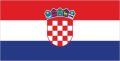
Translated from Narodne novine d.d., publisher of the Official Gazette of the Republic of Croatia The flag of the Republic of Croatia consists of three colours: red, white and blue with the coat of arms of the Republic of Croatia in the centre. The ratio of the width to the length of the flag is 1 : 2. The colours of the flag are laid horizontally, in this order from the top: red, white and blue. Each colour makes up one third of the width of the flag. The coat of arms of the Republic of Croatia is placed in the centre of the flag so that the upper part of the coat of arms (the crown) extends into the red field of the flag, and the lower part of the coat of arms extends into the blue field of the flag.
Unofficial translation by WorldometerTranslated from Narodne novine d.d., publisher of the Official Gazette of the Republic of Croatia The coat of arms, the flag and the anthem of the Republic of Croatia represent the Republic of Croatia and express belonging to the Republic of Croatia.
Unofficial translation by WorldometerTranslated from Croatian Radiotelevision The red-white flag symbolised historical Croatia, and the white-blue one Slavonia
Unofficial translation by WorldometerTranslated from Croatian Radiotelevision Therefore, when in the revolutionary year of 1848 war with Hungary was expected and the need to create a single national flag was recognised, the red-white-blue tricolour logically imposed itself. [...] A little more than a month later, on 5 June 1848, it was used for the first time, and officially, at the ceremonial installation of Josip Jelačić as Croatian ban.
Unofficial translation by WorldometerTranslated from Croatian Radiotelevision Shortly after the installation of Ban Jelačić, the tricolour was banned in the period of Bach's absolutism, but permitted again from 1860, and with the Croatian-Hungarian Settlement of 1868 it was also officially confirmed.
Unofficial translation by WorldometerTranslated from Croatian Radiotelevision After the collapse of the Habsburg Monarchy, and with entry into the Kingdom of Serbs, Croats and Slovenes, Croatia loses the right to display the tricolour as a state symbol. At that time the coat of arms of the Triune Kingdom also passes into history, and so the coat of arms with the chequerboard field was introduced as the single symbol of Croatian political and national identity, which in 1939 became the coat of arms of the Banovina of Croatia. During the Independent State of Croatia (NDH), the Ustaša emblem was added to the tricolour alongside the chequerboard, while the Partisans used the tricolour with a small five-pointed red star in the centre. This also became the official flag of Croatia within Federative Yugoslavia, with the star becoming larger in 1947 so that it extended into both the red and the blue field.
Unofficial translation by WorldometerTranslated from Croatian Radiotelevision In 1990 the old tricolour with the chequerboard of 25 red and white fields was restored. The new flag of the Republic of Croatia was officially displayed for the first time on 30 May 1990 on Ban Jelačić Square, and since 21 December we have the flag as it is today – with the coat of arms and the crown on it formed from the historical coats of arms of the Croatian lands.
Unofficial translation by WorldometerTranslated from the Croatian Parliament The author of all the state insignia is academician Miroslav Šutej
Unofficial translation by WorldometerSources:- narodne-novine.nn.hr ↗ - Narodne novine d.d., publisher of the Official Gazette of the Republic of Croatia
- glashrvatske.hrt.hr ↗ - Croatian Radiotelevision
- sabor.hr ↗ - the Croatian Parliament
- National anthem
- Lijepa naša domovino0:59
- Title (in Croatian)
- Lijepa naša domovino
- Title (in English, translated)
- Our Beautiful Homeland
- Lyrics
1Lijepa naša domovino, Oj junačka zemljo mila, Stare slave djedovino, Da bi vazda sretna bila!
Mila, kano si nam slavna, Mila si nam ti jedina, Mila, kuda si nam ravna, Mila, kuda si planina!
2Teci Savo, Dravo teci, Nit’ti Dunav silu gubi, Sinje more, svijetu reci, Da svoj narod Hrvat ljubi.
Dok mu njive sunce grije, Dok mu hrašće bura vije, Dok mu mrtve grobak krije, Dok mu živo srce bije!
Source: - Citizens
- "Croats" or "Croatians"
- Official name:The Constitution of the Republic of Croatia (consolidated text) ↗ - Croatian Parlament
- Official name, Citizens:The World Factbook: Croatia - CIA
- National flag:narodne-novine.nn.hr ↗ - Narodne novine d.d., publisher of the Official Gazette of the Republic of Croatia
- National flag:glashrvatske.hrt.hr ↗ - Croatian Radiotelevision
- National flag:sabor.hr ↗ - the Croatian Parliament
- National anthem:nationalanthems.info ↗
Geography
- Location
- Southeastern Europe, bordering the Adriatic Sea, between Bosnia and Herzegovina and Slovenia
- Total area
- 56,594 km²
- Land area
- 55,974 km²
- Water area
- 620 km²
- Land borders
- 2,237 km(5 countries)
- Bosnia and Herzegovina
- 956 km
- Slovenia
- 600 km
- Hungary
- 348 km
- Serbia
- 314 km
- Montenegro
- 19 km
Source:- The World Factbook: Croatia - CIA
- Coastline
- 5,835 km
- Mainland
- 1,777 km
- Islands
- 4,058 km
Source:- The World Factbook: Croatia - CIA
- Terrain
Geographically diverse; flat plains along Hungarian border, low mountains and highlands near Adriatic coastline and islands - Mean elevation
- 331 m
- Highest point
- 1,831 mDinara
- Lowest point
- 0 mAdriatic Sea
- Climate
Mediterranean and continental continental climate predominant with hot summers and cold winters; mild winters, dry summers along coast - Avg. temperature
- 12.3 °C
- Avg. daily range
- 8.2 to 16.5 °C
- Annual precipitation
- 1,106 mm
Temperature °CMeanDaily rangePrecipitation mmMonthly climate normals Month Avg. high, °C Mean, °C Avg. low, °C Precipitation, mm January 5.3 2.3 −0.6 79 February 7.4 3.5 −0.2 82 March 11.8 7.4 3.2 83 April 16.4 11.8 7.2 90 May 20.9 16.3 11.6 98 June 24.9 20.3 15.4 83 July 27.3 22.4 17.2 69 August 27.4 22.2 17.2 75 September 22.1 17.2 12.9 107 October 17 12.6 8.7 109 November 11.1 7.8 4.8 125 December 6.1 3.2 0.5 105 Country-wide averages over 1991–2020.
Sources:- The World Factbook: Croatia - CIA
- Climate Change Knowledge Portal (ERA5 reanalysis) ↗ - World Bank
- Weather
- Loading
- Land use2023
- Arable15.5%Perm. crops1.4%Pasture9.6%Forest34.7%Other38.2%
- Arable land
- 868,000 hectares (15.5%)
- Permanent crops
- 79,000 hectares (1.4%)
- Permanent meadows & pastures
- 539,000 hectares (9.6%)
- Forest
- 1,943,560 hectares (34.7%)
- Other land
- 2,137,440 hectares (38.2%)
Source: - Natural hazards2026
- River floods6.8Very high#45/191Tsunamis5.8High#43/191Earthquakes5.6High#61/191Coastal floods5.0High#60/191Drought3.2Low#94/191Epidemics2.6Very low#167/191Tropical cyclones0.0Very low
Scores out of 10, ranks out of 191 countries.
Source:- INFORM Risk Index ↗ - European Commission Joint Research Centre
- Location, Land borders, Coastline, Terrain, Mean elevation, Highest point, Lowest point, Climate, Major rivers:The World Factbook: Croatia - CIA
- Climate:Climate Change Knowledge Portal (ERA5 reanalysis) ↗ - World Bank
- Land use:FAOSTAT Land Use domain ↗ - FAO
- Natural hazards:INFORM Risk Index ↗ - European Commission Joint Research Centre
Demographics
- Population change2026
- −0.67% per year−25,815 people/yearWorld Rank211thof 237
- Birth rate
- 8.0 per 1,000 population
- Death rate
- 14.0 per 1,000 population
- Net migration rate
- −0.7 per 1,000 population
- 2026
- 45.5 yearsWorld Rank20thof 237
- Age structure2026
- 0-14 years13.5%15-64 years62.5%65 years +24.0%
- Share aged 65 and over
- 24.0%
- Share aged under 18
- 16.8%
- Total dependency ratio
- 60
- Youth dependency ratio
- 22
- Elderly dependency ratio
- 38
- Sex ratio
- 0.93 male / female
MaleAgeFemalePopulation by age group, % of total population Age Male Female 80+ 1.8% 3.8% 70-79 4.8% 6.4% 60-69 6.7% 7.6% 50-59 6.8% 7.0% 40-49 7.1% 6.9% 30-39 5.9% 5.6% 20-29 5.5% 5.2% 10-19 5.3% 5.0% 0-9 4.4% 4.2% - 2026
- 0.63 below the replacement level for Croatia ()1.47 births per womanreplacement 2.10123World Rank175thof 237
- 0.71 daughters per woman0.29 below replacement, long-run each generation smaller than the lastreplacement 1.000.511.5
- 2026
- −6.0 per 1,000 populationfor every 1,000 people, 6.0 more deaths than births a year
- 2026
- −0.7 per 1,000 population
- Urbanization2026
- 58.1% live in 2,222,255 urban residents
- Largest cities2021
- Zagreb, Split, Rijeka, OsijekRankCity or SettlementPopulation (2021 census)1Zagreb663,5922Split149,8303Rijeka107,9644Osijek75,5355Zadar67,3096Sesvete55,3137Pula52,2208Slavonski Brod45,0059Karlovac41,86910Varaždin36,187Source:
- Croatian Bureau of Statistics (2021 census), via City Population by Thomas Brinkhoff ↗
- Population distribution
- More of the population lives in the northern half of the country, with approximately a quarter of the populace residing in and around the capital of Zagreb; many of the islands are sparsely populated.
- Ethnic groups2021
- Croat91.6%Serb3.2%Other3.9%Unspecified1.3%
Other includes Bosniak, Romani, Albanian, Italian, and Hungarian.
Source:- The World Factbook: Croatia - CIA
- Religions2021
- Roman Catholic79.0%Orthodox3.3%Protestant0.3%Other Christian4.8%Muslim1.3%Other1.1%Agnostic1.7%None or atheist4.7%Unspecified3.9%
- Languages
- Croatian (Hrvatski)
- Population, Population change, Median age, Age structure, Total fertility rate, Net reproduction rate, Natural change, Net migration rate:UN World Population Prospects ↗
- Urbanization:UN World Urbanization Prospects ↗
- Largest cities:Croatian Bureau of Statistics (2021 census), via City Population by Thomas Brinkhoff ↗
- Population distribution, Ethnic groups, Religions:The World Factbook: Croatia - CIA
Government & Administration
- Form of state
- RepublicThe President of the Republic is elected directly by universal suffrage and secret ballot for five years; the Constitution calls Croatia "a unitary and indivisible democratic and social state" (Arts. 1, 95).Source:
- System of government
- Semi-presidentialAlthough often described as parliamentary, Croatia is classified as semi-presidential because it combines a directly elected President with a Government that takes office on a confidence vote of a majority of all members of Parliament and is responsible to it (Arts. 104, 110, 115).Source:
- Ustav Republike Hrvatske (pročišćeni tekst), Narodne novine 85/2010 ↗, Arts. 104, 110, 115
- Territorial organisation
- Unitary
- Official websites
- Capital
- Zagreb777,359 people(2024)
- National holidays
- 14 days in 2026
- ThuJan 1New Year's Day
- TueJan 6Epiphany
- SunApr 5Easter Sunday
- MonApr 6Easter Monday
- FriMay 1Labor Day
- SatMay 30Statehood Day
- ThuJun 4Corpus Christi
- MonJun 22Anti-Fascist Struggle Day
- WedAug 5Victory and Homeland Thanksgiving Day and Croatian Veterans Day
- SatAug 15Assumption Day
- SunNov 1All Saints' Day
- WedNov 18Remembrance Day
- FriDec 25Christmas Day
- SatDec 26Saint Stephen's Day
Nationwide public holidays only, excluding regional, bank and government-only days.
- Time
- Currency
- Euro (EUR)
- Entry requirements
- Official visa and entry information
- Calling code
- +385
- Internet TLD
- .hr
- ISO 3166-1 codes
- HR, HRV
- Infrastructure
- Passengers carried
- 1,670,012 by the country's airlines(2023)
- Heliports
- 7
- Aircraft departures
- 25,311 by the country's airlines(2023)
- Air freight
- 0.1 million tonne-km(2023)
- Aircraft registration prefix
- 9A
Sources:- The World Factbook: Croatia - CIA
- World Development Indicators ↗ - World Bank
- Flag carrier
- Croatia AirlinesState-owned
- Passenger rail
- HŽ Putnički prijevoz
- 2025
- 47 / 100World Rank63rdof 182Confidence interval
Corruption index score by year Year Score Lower bound Upper bound 2012 46 41 51 2013 48 43 53 2014 48 43 53 2015 51 48 54 2016 49 45 53 2017 49 45 53 2018 48 43 53 2019 47 43 51 2020 47 44.6 49.4 2021 47 44.4 49.6 2022 50 48.5 51.5 2023 50 48 52 2024 47 43.9 50.1 2025 47 44 50 Source:- Corruption Perceptions Index 2025 ↗ - Transparency International, CC BY 4.0
- Form of state, System of government, Territorial organisation:Ustav Republike Hrvatske (pročišćeni tekst), Narodne novine 85/2010 ↗
- National holidays:Open World Holidays Framework (vacanza/holidays) ↗
- Infrastructure:The World Factbook: Croatia - CIA
- Infrastructure:World Development Indicators ↗ - World Bank
- Corruption Perceptions Index:Corruption Perceptions Index 2025 ↗ - Transparency International, CC BY 4.0
Economy
- High income
- GDP growth (real)2026
- +2.2% per yearWorld Rank123rdof 195
- GDP per capita (PPP)2026
- GDP per capita (nominal)
- $29,860 (48th in the world)
Source:- 2025
- Services60.9% of GDPIndustry19% of GDPAgriculture2.8% of GDPManufacturing10.1%part of industry
- Households
- +56.2%
- Government
- +24.3%
- Investment
- +24.6%
- Exports
- +48%
- Imports
- −53%
The shape of the economyGDP by end useSource:- World Development Indicators ↗ - World Bank
- Inflation2026
- 4.5%up 0.1 percentage points0.1pp from 2025
- Labor force2024
- 1.7 million (45% of population)World Rank131stof 187
- Labor force participation2024
- 52.4% of people aged 15+
- Unemployment2024
- 5.0%
- Youth unemployment2024
- 16.5% ages 15 to 24
- Labor productivity2024
- $56.5 per hour worked at PPP
- Labor cost2025
- €18.40 per hour$20.79 (USD), $35.33 (PPP)
- Budget balance2026
- 2.9% of GDP deficit
- Current account
- 4.4% of GDP, $5.1 billion deficit
Source: - Debt2024
- Government debt57.6% of GDPHousehold debt30.3% of GDPCompany debt56.8% of GDPInterest on debt1.5% of GDPCentral government debt56.5% of GDP
- Trade2024
- Goods$21.9 billion47%
- Services$24.8 billion53%
- Total exports
- $46.7 billion
- Change from 2023
- up 3.7 percent on the previous year3.7%
Sources:- World Development Indicators ↗ - World Bank
- The World Factbook: Croatia - CIA
- 2024
- +0.83World Rank30thof 145
- Projected GDP growth
- +1.4% a year over the next 10 years
Source:- Atlas of Economic Complexity ↗ - Harvard Growth Lab
- Agricultural products2024
- Green corn (maize), Sunflower seed, Barley, and 7 more
- 1Green corn (maize)167.3×
- 2Sunflower seed6.1×
- 3Barley3.7×
- 4Maize (corn)3×
- 5Sugar beet2.8×
- 6Grapes2.3×
- 7Wheat1.8×
- 8Meat of pig with the bone (fresh or chilled)1.7×
- 9Apples1.2×
- 10Soya beans1.1×
ProductSource:- FAOSTAT ↗ - Food and Agriculture Organization
- Gold reserves2025
- NoneNo gold in official reserves
- Industries
- chemicals and plastics, machine tools, fabricated metal, electronics, pig iron and rolled steel products, aluminum, paper, wood products, construction materials, textiles, shipbuilding, petroleum and petroleum refining, food and beverages, tourism
- Income level, GDP by sector, Trade, Gold reserves:World Development Indicators ↗ - World Bank
- GDP (nominal), GDP growth (real), GDP per capita (PPP), Inflation, Budget balance:IMF World Economic Outlook ↗
- Labor force, Labor force participation, Unemployment, Youth unemployment, Labor productivity, Labor cost:ILOSTAT ↗ - International Labour Organization
- Debt:IMF Global Debt Database ↗
- Debt:IMF Public Finances in Modern History ↗
- Trade, Industries:The World Factbook: Croatia - CIA
- Economic Complexity Index:Atlas of Economic Complexity ↗ - Harvard Growth Lab
- Agricultural products:FAOSTAT ↗ - Food and Agriculture Organization
Cost of Living
- Cost of living index
- Loading
- Monthly costs (excluding rent)
- Loading
- Rent
- Loading
- Buying an apartment
- Loading
- Average gross salary2025
- €2,207 per month$2,494 (USD), $4,237 (PPP)
- Median
- €1,836 per month($2,075)
- Men
- €2,354 per month($2,659)
- Women
- €2,057 per month($2,324)
Source:- ILOSTAT ↗ - International Labour Organization
- 2025
- €970 per month, gross$1,096 (USD), $1,863 (PPP)
- Share of the average gross salary
- 44%
Source:- ILOSTAT ↗ - International Labour Organization
- Average gross salary, Minimum wage:ILOSTAT ↗ - International Labour Organization
Society
- 2023
- 0.889Very highWorld Rank41stof 193CroatiaWorld
Human Development Index by year Year Croatia World 1995 0.713 0.625 1996 0.725 0.631 1997 0.734 0.636 1998 0.744 0.641 1999 0.753 0.646 2000 0.769 0.651 2001 0.785 0.657 2002 0.792 0.662 2003 0.798 0.669 2004 0.807 0.675 2005 0.814 0.681 2006 0.819 0.688 2007 0.825 0.694 2008 0.827 0.698 2009 0.826 0.701 2010 0.831 0.707 2011 0.836 0.713 2012 0.839 0.717 2013 0.846 0.721 2014 0.848 0.726 2015 0.852 0.731 2016 0.856 0.735 2017 0.862 0.739 2018 0.867 0.741 2019 0.872 0.745 2020 0.867 0.742 2021 0.876 0.742 2022 0.886 0.752 2023 0.889 0.756 Source:- Human Development Report ↗ - United Nations Development Programme
- 2023
- 30.1
- Mean years of schooling2023
- 12.1 years
- Expected for a child today
- 16.3 years
Source:- Human Development Report ↗ - United Nations Development Programme
- Literacy2001latest available
- 98.2% of adults
- Education expenditure2021
- 4.1% of GDP
- Share of government spending
- 8.5%
Source:- World Development Indicators ↗ - World Bank
- Internet users2024
- 83.6% of the population
- Households with Internet access
- 88.4%
Source:- ITU DataHub ↗ - International Telecommunication Union
- Mobile subscriptions2024
- 4.7 million
- Fixed telephone lines
- 1,102,931
- Fixed broadband
- 29.6 subscriptions per 100 people
Counts subscriptions, not people.
Source:- ITU DataHub ↗ - International Telecommunication Union
- Credit-card ownership2024
- 41% of adults
- Debit-card ownership
- 89%
- Account at a bank or mobile-money provider
- 93%
- Made or received a digital payment
- 88%
Source:- Global Findex Database ↗ - World Bank
- Refugees hosted2025
- 28,218 people
- Asylum seekers
- 1,123
- Stateless persons
- 758
- Internally displaced persons
- 38(2022)All due to disasters
- Refugees from Croatia abroad
- 17,846
Sources:- Refugee Data Finder ↗ - UN Refugee Agency
- Global Internal Displacement Database ↗ - Internal Displacement Monitoring Centre
- Inbound tourists2022
- Official tourism site15.3 million arrivalsdown 12% against 201912% below 2019World Rank19thof 139
- Per resident
- 3.9 arrivals per resident
- All visitors
- 50 million arrivals, overnight and same-day
- Visitor spending in the country
- $16.6 billion(2024)
- Share of GDP
- 12.2% tourism direct GDP
- 3.9 million overnight trips by residents(2024)
- 2.1 million overnight trips(2024)
- Residents' spending abroad
- $2.7 billion(2024)
- 172,649(2024)
- 3.5 nights(2024)
Overnight arrivals by year2010 to 2022A tourist stays at least one night. Arrivals count trips, not people.
Source:- UN Tourism Data Dashboard ↗ - UN Tourism
- UNESCO World Heritage Sites
- 10 sites8 cultural2 natural
Site Type Plitvice Lakes National Park Natural Historic Split Cultural Old City of Dubrovnik Cultural Euphrasian Basilica Historic Trogir Cultural Šibenik Cathedral Cultural Stari Grad Plain Cultural Zadar and Fort St. Nikola Venetian Defense Works Cultural Primeval Beech Forests Natural Stećci Medieval Tombstones Graveyards Cultural Source:- The World Factbook: Croatia - CIA
- Human Development Index, Mean years of schooling:Human Development Report ↗ - United Nations Development Programme
- Income inequality (Gini), Education expenditure:World Development Indicators ↗ - World Bank
- Literacy:UIS Data Browser ↗ - UNESCO Institute for Statistics
- Internet users, Mobile subscriptions:ITU DataHub ↗ - International Telecommunication Union
- Credit-card ownership:Global Findex Database ↗ - World Bank
- Refugees hosted:Refugee Data Finder ↗ - UN Refugee Agency
- Refugees hosted:Global Internal Displacement Database ↗ - Internal Displacement Monitoring Centre
- Inbound tourists:UN Tourism Data Dashboard ↗ - UN Tourism
- UNESCO World Heritage Sites:The World Factbook: Croatia - CIA
Crime & Safety
- Travel advisory (US)
- Loading
- Active humanitarian crisisAug 2026
- None - no active crisis
- Homicide rate2024
- Low by global standards1 per 100,000 peopleWorld Rank77thof 115
- Crime rates
- 7 offence categories
Offence Per 100,000 Count Year Homicide (victims) 1.0 39 2024 Serious assault 23.6 920 2023 Sexual violence 21.5 836 2023 Kidnapping 0.0 0 2023 Burglary 183.2 7,156 2022 Theft 283.8 11,087 2022 Vehicle theft 43.6 1,703 2022 A low figure can also mean weak recording.
Source:- UNODC Data Portal ↗ - UN Office on Drugs and Crime
- Prison population2023
- 114.1 per 100,000 people
- Persons held
- 4,445
Source:- UNODC Data Portal ↗ - UN Office on Drugs and Crime
- Active humanitarian crisis:INFORM Severity Index ↗ - European Commission Joint Research Centre
- Homicide rate, Crime rates, Prison population:UNODC Data Portal ↗ - UN Office on Drugs and Crime
Health
- Life expectancy2026
- 79.1 years
- Health expenditure2023
- 7.1% of GDP$1,548 per person
- Physicians2022
- 3.91 per 1,000 population
- Hospital beds2023
- 5.6 per 1,000 population
- Infant mortality2026
- 3.2 per 1,000 live births
- Maternal mortality2023
- 3 per 100,000 live births
- Alcohol consumption2022
- 10.8 litres of pure alcohol per adult per year
- Tobacco use2020
- 34.5% of adults
- Men
- 36.4%
- Women
- 32.7%
Source:- Global Health Observatory ↗ - World Health Organization
- Alcohol and Tobacco Spending2023
- 7.9% of household spendingWorld Rank1stof 105
- World median
- 3.1%
Source:- The World Factbook: Croatia - CIA
- Road traffic deaths2019
- 7.9 per 100,000 population
- Life expectancy, Infant mortality:UN World Population Prospects ↗
- Health expenditure, Physicians, Hospital beds, Road traffic deaths:World Development Indicators ↗ - World Bank
- Maternal mortality:Maternal mortality estimates ↗ - UN Maternal Mortality Estimation Inter-agency Group
- Alcohol consumption, Tobacco use:Global Health Observatory ↗ - World Health Organization
- Alcohol and Tobacco Spending:The World Factbook: Croatia - CIA
Environment
- CO₂ emissions2024
- 18.7 Mt per yearup 0.1 percent on the previous year0.1% from 2023
- CO₂ per capita
- 4.6 t per personWorld Rank61stof 207
- Share of global CO₂
- 0.05%
- Methane (CH₄)
- 3.92 Mt CO₂-eq
- Nitrous oxide (N₂O)
- 2.21 Mt CO₂-eq
- Fluorinated gases
- 2.04 Mt CO₂-eq
- All greenhouse gases
- 26.8 Mt CO₂-eq
Source:- Emissions Database for Global Atmospheric Research (EDGAR) ↗ - European Commission, Joint Research Centre
- 2024
- 13.3 µg/m³ of PM2.50.8 years of life expectancy lost against the WHO guidelineMost polluted107thof 236
- WHO guideline
- 5 µg/m³
- National standard
- 10 µg/m³
- Life expectancy gain if the national standard were met
- 0.3 years
Source:- Air Quality Life Index ↗ - Energy Policy Institute at the University of Chicago
- Environmental issues
- air pollution in urban areas, as well as emissions from neighboring countries
- surface water pollution in the Danube River Basin
- International agreements
- 20 of 20 landmark treaties in forceParty to 132 multilateral environmental agreements
Treaty Standing Joined Climate Paris Agreement in force 2017 UN Framework Convention on Climate Change in force 1996 Kyoto Protocol in force 2007 Ozone layer Montreal Protocol in force 1992 Vienna Convention (Ozone Layer) in force 1992 Biodiversity Convention on Biological Diversity in force 1997 CITES in force 2000 Convention on Migratory Species (Bonn) in force 2000 Cartagena Protocol on Biosafety in force 2003 Nagoya Protocol in force 2015 Land and heritage Ramsar Convention on Wetlands in force 1991 World Heritage Convention in force 1992 UN Convention to Combat Desertification in force 2001 Chemicals and waste Basel Convention in force 1994 Rotterdam Convention (PIC) in force 2008 Stockholm Convention (POPs) in force 2007 Minamata Convention on Mercury in force 2017 Oceans UN Convention on the Law of the Sea in force 1995 High Seas Treaty (BBNJ) in force 2026 MARPOL 73/78 in force 1992 Source:- International Environmental Agreements Database ↗ - Université Laval
- CO₂ emissions:Emissions Database for Global Atmospheric Research (EDGAR) ↗ - European Commission, Joint Research Centre
- Air pollution:Air Quality Life Index ↗ - Energy Policy Institute at the University of Chicago
- Environmental issues:The World Factbook: Croatia - CIA
- International agreements:International Environmental Agreements Database ↗ - Université Laval
Food & Water
- No access to safe drinking water2022
- 0.4% of the population
- Renewable water2022
- 106 billion m³ per year
- Per person
- 27,003 m³ per year
- Dependency ratio
- 64% originates outside the country
- Annual water withdrawal
- 1 billion m³ per year
- Withdrawn for agriculture
- 7%
- Water stress
- 2% of available freshwater withdrawn
Source:- AQUASTAT ↗ - Food and Agriculture Organization
- Undernourishment2022
- <2.5% of the population
- Obesity2024
- 30.8% of adults
- Men
- 34.2%
- Women
- 27%
Source:- Global Health Observatory ↗ - World Health Organization
- No access to safe drinking water, Renewable water:AQUASTAT ↗ - Food and Agriculture Organization
- Undernourishment:Food security indicators (FAOSTAT) ↗ - Food and Agriculture Organization
- Obesity:Global Health Observatory ↗ - World Health Organization
Energy
- Energy consumption2024
- Per capita
- 86.4 GJ per person
- Share of world total
- 0.05%
- Supply
- Deficitproduces 27% of what it consumes, 2024
Source:- International Energy Statistics ↗ - U.S. Energy Information Administration
- Electricity2024
- Net importer, net 4.4 TWh in 2024, 25% of consumption15 TWh generated per year
- Generation
- 15 TWh per year
- Consumption
- 17 TWh per year
- Imports
- 13 TWh per year
- Exports
- 8.7 TWh per year
- Net
- −4.4 TWh per year
Source:- International Energy Statistics ↗ - U.S. Energy Information Administration
- Oil, gas & coal
- Deficitproduces 17% of what it consumes, 2024Oil reserves202571 million barrelsWorld Rank74thof 99Imports201865,240 b/d
Oil imports and exports count crude oil only.
- Energy consumption, Electricity, Oil, gas & coal:International Energy Statistics ↗ - U.S. Energy Information Administration
- Oil, gas & coal:Worldwide Oil and Gas Survey ↗ - Oil & Gas Journal
Defense
- Military expenditure2024
- 1.8% of GDP$1.6 billion, 3.8% of government spending
- Military personnel2025
- approximately 15,000active-duty military personnel
- Military service2025
- Voluntaryno conscription since 2008, but will be reinstated in 2026 when it will become mandatory for men aged 19–29 to undergo two months of basic military training; men and women 18–29
As of 2024, women comprised about 14% of the military's full-time personnel.
Source:- The World Factbook: Croatia - CIA
- Nuclear weapons2026
- None - no nuclear arsenal
- Military expenditure:SIPRI Military Expenditure Database ↗ - Stockholm International Peace Research Institute
- Military expenditure:World Development Indicators ↗ - World Bank
- Military personnel, Military service:The World Factbook: Croatia - CIA
- Nuclear weapons:Status of World Nuclear Forces ↗ - Federation of American Scientists


