

National Identity
- Official name
- Republic of Niger
- Official name (in French)
- République du Niger
- Name etymology
named for the Niger River that passes through the southwest of the country; the name of the river probably comes from the local Tuareg name, egereou n-igereouen (big rivers)
Sources:- Constitution of the Seventh Republic ↗ - Official portal of the government of Niger
- The World Factbook: Niger - CIA
- Coat of arms
- National flag
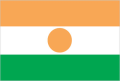
Translated from the Government of Niger The national emblem is the tricolour flag composed of three (3) horizontal, rectangular and equal bands whose colours are arranged from top to bottom in the following order: orange, white and green. The middle white band bears at its centre a disc of orange colour.
Unofficial translation by WorldometerTranslated from the Government of Niger The orange band represents the desert, located in the north of the country, the green band the fertile plain of the Niger basin, in the south of the country, and the orange circle the sun.
Unofficial translation by WorldometerTranslated from the Government of Niger The flag of Niger was adopted on 23 November 1959.
Unofficial translation by Worldometer- National anthem
- L’Honneur de la Patrie1:48
- Title (in French)
- L’Honneur de la Patrie
- Title (in English, translated)
- The Honour of the Fatherland
- Lyrics
Des rives du Niger aux confins du Ténéré Frères et sœurs nous sommes Enfants d’une même Patrie le Niger Nourris de la sève des mémes idéaux Pour un Niger de paix libre fort et uni Pour un Niger prospère le Pays de nos rˆves Pour l’honneur de la Patrie Incarnons la vaillance et la persévérance Et toutes les vertus de nos dignes aïeux Guerriers intrépides déterminés et fiers Défendons la patrie au prix de notre sang Faisons du Niger symbole de dignité Emblème et flambeau de l’Afrique qui avance Pour ces nobles idéaux debout et en avant En avant pour le travail en avant pour le combat Nous demeurons debout Portant haut le drapeau de notre cher Pays Dans le ciel d’Afrique et dans tout l’Univers Pour construire ensemble Un monde de justice de paix et de progrès Et pour faire du Niger la fierté de l’Afrique.
Source: - Citizens
- Nigeriens
- Official name:Constitution of the Seventh Republic ↗ - Official portal of the government of Niger
- Official name, Citizens:The World Factbook: Niger - CIA
- Coat of arms:Image credit
- National flag:gouv.ne ↗ - the Government of Niger
- National flag:gouv.ne ↗ - the Government of Niger
- National anthem:nationalanthems.info ↗
Geography
- Location
- Western Africa, southeast of Algeria
- Total area
- 1,267,000 km²
- Land area
- 1,266,700 km²
- Water area
- 300 km²
- Land borders
- 5,834 km(7 countries)
- Coastline
- 0 km(Landlocked)
- Terrain
Predominately desert plains and sand dunes; flat to rolling plains in south; hills in north - Mean elevation
- 474 m
- Highest point
- 2,022 mIdoukal-n-Taghes
- Lowest point
- 200 mNiger River
- Climate
Desert mostly hot, dry, dusty; tropical in extreme south - Avg. temperature
- 27.5 °C
- Avg. daily range
- 20.4 to 34.5 °C
- Annual precipitation
- 87 mm
Temperature °CMeanDaily rangePrecipitation mmMonthly climate normals Month Avg. high, °C Mean, °C Avg. low, °C Precipitation, mm January 25.7 18.3 11.1 0 February 29.2 21.5 13.8 0 March 33.8 26.2 18.2 0 April 38.3 30.8 22.7 1 May 40.1 33.1 25.6 3 June 40 33.5 26.7 6 July 38.2 32.2 26.1 20 August 36.8 31.2 25.6 42 September 37.7 31.2 24.7 12 October 36 28.9 21.7 2 November 31.4 23.7 16.1 0 December 26.9 19.3 12.1 0 Country-wide averages over 1991–2020.
Sources:- The World Factbook: Niger - CIA
- Climate Change Knowledge Portal (ERA5 reanalysis) ↗ - World Bank
- Weather
- Loading
- Land use2023
- Arable14.0%Pasture22.7%Forest0.8%Other62.4%
- Arable land
- 17,700,000 hectares (14.0%)
- Permanent crops
- 116,500 hectares (0.1%)
- Permanent meadows & pastures
- 28,782,000 hectares (22.7%)
- Forest
- 1,064,940 hectares (0.8%)
- Other land
- 79,006,560 hectares (62.4%)
Source: - Major lakes
- Lake Chad10,360 km²
- Natural hazards2026
- Epidemics7.1Very high#19/191River floods6.6Very high#52/191Drought6.3High#21/191Earthquakes0.1Very low#127/191Tsunamis0.0Very lowTropical cyclones0.0Very lowCoastal floods0.0Very low
Scores out of 10, ranks out of 191 countries.
Source:- INFORM Risk Index ↗ - European Commission Joint Research Centre
- Location, Land borders, Coastline, Terrain, Mean elevation, Highest point, Lowest point, Climate, Major rivers, Major lakes:The World Factbook: Niger - CIA
- Climate:Climate Change Knowledge Portal (ERA5 reanalysis) ↗ - World Bank
- Land use:FAOSTAT Land Use domain ↗ - FAO
- Natural hazards:INFORM Risk Index ↗ - European Commission Joint Research Centre
Demographics
- Population change2026
- +3.21% per year+897,047 people/yearWorld Rank5thof 237
- Birth rate
- 40.2 per 1,000 population
- Death rate
- 8.4 per 1,000 population
- Net migration rate
- −0.4 per 1,000 population
- 2026
- 15.7 yearsWorld Rank235thof 237
- Age structure2026
- 0-14 years45.8%15-64 years51.5%65 years +2.6%
- Share aged 65 and over
- 2.6%
- Share aged under 18
- 52.9%
- Total dependency ratio
- 94
- Youth dependency ratio
- 89
- Elderly dependency ratio
- 5
- Sex ratio
- 1.03 male / female
MaleAgeFemalePopulation by age group, % of total population Age Male Female 80+ 0.1% 0.2% 70-79 0.6% 0.6% 60-69 1.4% 1.4% 50-59 2.3% 2.2% 40-49 3.5% 3.4% 30-39 5.3% 5.1% 20-29 8.5% 8.2% 10-19 12.6% 12.2% 0-9 16.5% 16.0% - 2026
- 3.24 above the replacement level for Niger ()5.64 births per womanreplacement 2.40123456World Rank5thof 237
- 2.36 daughters per woman1.36 above replacement, long-run each generation larger than the lastreplacement 1.000.511.522.5
- 2026
- +31.7 per 1,000 populationfor every 1,000 people, 31.7 more births than deaths a year
- 2026
- −0.4 per 1,000 population
- Urbanization2026
- 18.7% live in 5,395,120 urban residents
- Largest cities2012latest available
- Niamey, Maradi, Zinder, TahouaRankCity or Urban CenterPopulation (2012 census)1Niamey978,0292Maradi267,2493Zinder235,6054Tahoua117,8265Agadez110,4976Arlit78,6517Birni N'Konni63,1698Dosso58,6719Gaya45,46510Tessaoua43,409Source:
- National Institute of Statistics, Niger (2012 census), via City Population by Thomas Brinkhoff ↗
- Population distribution
- Majority of the populace is located in the southernmost extreme of the country along the border with Nigeria and Benin.
- Ethnic groups2006
- Hausa53.1%Zarma/Songhai21.2%Tuareg11.0%Fulani (Peuhl)6.5%Kanuri5.9%Gurma0.8%Arab0.4%Tubu0.4%Other/unavailable0.9%
- Religions2020
- Muslim95.5%Ethnic religionist4.1%Christian0.3%Agnostics and other0.1%
- Languages
- French (Français)
- Population, Population change, Median age, Age structure, Total fertility rate, Net reproduction rate, Natural change, Net migration rate:UN World Population Prospects ↗
- Urbanization:UN World Urbanization Prospects ↗
- Largest cities:National Institute of Statistics, Niger (2012 census), via City Population by Thomas Brinkhoff ↗
- Population distribution, Ethnic groups, Religions:The World Factbook: Niger - CIA
Government & Administration
- Form of state
- RepublicThe Charte de la Refondation, which has constitutional value, makes the President of the National Council for the Safeguard of the Homeland (CNSP) President of the Republic and Head of State (Arts. 61, 78).
- System of government
- Military ruleThe President heads the State and the Government, appoints the Prime Minister and ministers, who answer to him, and legislates by ordinance; there is no elected legislature. Governed under the Charte de la Refondation of 26 March 2025; the 2010 Constitution is suspended (Arts. 60–62).
- Territorial organisation
- Unitary
- Transitional arrangement
- Yes
- Official websites
- Government (in French)
- President (in French)
- Capital
- Niamey1.3 million people(2023)
- National holidays
- 15 days in 2026
- ThuJan 1New Year's Day
- MonMar 16Laylat al-Qadr (estimated)
- FriMar 20Eid al-Fitr (estimated)
- MonApr 6Easter Monday
- FriApr 24National Concord Day
- FriMay 1International Labor Day
- WedMay 27Eid al-Adha (estimated)
- ThuMay 28Day after Eid al-Adha (estimated)
- TueJun 16Islamic New Year (estimated)
- SunJul 26Anniversary of the CNSP Coup
- MonJul 27Anniversary of the CNSP Coup (observed)
- MonAug 3Anniversary of the Proclamation of Independence
- TueAug 25Prophet's Birthday (estimated)
- FriDec 18National Day
- FriDec 25Christmas Day
Nationwide public holidays only, excluding regional, bank and government-only days.
- Time
- WATWest Africa TimeUTC+1
- Currency
- West African CFA Franc (XOF)
- Calling code
- +227
- Internet TLD
- .ne
- ISO 3166-1 codes
- NE, NER
- Infrastructure
- Passengers carried
- 5,775 by the country's airlines(2023)
- Aircraft departures
- 165 by the country's airlines(2023)
- Air freight
- 0.3 million tonne-km(2023)
- Aircraft registration prefix
- 5U
Sources:- The World Factbook: Niger - CIA
- World Development Indicators ↗ - World Bank
- 2025
- 31 / 100World Rank124thof 182Confidence interval
Corruption index score by year Year Score Lower bound Upper bound 2012 33 28 38 2013 34 28 40 2014 35 28 42 2015 34 27 41 2016 35 29 40 2017 33 28 38 2018 34 29 39 2019 32 29.2 34.8 2020 32 30 34 2021 31 28.8 33.2 2022 32 29.5 34.5 2023 32 29.5 34.5 2024 34 30.7 37.3 2025 31 27.8 34.2 Source:- Corruption Perceptions Index 2025 ↗ - Transparency International, CC BY 4.0
- Form of state, System of government, Territorial organisation, Transitional arrangement:Charte de la Refondation, promulguée par le Décret n° 2025-160/P/CNSP du 26 mars 2025, Journal Officiel de la République du Niger, 92e année, Édition spéciale n° 06 du 31 mars 2025 ↗ - Presidency of the Republic of Niger
- National holidays:Open World Holidays Framework (vacanza/holidays) ↗
- Infrastructure:The World Factbook: Niger - CIA
- Infrastructure:World Development Indicators ↗ - World Bank
- Corruption Perceptions Index:Corruption Perceptions Index 2025 ↗ - Transparency International, CC BY 4.0
Economy
- Low income
- GDP growth (real)2026
- +7% per yearWorld Rank14thof 195
- GDP per capita (PPP)2026
- GDP per capita (nominal)
- $774 (187th in the world)
Source:- 2024
- Services32.2% of GDPIndustry17.3% of GDPAgriculture48% of GDPManufacturing7%part of industry
- Households
- +68.2%
- Government
- +12.2%
- Investment
- +22%
- Exports
- +15.8%
- Imports
- −18.1%
The shape of the economyGDP by end useSource:- World Development Indicators ↗ - World Bank
- Inflation2026
- −1.9%up 2.8 percentage points2.8pp from 2025
- Labor force2024
- 11.5 million (42% of population)World Rank50thof 187
- Labor force participation2024
- 79.6% of people aged 15+
- Unemployment2024
- 0.4%
- Youth unemployment2024
- 0.4% ages 15 to 24
- Labor productivity2024
- $2.1 per hour worked at PPP
- Budget balance2026
- 3.4% of GDP deficit
- Current account
- 3% of GDP, $706 million deficit
Source: - Debt2024
- Central government debt47.2% of GDPInterest on debt1.8% of GDP
- Trade2024
- Goods$1.5 billion86%
- Services$247.6 million14%
- Total exports
- $1.8 billion
- Change from 2023
- up 44.2 percent on the previous year44.2%
Sources:- World Development Indicators ↗ - World Bank
- The World Factbook: Niger - CIA
- 2024
- −0.75World Rank107thof 145
- Projected GDP growth
- +2.7% a year over the next 10 years
Source:- Atlas of Economic Complexity ↗ - Harvard Growth Lab
- Agricultural products2024
- Cow peas (dry), Millet, Sorghum, and 7 more
- 1Cow peas (dry)149.1×
- 2Millet67.7×
- 3Sorghum16.2×
- 4Lettuce and chicory12.9×
- 5Raw milk of goats12×
- 6Onions and shallots (dry)11.9×
- 7Squash and gourds (including pumpkins)8.1×
- 8Groundnuts (in shell)6.4×
- 9Cabbages4.5×
- 10Chillies and peppers (green)3.7×
ProductSource:- FAOSTAT ↗ - Food and Agriculture Organization
- Industries
- uranium mining, petroleum, cement, brick, soap, textiles, food processing, chemicals, slaughterhouses
- Income level, GDP by sector, Trade:World Development Indicators ↗ - World Bank
- GDP (nominal), GDP growth (real), GDP per capita (PPP), Inflation, Budget balance:IMF World Economic Outlook ↗
- Labor force, Labor force participation, Unemployment, Youth unemployment, Labor productivity:ILOSTAT ↗ - International Labour Organization
- Debt:IMF Global Debt Database ↗
- Debt:IMF Public Finances in Modern History ↗
- Trade, Industries:The World Factbook: Niger - CIA
- Economic Complexity Index:Atlas of Economic Complexity ↗ - Harvard Growth Lab
- Agricultural products:FAOSTAT ↗ - Food and Agriculture Organization
Cost of Living
- Average gross salary2022
- F CFA 75,079 per month$120 (USD), $369 (PPP)
- Median
- F CFA 50,000 per month($80)
- Men
- F CFA 76,693 per month($123)
- Women
- F CFA 68,606 per month($110)
Source:- ILOSTAT ↗ - International Labour Organization
- 2024
- F CFA 42,000 per month, gross$69 (USD), $196 (PPP)
- Average gross salary, Minimum wage:ILOSTAT ↗ - International Labour Organization
Society
- 2023
- 0.419LowWorld Rank188thof 193NigerWorld
Human Development Index by year Year Niger World 1990 0.215 0.608 1991 0.219 0.611 1992 0.222 0.614 1993 0.228 0.617 1994 0.233 0.620 1995 0.238 0.625 1996 0.245 0.631 1997 0.250 0.636 1998 0.258 0.641 1999 0.263 0.646 2000 0.266 0.651 2001 0.272 0.657 2002 0.278 0.662 2003 0.284 0.669 2004 0.292 0.675 2005 0.302 0.681 2006 0.309 0.688 2007 0.313 0.694 2008 0.323 0.698 2009 0.329 0.701 2010 0.339 0.707 2011 0.346 0.713 2012 0.356 0.717 2013 0.362 0.721 2014 0.369 0.726 2015 0.374 0.731 2016 0.380 0.735 2017 0.384 0.739 2018 0.391 0.741 2019 0.400 0.745 2020 0.404 0.742 2021 0.413 0.742 2022 0.414 0.752 2023 0.419 0.756 Source:- Human Development Report ↗ - United Nations Development Programme
- 2021
- 32.9
- Mean years of schooling2023
- 1.4 years
- Expected for a child today
- 8.3 years
Source:- Human Development Report ↗ - United Nations Development Programme
- Literacy2022
- 35.6% of adults
- Education expenditure2023
- 4.1% of GDP
- Share of government spending
- 12.8%
Source:- World Development Indicators ↗ - World Bank
- Internet users2024
- 15.6% of the population
- Households with Internet access
- 53.9%
Source:- ITU DataHub ↗ - International Telecommunication Union
- Mobile subscriptions2024
- 16.4 million
- Fixed telephone lines
- 117,563
- Fixed broadband
- 0.1 subscriptions per 100 people
Counts subscriptions, not people.
Source:- ITU DataHub ↗ - International Telecommunication Union
- Credit-card ownership2024
- 0% of adults
- Debit-card ownership
- 2%
- Account at a bank or mobile-money provider
- 15%
- Mobile-money account
- 6%
- Made or received a digital payment
- 12%
Source:- Global Findex Database ↗ - World Bank
- Refugees hosted2025
- 391,862 people
- Asylum seekers
- 41,695
- Internally displaced persons
- 417,000392,000 due to conflicts, 25,000 due to disasters
- Refugees from Niger abroad
- 30,953
Sources:- Refugee Data Finder ↗ - UN Refugee Agency
- Global Internal Displacement Database ↗ - Internal Displacement Monitoring Centre
- Inbound tourists2020latest available
- 85,000 arrivalsdown 56% against 201956% below 2019
- Per resident
- 0.4 arrivals per 100 residents
- $101.6 million(2023)
- $118.6 million(2023)
- Hotel beds
- 4,596
Overnight arrivals by year2010 to 2020A tourist stays at least one night. Arrivals count trips, not people.
Source:- UN Tourism Data Dashboard ↗ - UN Tourism
- UNESCO World Heritage Sites
- 3 sites1 cultural2 natural
Site Type Air and Ténéré Natural Reserves Natural W-Arly-Pendjari Complex Natural Historic Agadez Cultural Source:- The World Factbook: Niger - CIA
- Human Development Index, Mean years of schooling:Human Development Report ↗ - United Nations Development Programme
- Income inequality (Gini), Education expenditure:World Development Indicators ↗ - World Bank
- Literacy:UIS Data Browser ↗ - UNESCO Institute for Statistics
- Internet users, Mobile subscriptions:ITU DataHub ↗ - International Telecommunication Union
- Credit-card ownership:Global Findex Database ↗ - World Bank
- Refugees hosted:Refugee Data Finder ↗ - UN Refugee Agency
- Refugees hosted:Global Internal Displacement Database ↗ - Internal Displacement Monitoring Centre
- Inbound tourists:UN Tourism Data Dashboard ↗ - UN Tourism
- UNESCO World Heritage Sites:The World Factbook: Niger - CIA
Crime & Safety
- Travel advisory (US)
- Loading
- Active humanitarian crisisAug 2026
- High7.8 out of 10Conflict and violence, Drought and drier conditions, FloodsSeverity by monthSep 2024 to Aug 2026What the score is made ofImpact of the crisis7.4Conditions of people affected7.6Complexity of the crisis8.4
Data reliability as rated by INFORM: High. Last updated Aug 26, 2026.
Source:- INFORM Severity Index ↗ - European Commission Joint Research Centre
- Homicide rate2012
- 4.4 per 100,000 peopleMedium by global standards
- Crime rates
- 1 offence category
Offence Per 100,000 Count Year Homicide (victims) 4.4 788 2012 A low figure can also mean weak recording.
Source:- UNODC Data Portal ↗ - UN Office on Drugs and Crime
- Prison population2023
- 49.7 per 100,000 people
- Persons held
- 13,005
Source:- UNODC Data Portal ↗ - UN Office on Drugs and Crime
- Active humanitarian crisis:INFORM Severity Index ↗ - European Commission Joint Research Centre
- Homicide rate, Crime rates, Prison population:UNODC Data Portal ↗ - UN Office on Drugs and Crime
Health
- Life expectancy2026
- 61.9 years
- Health expenditure2023
- 4% of GDP$26 per person
- Physicians2023
- 0.04 per 1,000 population
- Hospital beds2020
- 0.3 per 1,000 population
- Infant mortality2026
- 61.0 per 1,000 live births
- Maternal mortality2023
- 350 per 100,000 live births
- Alcohol consumption2022
- 0.2 litres of pure alcohol per adult per year
- Tobacco use2020
- 7.7% of adults
- Men
- 14.1%
- Women
- 1.3%
Source:- Global Health Observatory ↗ - World Health Organization
- Road traffic deaths2019
- 25.5 per 100,000 population
- Life expectancy, Infant mortality:UN World Population Prospects ↗
- Health expenditure, Physicians, Hospital beds, Road traffic deaths:World Development Indicators ↗ - World Bank
- Maternal mortality:Maternal mortality estimates ↗ - UN Maternal Mortality Estimation Inter-agency Group
- Alcohol consumption, Tobacco use:Global Health Observatory ↗ - World Health Organization
Environment
- CO₂ emissions2024
- 3.21 Mt per yearup 1.6 percent on the previous year1.6% from 2023
- CO₂ per capita
- 0.1 t per personWorld Rank202ndof 207
- Share of global CO₂
- 0.01%
- Methane (CH₄)
- 27.3 Mt CO₂-eq
- Nitrous oxide (N₂O)
- 10 Mt CO₂-eq
- Fluorinated gases
- 0.64 Mt CO₂-eq
- All greenhouse gases
- 41.1 Mt CO₂-eq
Source:- Emissions Database for Global Atmospheric Research (EDGAR) ↗ - European Commission, Joint Research Centre
- 2024
- 15.3 µg/m³ of PM2.51 years of life expectancy lost against the WHO guidelineMost polluted88thof 236
- WHO guideline
- 5 µg/m³
Source:- Air Quality Life Index ↗ - Energy Policy Institute at the University of Chicago
- Environmental issues
- overgrazing
- soil erosion
- deforestation
- desertification
- contaminated water
- inadequate potable water
- wildlife populations (such as elephant, hippopotamus, giraffe, and lion) threatened by poaching and habitat destruction
Source:- The World Factbook: Niger - CIA
- International agreements
- 18 of 20 landmark treaties in forceParty to 67 multilateral environmental agreements
Treaty Standing Joined Climate Paris Agreement in force 2016 UN Framework Convention on Climate Change in force 1995 Kyoto Protocol in force 2005 Ozone layer Montreal Protocol in force 1993 Vienna Convention (Ozone Layer) in force 1993 Biodiversity Convention on Biological Diversity in force 1995 CITES in force 1975 Convention on Migratory Species (Bonn) in force 1983 Cartagena Protocol on Biosafety in force 2004 Nagoya Protocol in force 2014 Land and heritage Ramsar Convention on Wetlands in force 1987 World Heritage Convention in force 1975 UN Convention to Combat Desertification in force 1996 Chemicals and waste Basel Convention in force 1998 Rotterdam Convention (PIC) in force 2006 Stockholm Convention (POPs) in force 2006 Minamata Convention on Mercury in force 2017 Oceans UN Convention on the Law of the Sea in force 2013 High Seas Treaty (BBNJ) not a party MARPOL 73/78 not a party Source:- International Environmental Agreements Database ↗ - Université Laval
- CO₂ emissions:Emissions Database for Global Atmospheric Research (EDGAR) ↗ - European Commission, Joint Research Centre
- Air pollution:Air Quality Life Index ↗ - Energy Policy Institute at the University of Chicago
- Environmental issues:The World Factbook: Niger - CIA
- International agreements:International Environmental Agreements Database ↗ - Université Laval
Food & Water
- No access to safe drinking water2022
- 41.8% of the population
- Renewable water2022
- 34 billion m³ per year
- Per person
- 1,345 m³ per year
- Dependency ratio
- 90% originates outside the country
- Annual water withdrawal
- 2.6 billion m³ per year
- Withdrawn for agriculture
- 91%
- Water stress
- 11% of available freshwater withdrawn
Source:- AQUASTAT ↗ - Food and Agriculture Organization
- Undernourishment2022
- 12.5% of the population3.2 million people
- Obesity2024
- 6.8% of adults
- Men
- 4.9%
- Women
- 8.7%
Source:- Global Health Observatory ↗ - World Health Organization
- Underweight children2022
- 34.6% of children under five
- No access to safe drinking water, Renewable water:AQUASTAT ↗ - Food and Agriculture Organization
- Undernourishment:Food security indicators (FAOSTAT) ↗ - Food and Agriculture Organization
- Obesity:Global Health Observatory ↗ - World Health Organization
- Underweight children:World Development Indicators ↗ - World Bank
Energy
- Energy consumption2024
- Per capita
- 1.84 GJ per person
- Share of world total
- 0.01%
- Supply
- Surplusproduces 1.5× what it consumes, 2024
Source:- International Energy Statistics ↗ - U.S. Energy Information Administration
- Electricity2024
- Imports only, 1.2 TWh imported, nothing exported in 20240.9 TWh generated per year
- Generation
- 0.9 TWh per year
- Consumption
- 1.7 TWh per year
- Imports
- 1.2 TWh per year
Source:- International Energy Statistics ↗ - U.S. Energy Information Administration
- Oil, gas & coal
- Surplusproduces 1.5× what it consumes, 2024Oil reserves2025150 million barrelsWorld Rank63rdof 99
Oil imports and exports count crude oil only.
- Energy consumption, Electricity, Oil, gas & coal:International Energy Statistics ↗ - U.S. Energy Information Administration
- Oil, gas & coal:Worldwide Oil and Gas Survey ↗ - Oil & Gas Journal
Defense
- Military expenditure2024
- 2.2% of GDP$435.9 million, 13.8% of government spending
- Military personnel2025
- estimated 50,000active Armed Forces, including Gendarmerie; estimated 15,000–20,000 National Guard
In 2020, the Nigerien Government announced it intended to increase the size of the FAN to 50,000 by 2025 and 100,000 by 2030.
Source:- The World Factbook: Niger - CIA
- Military service2025
- Selective conscriptionunmarried men and women 18+, 24-month service term, selective compulsory or voluntary
- Nuclear weapons2026
- None - no nuclear arsenal
- Military expenditure:SIPRI Military Expenditure Database ↗ - Stockholm International Peace Research Institute
- Military expenditure:World Development Indicators ↗ - World Bank
- Military personnel, Military service:The World Factbook: Niger - CIA
- Nuclear weapons:Status of World Nuclear Forces ↗ - Federation of American Scientists

