

National Identity
- Official name
- Islamic Republic of Iran
- Official name (in Persian)
- جمهوری اسلامی ایران
- Official name (in Persian, Romanized)
- Jomhūrī-ye Eslāmī-ye Īrān
- Name etymology
the name derives from the Sanskrit word arya, referring to people living in a mountainous land, from the root word ar-, or "mountain;" the former name, Persia, was originally "Pars" (or the Arabic-influenced variant "Fars") from the Old Persian parsi, meaning "pure"
Sources:- The Constitution of the Islamic Republic of Iran ↗ - The Constitutional Council
- The World Factbook: Iran - CIA
- National emblem
- National flag
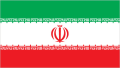
Translated from the Guardian Council of the Islamic Republic of Iran Article 18
The official flag of Iran is of the colours green, white and red, with the special emblem of the Islamic Republic and the motto "Allahu Akbar".
Unofficial translation by WorldometerTranslated from the Islamic Revolution Document Center of Iran - The special emblem of the Islamic Republic of Iran, in red, is placed in the centre of the flag.
- The motto Allahu Akbar is repeated in white and in Banna'i Kufic script (that is, the same script in which the motto Allahu Akbar is inscribed on the minarets of Islamic mosques).
- The motto Allahu Akbar, as a sign of the twenty-second of Bahman, the day of the victory of the Revolution, is repeated twenty-two times as a border along the boundary of the green and white and of the red and white colours (eleven times in the green colour and eleven times in the red colour)
Unofficial translation by WorldometerTranslated from the Islamic Revolution Document Center of Iran The green colour of our country's flag is a sign of "belief in Islam", the white colour a sign of "Iranians' love of peace and tranquillity", and the red colour indicates that Iranians defend "independence, freedom and the Islamic Republic" by sacrificing their blood. The motto "Allahu Akbar" conveys Iranians' belief in God, and that they regard God as higher and superior to any power. The special emblem of the Islamic Republic, in appearance similar to a tulip, which is itself a symbol of the martyrs shrouded in blood, on the other hand expresses the word "Allah", which is the foundation of the Revolution and the ultimate goal of the Iranian nation. This emblem is made up of five parts, which express the five principles of belief in Islam, namely monotheism, prophethood, the resurrection, justice and the imamate, and its symmetry represents balance, equilibrium and justice in the system of the Islamic Republic of Iran.
Unofficial translation by WorldometerTranslated from the Islamic Revolution Document Center of Iran After the victory of the Islamic Revolution in Bahman 1357, first the Lion and Sun emblem was removed from the official flag of Iran, but the colours and composition of the flag remained unchanged, and a slight change occurred in the meanings of the colours. Passionate debates were also under way regarding the composition of Iran's new flag, including several sessions of debate and discussion among the members of the Assembly for the Final Review of the Constitution, each of whom expressed their own interpretations concerning the colours of Iran's flag and, in particular, the presence or absence and the origin of the Lion and Sun emblem, until finally, with the approval of that Assembly, Article 18 of the Constitution of the Islamic Republic of Iran was devoted to the official flag of Iran and its design, colours and size.
Unofficial translation by WorldometerTranslated from the Islamic Revolution Document Center of Iran Subsequently, the authorities of our country at the time organised a public competition, announcing the specifications of the flag they had in mind. Many and varied designs were sent to the secretariat, but upon the announcement of the competition results, two designs attracted the most attention from the authorities of the time. The first design belonged to "Sadegh Tabrizi", a painter and calligrapher, and the second design belonged to "Hamid Nadimi", one of the professors of Shahid Beheshti University in Tehran. Initially, Sadegh Tabrizi's design for the flag of Iran was approved by the authorities of the time and was used for more than a year in government departments and offices. This flag design, with 22 stars and 8 clenched fists, was adopted by the Revolutionary Council on 10 Bahman 1358 and, with "Allahu Akbar" added in its centre, was depicted on the flag of Iran. The initial design of the flag of the Islamic Republic of Iran was used for more than a year, until 15 Tir 1359, in state and government departments, on national occasions and on the national banknotes.
Unofficial translation by WorldometerTranslated from the Islamic Revolution Document Center of Iran However, the final and current design of our country's flag, after its redesign by Dr Nadimi, was once again placed on the agenda of the Islamic Revolutionary Council. Finally, on 15 Tir 1359, the Revolutionary Council, in communicating the general characteristics of the flag of Iran, announced that the geometric and technical specifications of the flag were to be designed in compliance with the standards communicated by the Institute of Standards and Industrial Research of Iran.
Unofficial translation by WorldometerSources:- shora-gc.ir ↗ - the Guardian Council of the Islamic Republic of Iran
- irdc.ir ↗ - the Islamic Revolution Document Center of Iran
- National anthem
- Soroud-e Melli-e Jomhouri-e Eslami-e Iran (سرود ملی جمهوری اسلامی ایران)0:56
- Title (in Persian)
- سرود ملی جمهوری اسلامی ایران
- Title (in Persian, Romanized)
- Soroud-e Melli-e Jomhouri-e Eslami-e Iran
- Title (in English, translated)
- National Anthem of the Islamic Republic of Iran
- Lyrics
سَر زَد از اُفُق مِهرِ خاوران فروغِ دیدهٔ حق باوران بهمن، فَرِّ ایمانِ ماست پیامت ای امام «استقلال، آزادی» نقشِ جانِ ماست شهیدان، پیچیده در گوش زمانْ فریادتان پاینده مانی و جاودان جمهوری اسلامی ایران
Source: - Citizens
- Iranians
- Official name:The Constitution of the Islamic Republic of Iran ↗ - The Constitutional Council
- Official name, Citizens:The World Factbook: Iran - CIA
- National flag:shora-gc.ir ↗ - the Guardian Council of the Islamic Republic of Iran
- National flag:irdc.ir ↗ - the Islamic Revolution Document Center of Iran
- National anthem:nationalanthems.info ↗
Geography
- Location
- Total area
- 1,648,195 km²
- Land area
- 1,531,595 km²
- Water area
- 116,600 km²
- Land borders
- 5,894 km(7 countries)
- Iraq
- 1,599 km
- Turkmenistan
- 1,148 km
- Pakistan
- 959 km
- Afghanistan
- 921 km
- Azerbaijan
- 689 km
- Turkey (Türkiye)
- 534 km
- Armenia
- 44 km
Source:- The World Factbook: Iran - CIA
- Coastline
- 2,440 km(
plus 740 km of shoreline on the Caspian Sea ) - Terrain
Rugged, mountainous rim; high, central basin with deserts, mountains; small, discontinuous plains along both coasts - Mean elevation
- 1,305 m
- Highest point
- 5,625 mKuh-e Damavand
- Lowest point
- −28 mCaspian Sea
- Climate
Mostly arid or semiarid subtropical along Caspian coast - Avg. temperature
- 18.4 °C
- Avg. daily range
- 12.1 to 24.4 °C
- Annual precipitation
- 289 mm
Temperature °CMeanDaily rangePrecipitation mmMonthly climate normals Month Avg. high, °C Mean, °C Avg. low, °C Precipitation, mm January 10.7 5.4 0.3 44 February 13.2 7.8 2.3 41 March 18.1 12.6 6.6 48 April 24.1 18.4 12 33 May 29.9 23.9 17.1 18 June 34.7 28.4 21.3 7 July 36.4 30.2 23.4 5 August 35.5 29 22 5 September 32.1 25.2 18 7 October 26.2 19.5 12.7 14 November 18.3 12.3 6.5 28 December 13.1 7.4 2.1 36 Country-wide averages over 1991–2020.
Sources:- The World Factbook: Iran - CIA
- Climate Change Knowledge Portal (ERA5 reanalysis) ↗ - World Bank
- Weather
- Loading
- Land use2023
- Arable9.7%Perm. crops1.2%Pasture18.2%Forest6.6%Other64.4%
- Arable land
- 15,699,000 hectares (9.7%)
- Permanent crops
- 1,891,000 hectares (1.2%)
- Permanent meadows & pastures
- 29,477,000 hectares (18.2%)
- Forest
- 10,751,000 hectares (6.6%)
- Other land
- 104,432,000 hectares (64.4%)
Source: - Major lakes
- Caspian Sea374,000 km²Lake Urmia5,200 km²Lake Namak750 km²
- Natural hazards2026
- Earthquakes9.3Very high#8/191Coastal floods7.4Very high#18/191River floods7.3Very high#35/191Drought6.4High#19/191Epidemics6.1High#53/191Tsunamis5.5High#50/191Tropical cyclones1.6Very low#52/191
Scores out of 10, ranks out of 191 countries.
Source:- INFORM Risk Index ↗ - European Commission Joint Research Centre
- Location, Land borders, Coastline, Terrain, Mean elevation, Highest point, Lowest point, Climate, Major rivers, Major lakes:The World Factbook: Iran - CIA
- Climate:Climate Change Knowledge Portal (ERA5 reanalysis) ↗ - World Bank
- Land use:FAOSTAT Land Use domain ↗ - FAO
- Natural hazards:INFORM Risk Index ↗ - European Commission Joint Research Centre
Demographics
- Population change2026
- +0.81% per year+750,816 people/yearWorld Rank114thof 237
- Birth rate
- 11.8 per 1,000 population
- Death rate
- 4.9 per 1,000 population
- Net migration rate
- +0.7 per 1,000 population
- 2026
- 34.5 yearsWorld Rank111thof 237
- Age structure2026
- 0-14 years21.6%15-64 years69.5%65 years +8.9%
- Share aged 65 and over
- 8.9%
- Share aged under 18
- 25.9%
- Total dependency ratio
- 44
- Youth dependency ratio
- 31
- Elderly dependency ratio
- 13
- Sex ratio
- 1.03 male / female
MaleAgeFemalePopulation by age group, % of total population Age Male Female 80+ 0.6% 0.7% 70-79 2.1% 2.2% 60-69 3.7% 3.8% 50-59 5.7% 5.5% 40-49 8.8% 8.5% 30-39 8.7% 8.4% 20-29 6.5% 6.3% 10-19 7.8% 7.3% 0-9 7.0% 6.6% - 2026
- 0.44 below the replacement level for Iran ()1.66 births per womanreplacement 2.10123World Rank142ndof 237
- 0.79 daughters per woman0.21 below replacement, long-run each generation smaller than the lastreplacement 1.000.511.5
- 2026
- +6.9 per 1,000 populationfor every 1,000 people, 6.9 more births than deaths a year
- 2026
- +0.7 per 1,000 population
- Urbanization2026
- 77.7% live in cities72,422,939 urban residents
- Largest cities2016latest available
- Tehran, Mashhad, Isfahan, KarajRankCity or TownPopulation (2016 census)1Tehran8,693,7062Mashhad3,001,1843Isfahan1,961,2604Karaj1,592,4925Shiraz1,565,5726Tabriz1,558,6937Qom1,201,1588Ahvaz1,184,7889Kermanshah946,65110Urmia736,224Source:
- Statistical Centre of Iran (2016 census), via City Population by Thomas Brinkhoff ↗
- Population distribution
- Population is concentrated in the north, northwest, and west, reflecting the position of the Zagros and Elburz Mountains; the vast, dry areas in the center and eastern parts of the country, around the deserts of the Dasht-e Kavir and Dasht-e Lut, have a much lower population density.
- Ethnic groups
- Persian, Azeri, Kurd, Lur, Baloch, Arab, Turkmen, Turkic tribes
- Religions2020
- Muslim98.5%Christian0.7%Baha'i0.3%Agnostic0.3%Other0.2%
Other includes Zoroastrian, Jewish, Hindu.Islam is the official religion.
Source:- The World Factbook: Iran - CIA
- Languages
- Persian (فارسی)
- Population, Population change, Median age, Age structure, Total fertility rate, Net reproduction rate, Natural change, Net migration rate:UN World Population Prospects ↗
- Urbanization:UN World Urbanization Prospects ↗
- Largest cities:Statistical Centre of Iran (2016 census), via City Population by Thomas Brinkhoff ↗
- Population distribution, Ethnic groups, Religions:The World Factbook: Iran - CIA
Government & Administration
- Form of state
- Islamic RepublicThe Constitution names the state an Islamic Republic (Art. 1).Sources:
- About Iran - Government ↗, Art. 1
- The Constitution of the Islamic Republic of Iran ↗, Art. 1
- Constitution of the Islamic Republic of Iran, unofficial English translation (Constitute Project), Art. 1
- System of government
- Clerical supervisionAbsolute sovereignty belongs to God, who made people masters of their social destiny, and the three powers act under the Leader's supervision (Arts. 56, 57). The directly elected President heads the executive; Assembly no-confidence in him goes to the Leader (Arts. 89, 110, 114).Sources:
- About Iran - Government ↗, Arts. 89, 110, 114
- The Constitution of the Islamic Republic of Iran ↗, Arts. 89, 110, 114
- Constitution of the Islamic Republic of Iran, unofficial English translation (Constitute Project), Arts. 89, 110, 114
- Territorial organisation
- Unitary
- Capital
- Tehran8.7 million people(2016)
- National holidays
- 32 days in 2026
- SatJan 3Birthday of Imam Ali
- SatJan 17Isra' and Mi'raj
- WedFeb 4Birthday of Mahdi
- WedFeb 11Islamic Revolution Day
- SunMar 1Public Holiday
- MonMar 2Public Holiday
- TueMar 3Public Holiday
- WedMar 4Public Holiday
- ThuMar 5Public Holiday
- FriMar 6Public Holiday
- SatMar 7Public Holiday
- WedMar 11Martyrdom of Imam Ali
- FriMar 20Iranian Oil Industry Nationalization Day
- SatMar 21Eid al-FitrNowruz
- SunMar 22Eid al-Fitr HolidayNowruz Holiday
- MonMar 23Nowruz Holiday
- TueMar 24Nowruz Holiday
- WedApr 1Islamic Republic Day
- ThuApr 2Nature's Day
- TueApr 14Martyrdom of Imam Ja'far al-Sadiq
- WedMay 27Eid al-Adha
- ThuJun 4Death of Imam KhomeiniEid al-Ghadir
- FriJun 515 Khordad Uprising
- WedJun 24Tasua
- ThuJun 25Ashura
- TueAug 4Arbaeen
- WedAug 12Death of Prophet Muhammad and Martyrdom of Hasan ibn Ali
- ThuAug 13Martyrdom of Ali al-Rida
- FriAug 21Martyrdom of Hasan al-Askari
- SunAug 30Birthday of Muhammad and Imam Ja'far al-Sadiq
- FriNov 13Martyrdom of Fatima
- WedDec 23Birthday of Imam Ali
Nationwide public holidays only, excluding regional, bank and government-only days.
- Time
- IRSTIran Standard TimeUTC+3:30
- Currency
- Iranian Rial (IRR)
- Calling code
- +98
- Internet TLD
- .ir
- ISO 3166-1 codes
- IR, IRN
- Infrastructure
- Passengers carried
- 18,067,403 by the country's airlines(2023)
- Heliports
- 90
- Aircraft departures
- 144,976 by the country's airlines(2023)
- Air freight
- 136.9 million tonne-km(2023)
- Aircraft registration prefix
- EP
Sources:- The World Factbook: Iran - CIA
- World Development Indicators ↗ - World Bank
- 2025
- 23 / 100World Rank153rdof 182Confidence interval
Corruption index score by year Year Score Lower bound Upper bound 2012 28 20 35 2013 25 19 31 2014 27 19 35 2015 27 22 32 2016 29 25 33 2017 30 24 36 2018 28 23 33 2019 26 20.1 31.9 2020 25 20.8 29.2 2021 25 21.2 28.8 2022 25 21.2 28.8 2023 24 19.7 28.3 2024 23 19.4 26.6 2025 23 19.7 26.3 Source:- Corruption Perceptions Index 2025 ↗ - Transparency International, CC BY 4.0
- Form of state, System of government, Territorial organisation:About Iran - Government ↗
- Form of state, System of government, Territorial organisation:The Constitution of the Islamic Republic of Iran ↗ - Guardian Council of the Constitution
- Form of state, System of government, Territorial organisation:Constitution of the Islamic Republic of Iran, unofficial English translation (Constitute Project)
- National holidays:Open World Holidays Framework (vacanza/holidays) ↗
- Infrastructure:The World Factbook: Iran - CIA
- Infrastructure:World Development Indicators ↗ - World Bank
- Corruption Perceptions Index:Corruption Perceptions Index 2025 ↗ - Transparency International, CC BY 4.0
Economy
- Upper middle income
- GDP growth (real)2026
- −7.6% per yearWorld Rank191stof 195
- GDP per capita (PPP)2026
- GDP per capita (nominal)
- $3,548 (145th in the world)
Source:- 2024
- Services49.8% of GDPIndustry36.1% of GDPAgriculture10.8% of GDPManufacturing20.6%part of industry
- Households
- +53.7%
- Government
- +13.3%
- Investment
- +41.8%
- Exports
- +25.8%
- Imports
- −34.5%
The shape of the economyGDP by end useSource:- World Development Indicators ↗ - World Bank
- Inflation2026
- 78.6%up 28 percentage points28pp from 2025
- Labor force2024
- 29.3 million (32% of population)World Rank24thof 187
- Labor force participation2024
- 41.3% of people aged 15+
- Unemployment2024
- 8.1%
- Youth unemployment2024
- 21.3% ages 15 to 24
- Labor productivity2024
- $23.5 per hour worked at PPP
- Budget balance2026
- 7.1% of GDP deficit
- Current account
- 1.2% of GDP, $3.7 billion deficit
Source: - Debt2024
- Central government debt36.8% of GDPInterest on debt1.7% of GDP
- Trade2023
- China35%

- Turkey (Türkiye)16%

- India8%

- Pakistan7%

- Armenia5%

Source:- The World Factbook: Iran - CIA
- 2024
- −0.07World Rank87thof 145
- Projected GDP growth
- +2% a year over the next 10 years
Source:- Atlas of Economic Complexity ↗ - Harvard Growth Lab
- Agricultural products2024
- Dates, Oranges, Barley, and 7 more
- 1Dates16.3×
- 2Oranges4.5×
- 3Barley3.9×
- 4Apples3.3×
- 5Wheat2.9×
- 6Grapes2.8×
- 7Onions and shallots (dry)2.7×
- 8Meat of chickens (fresh or chilled)2.4×
- 9Sugar beet2.4×
- 10Tomatoes2.4×
ProductSource:- FAOSTAT ↗ - Food and Agriculture Organization
- Industries
- petroleum, petrochemicals, gas, fertilizer, caustic soda, textiles, cement and other construction materials, food processing (particularly sugar refining and vegetable oil production), ferrous and nonferrous metal fabrication, armaments
- Income level, GDP by sector:World Development Indicators ↗ - World Bank
- GDP (nominal), GDP growth (real), GDP per capita (PPP), Inflation, Budget balance:IMF World Economic Outlook ↗
- Labor force, Labor force participation, Unemployment, Youth unemployment, Labor productivity:ILOSTAT ↗ - International Labour Organization
- Debt:IMF Global Debt Database ↗
- Debt:IMF Public Finances in Modern History ↗
- Trade, Industries:The World Factbook: Iran - CIA
- Economic Complexity Index:Atlas of Economic Complexity ↗ - Harvard Growth Lab
- Agricultural products:FAOSTAT ↗ - Food and Agriculture Organization
Cost of Living
- Cost of living index
- Loading
- Monthly costs (excluding rent)
- Loading
- Rent
- Loading
- Buying an apartment
- Loading
- 2023
- IRR 53,073,300 per month, gross$1,264 (USD), $599 (PPP)
- Minimum wage:ILOSTAT ↗ - International Labour Organization
Society
- 2023
- 0.799HighWorld Rank75thof 193IranWorld
Human Development Index by year Year Iran World 1990 0.626 0.608 1991 0.645 0.611 1992 0.652 0.614 1993 0.658 0.617 1994 0.664 0.620 1995 0.672 0.625 1996 0.681 0.631 1997 0.687 0.636 1998 0.695 0.641 1999 0.703 0.646 2000 0.710 0.651 2001 0.719 0.657 2002 0.727 0.662 2003 0.732 0.669 2004 0.741 0.675 2005 0.746 0.681 2006 0.757 0.688 2007 0.761 0.694 2008 0.765 0.698 2009 0.771 0.701 2010 0.778 0.707 2011 0.787 0.713 2012 0.795 0.717 2013 0.794 0.721 2014 0.795 0.726 2015 0.788 0.731 2016 0.791 0.735 2017 0.793 0.739 2018 0.790 0.741 2019 0.787 0.745 2020 0.775 0.742 2021 0.777 0.742 2022 0.793 0.752 2023 0.799 0.756 Source:- Human Development Report ↗ - United Nations Development Programme
- 2023
- 35.9
- Mean years of schooling2023
- 10.8 years
- Expected for a child today
- 14 years
Source:- Human Development Report ↗ - United Nations Development Programme
- Literacy2023
- 88.9% of adults
- Education expenditure2022
- 2.7% of GDP
- Share of government spending
- 18.8%
Source:- World Development Indicators ↗ - World Bank
- Internet users2024
- 85.3% of the population
- Households with Internet access
- 86.2%
Source:- ITU DataHub ↗ - International Telecommunication Union
- Mobile subscriptions2024
- 159.4 million
- Fixed telephone lines
- 28,225,918
- Fixed broadband
- 12.1 subscriptions per 100 people
Counts subscriptions, not people.
Source:- ITU DataHub ↗ - International Telecommunication Union
- Credit-card ownership2024
- 12% of adults
- Debit-card ownership
- 89%
- Account at a bank or mobile-money provider
- 91%
- Mobile-money account
- 13%
- Made or received a digital payment
- 86%
Source:- Global Findex Database ↗ - World Bank
- Refugees hosted2025
- 2.5 million people
- Internally displaced persons
- 420(2024)All due to disasters
- Refugees from Iran abroad
- 159,882
Sources:- Refugee Data Finder ↗ - UN Refugee Agency
- Global Internal Displacement Database ↗ - Internal Displacement Monitoring Centre
- Inbound tourists2021latest available
- 882,000 arrivals
- Per resident
- 1 arrivals per 100 residents
- Same-day visitors
- 107,000 arrivals
- Visitor spending in the country
- $5.3 billion(2018, latest available)
- Domestic trips
- 57.1 million overnight trips by residents(2011, latest available)
- Residents' trips abroad
- 2.4 million overnight trips
- Residents' spending abroad
- $9.3 billion(2018, latest available)
- Hotel beds
- 468,593(2022)
A tourist stays at least one night. Arrivals count trips, not people.
Source:- UN Tourism Data Dashboard ↗ - UN Tourism
- UNESCO World Heritage Sites
- 29 sites27 cultural2 natural
Site Type Persepolis Cultural Tchogha Zanbil Cultural Bam and its Cultural Landscape Cultural Golestan Palace Cultural Shushtar Historical Hydraulic System Cultural Pasargadae Cultural Hyrcanian Forests Natural Tabriz Historic Bazaar Complex Cultural Meidan Emam, Esfahan Cultural Bisotun Cultural Takht-e Soleyman Cultural Soltaniyeh Cultural Armenian Monastic Ensembles of Iran Cultural Sheikh Safi al-din Khānegāh and Shrine Ensemble in Ardabil Cultural The Persian Garden Cultural Gonbad-e Qābus Cultural Masjed-e Jāmé of Isfahan Cultural Shahr-i Sokhta Cultural Cultural Landscape of Maymand Cultural Susa Cultural Lut Desert Natural The Persian Qanat Cultural Historic City of Yazd Cultural Sassanid Archaeological Landscape of Fars Region Cultural Cultural Landscape of Hawraman/Uramanat Cultural Trans-Iranian Railway Cultural The Persian Caravanserai Cultural Hegmataneh Cultural Prehistoric Sites of the Khorramabad Valley Cultural Source:- The World Factbook: Iran - CIA
- Human Development Index, Mean years of schooling:Human Development Report ↗ - United Nations Development Programme
- Income inequality (Gini), Education expenditure:World Development Indicators ↗ - World Bank
- Literacy:UIS Data Browser ↗ - UNESCO Institute for Statistics
- Internet users, Mobile subscriptions:ITU DataHub ↗ - International Telecommunication Union
- Credit-card ownership:Global Findex Database ↗ - World Bank
- Refugees hosted:Refugee Data Finder ↗ - UN Refugee Agency
- Refugees hosted:Global Internal Displacement Database ↗ - Internal Displacement Monitoring Centre
- Inbound tourists:UN Tourism Data Dashboard ↗ - UN Tourism
- UNESCO World Heritage Sites:The World Factbook: Iran - CIA
Crime & Safety
- Travel advisory (US)
- Loading
- Active humanitarian crisisAug 2026
- Very high8.6 out of 10Conflict and violence, International displacement, Political and economic crisis
Crisis Since Sep 2024 Severity Country overallAll crises below combined 8.6Very high Conflict in IranConflict and violence, Political and economic crisis 8.4Very high Displacement from Afghanistan to IranInternational displacement 7.7High Data reliability as rated by INFORM: High. Last updated Aug 31, 2026.
Source:- INFORM Severity Index ↗ - European Commission Joint Research Centre
- Homicide rate2014
- 2.4 per 100,000 peopleLow by global standards
- Crime rates
- 1 offence category
Offence Per 100,000 Count Year Homicide (victims) 2.4 1,936 2014 A low figure can also mean weak recording.
Source:- UNODC Data Portal ↗ - UN Office on Drugs and Crime
- Prison population2020
- 215.4 per 100,000 people
- Persons held
- 189,000
Source:- UNODC Data Portal ↗ - UN Office on Drugs and Crime
- Active humanitarian crisis:INFORM Severity Index ↗ - European Commission Joint Research Centre
- Homicide rate, Crime rates, Prison population:UNODC Data Portal ↗ - UN Office on Drugs and Crime
Health
- Life expectancy2026
- 78.2 years
- Health expenditure2023
- 6% of GDP$267 per person
- Physicians2023
- 1.81 per 1,000 population
- Hospital beds2019
- 1.9 per 1,000 population
- Infant mortality2026
- 8.5 per 1,000 live births
- Maternal mortality2023
- 16 per 100,000 live births
- Alcohol consumption2022
- 0.1 litres of pure alcohol per adult per year
- Tobacco use2020
- 13% of adults
- Men
- 24.2%
- Women
- 1.8%
Source:- Global Health Observatory ↗ - World Health Organization
- Alcohol and Tobacco Spending2023
- 0.5% of household spendingWorld Rank97thof 105
- World median
- 3.1%
Source:- The World Factbook: Iran - CIA
- Road traffic deaths2019
- 21.5 per 100,000 population
- Life expectancy, Infant mortality:UN World Population Prospects ↗
- Health expenditure, Physicians, Hospital beds, Road traffic deaths:World Development Indicators ↗ - World Bank
- Maternal mortality:Maternal mortality estimates ↗ - UN Maternal Mortality Estimation Inter-agency Group
- Alcohol consumption, Tobacco use:Global Health Observatory ↗ - World Health Organization
- Alcohol and Tobacco Spending:The World Factbook: Iran - CIA
Environment
- CO₂ emissions2024
- 829 Mt per yearup 1.6 percent on the previous year1.6% from 2023
- CO₂ per capita
- 9.6 t per personWorld Rank24thof 207
- Share of global CO₂
- 2.1%
- Methane (CH₄)
- 175.7 Mt CO₂-eq
- Nitrous oxide (N₂O)
- 30 Mt CO₂-eq
- Fluorinated gases
- 20.1 Mt CO₂-eq
- All greenhouse gases
- 1,054.8 Mt CO₂-eq
Source:- Emissions Database for Global Atmospheric Research (EDGAR) ↗ - European Commission, Joint Research Centre
- 2024
- 28.7 µg/m³ of PM2.52.3 years of life expectancy lost against the WHO guidelineMost polluted28thof 236
- WHO guideline
- 5 µg/m³
- National standard
- 12 µg/m³
- Life expectancy gain if the national standard were met
- 1.6 years
Source:- Air Quality Life Index ↗ - Energy Policy Institute at the University of Chicago
- Environmental issues
- air pollution, especially in urban areas, from vehicle emissions, refinery operations, and industrial effluents
- deforestation
- overgrazing
- desertification
- oil pollution in the Persian Gulf
- wetland losses from drought
- soil degradation (salination)
- inadequate potable water
- water pollution from raw sewage and industrial waste
Source:- The World Factbook: Iran - CIA
- International agreements
- 16 of 20 landmark treaties in forceParty to 69 multilateral environmental agreements
Treaty Standing Joined Climate Paris Agreement signed 2016, not ratified UN Framework Convention on Climate Change in force 1996 Kyoto Protocol in force 2005 Ozone layer Montreal Protocol in force 1991 Vienna Convention (Ozone Layer) in force 1991 Biodiversity Convention on Biological Diversity in force 1996 CITES in force 1976 Convention on Migratory Species (Bonn) in force 2008 Cartagena Protocol on Biosafety in force 2004 Nagoya Protocol not a party Land and heritage Ramsar Convention on Wetlands in force 1975 World Heritage Convention in force 1975 UN Convention to Combat Desertification in force 1997 Chemicals and waste Basel Convention in force 1993 Rotterdam Convention (PIC) in force 2004 Stockholm Convention (POPs) in force 2006 Minamata Convention on Mercury in force 2017 Oceans UN Convention on the Law of the Sea signed 1982, not ratified High Seas Treaty (BBNJ) not a party MARPOL 73/78 in force 2003 Source:- International Environmental Agreements Database ↗ - Université Laval
- CO₂ emissions:Emissions Database for Global Atmospheric Research (EDGAR) ↗ - European Commission, Joint Research Centre
- Air pollution:Air Quality Life Index ↗ - Energy Policy Institute at the University of Chicago
- Environmental issues:The World Factbook: Iran - CIA
- International agreements:International Environmental Agreements Database ↗ - Université Laval
Food & Water
- No access to safe drinking water2022
- 3.8% of the population
- Renewable water2022
- 137 billion m³ per year
- Per person
- 1,531 m³ per year
- Dependency ratio
- 7% originates outside the country
- Annual water withdrawal
- 93 billion m³ per year
- Withdrawn for agriculture
- 92%
- Water stress
- 81% of available freshwater withdrawn
Source:- AQUASTAT ↗ - Food and Agriculture Organization
- Undernourishment2022
- 6.5% of the population5.7 million people
- Obesity2024
- 24.6% of adults
- Men
- 18.8%
- Women
- 30.4%
Source:- Global Health Observatory ↗ - World Health Organization
- Underweight children2017
- 4.3% of children under five
- No access to safe drinking water, Renewable water:AQUASTAT ↗ - Food and Agriculture Organization
- Undernourishment:Food security indicators (FAOSTAT) ↗ - Food and Agriculture Organization
- Obesity:Global Health Observatory ↗ - World Health Organization
- Underweight children:World Development Indicators ↗ - World Bank
Energy
- Energy consumption2024
- Per capita
- 160.9 GJ per person
- Share of world total
- 2.3%
- Supply
- Surplusproduces 1.4× what it consumes, 2024
Source:- International Energy Statistics ↗ - U.S. Energy Information Administration
- Electricity2024
- Net exporter, net 2.4 TWh in 2024, 0.69% of consumption389 TWh generated per year
- Generation
- 389 TWh per year
- Consumption
- 347 TWh per year
- Imports
- 3.2 TWh per year
- Exports
- 5.6 TWh per year
- Net
- +2.4 TWh per year
Source:- International Energy Statistics ↗ - U.S. Energy Information Administration
- Oil, gas & coal
- Surplusproduces 2.3× what it consumes, 2024Oil reserves2025208.6 billion barrelsWorld Rank3rdof 99
Oil imports and exports count crude oil only.
- Energy consumption, Electricity, Oil, gas & coal:International Energy Statistics ↗ - U.S. Energy Information Administration
- Oil, gas & coal:Worldwide Oil and Gas Survey ↗ - Oil & Gas Journal
Defense
- Military expenditure2024
- 2% of GDP$7.9 billion, 12.5% of government spending
- Military personnel2025
- up to 600,000total active armed forces personnel; estimated 400,000 Islamic Republic of Iran Regular Forces (350,000 Ground Forces; 18,000 Navy; 40,000 Air Force/Air Defense Forces); up to estimated 190,000 Islamic Revolutionary Guard Corps (100,000–150,000 Ground Forces; 20,000 Navy; 15,000 Aerospace Force; 5,000 Qods Force); estimated 90,000 active Basij Paramilitary ForcesEstimates vary.
- Military service2025
- Conscriptionmen 18 or 19+, 14–21 months depending on the location of service; voluntary men 16+; women exempted from conscription but may volunteer
Conscripts may serve in the Artesh, IRGC, or Law Enforcement.
Source:- The World Factbook: Iran - CIA
- Space program2024
- Iranian Space Agency (ISA; created in 2003); Iran Space Research Center (ISRC; established, 2000); Ministry of Defense and Armed Forces Logistics (MODAFL); Islamic Revolutionary Guard Corps - Aerospace Force (IRGC-ARF)
Has an ambitious civil and military space program focused on satellites and satellite launch vehicles (SLV); designs, builds, and operates satellites, including communications, remote sensing (RS), and scientific; manufactures and operates SLVs; researching and developing other space-related capabilities and technologies in areas such as telecommunications, RS, navigation, and space situational awareness; international sanctions against Iran’s weapons of mass destruction program have severely limited Iran’s cooperation with foreign space agencies and commercial space industries; in recent years, however, it has worked with North Korea and Russia, as well as regional and international space organizations such as the Asia-Pacific Space Cooperation Organization and the International Telecommunications Satellite Organization; Iran was a founding member of the UN Committee on the Peaceful Uses of Outer Space (COPUOS) in 1958; has an active private space industry
- Launch sites
- Imam Khomeini Space Center (aka Semnan Space Center; Semnan province); Shahroud Space Center (Semnan Province; IRGC-operated); Chabahar Space Center (Sistan and Baluchistan Province; under development)
- 1998
- Began development of 2-stage satellite/space launch vehicle (SLV) (Safir)
- 2006
- First successful launch of a small, domestically produced communications and research satellite (Omid) on the Safir SLV
- 2010
- Began developing a more capable 2-stage orbital SLV (Simorgh; aka Safir-2)
- 2011
- Launched first domestically produced remote sensing (RS) satellite (Rasad) on Safir SLV
- 2020
- Placed RS microsatellite (Noor) in orbit on 3-stage SLV (Qased or Messenger)
- 2021
- First launch of road-mobile 3-stage SLV (Zuljanah)
- 2022
- Completed suborbital test of new small-lift SLV (Quam-100)
Key milestones
ISA and ISRC are subordinate to the Ministry of Information and Communications Technology; along with the MODAFL, they oversee part of Iran's satellite development programs; they also work with Iranian universities, private industry, and foreign partners to develop satellitesMODAFL and the IRGC-ARF oversee Iran's satellite/space launch vehicle development program
Source:- The World Factbook: Iran - CIA
- Nuclear weapons2026
- None - no nuclear arsenal
- Military expenditure:SIPRI Military Expenditure Database ↗ - Stockholm International Peace Research Institute
- Military expenditure:World Development Indicators ↗ - World Bank
- Military personnel, Military service, Space program:The World Factbook: Iran - CIA
- Nuclear weapons:Status of World Nuclear Forces ↗ - Federation of American Scientists

