

National Identity
- Official name
- Republic of India
- Official name (in Hindi)
- भारत गणराज्य
- Official name (in Hindi, Romanized)
- Bhārat Gaṇarājya
- Name etymology
the English name derives from the Indus River; the Indian name, Bharat, may derive from the Bharatas tribe mentioned in the Sanskrit Vedas (Hindu religious texts); the name is also associated with Emperor Bharata, the legendary conqueror of India
Sources:- Profile - Government ↗ - National Portal of India
- The World Factbook: India - CIA
- National emblem
- National flag
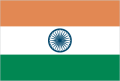
- In 1906, during the Swadeshi and Boycott struggle, a flag of India was hoisted for the first time in the Parsee Bagan Square in Calcutta (present-day Kolkata).
- In 1907, a similar flag with slight modifications was raised by Madam Bhikaji Cama in Paris. This flag was also exhibited in Berlin at a socialist conference and thus came to be called the Berlin Committee Flag.
- In 1921, at the Bezwada (now Vijayawada) session of Congress, a young freedom fighter Pingali Venkaiah, presented a design of a flag to Mahatma Gandhi. The flag consisted of three stripes representing multiple communities living in harmony in India. A spinning wheel was superimposed in the center, signifying the country's progress.
- In 1931, a formal resolution was passed adopting Pingali Vekaiah's flag with a little modification. While the white and green remained, the red was replaced by saffron. The saffron was for courage, white for peace and green for fertility and growth.
- Finally, in July 1947, the Constituent Assembly formally adopted the flag of free India. The spinning wheel was replaced by the Dharma Chakra of Emperor Ashoka, symbolizing truth and life. This came to be called the Tiranga.
As published by the Lok Sabha, House of the People of India "Resolved that the National Flag of India shall be horizontal tricolour of deep Saffron (Kesari), white and dark green in equal proportion. In the centre of the white band, there shall be a Wheel in navy blue to represent the Charkha. The design of the Wheel shall be that of the Wheel. (Chakra) which appears on the abacuse of the Sarnath Lion Capital of Asoka.
The diameter of the Wheel shall approximate to the width of the white band.
The ratio of the width to the length of the Flag shall ordinarily be 2:3."
As published in EnglishAs published by the Press Information Bureau, Ministry of Information and Broadcasting, Government of India Saffron was for courage, white for peace, and green for fertility and growth. The Dharma Chakra replaced the spinning wheel, symbolizing the eternal wheel of law and progress.
As published in EnglishAs published by the Press Information Bureau, Ministry of Information and Broadcasting, Government of India As published in EnglishAs published by the Press Information Bureau, Ministry of Information and Broadcasting, Government of India As published in EnglishAs published by the Press Information Bureau, Ministry of Information and Broadcasting, Government of India As published in EnglishAs published by the Press Information Bureau, Ministry of Information and Broadcasting, Government of India As published in EnglishAs published by the Press Information Bureau, Ministry of Information and Broadcasting, Government of India As published in EnglishSources:- sansad.in ↗ - the Lok Sabha, House of the People of India
- static.pib.gov.in ↗ - the Press Information Bureau, Ministry of Information and Broadcasting, Government of India
- static.pib.gov.in ↗ - the Press Information Bureau, Ministry of Information and Broadcasting, Government of India
- National anthem
- Jana-Gana-Mana (जन गण मन)1:04
- Title (in Hindi)
- जन गण मन
- Title (in Hindi, Romanized)
- Jana-Gana-Mana
- Title (in English, translated)
- Thou Art the Ruler of the Minds of All People
- Lyrics
जन-गण-मन अधिनायक, जय हे भारत-भाग्य-विधाता, पंजाब-सिंधु गुजरात-मराठा, द्रविड़-उत्कल बंग, विन्ध्य-हिमाचल-यमुना गंगा, उच्छल-जलधि-तरंग, तव शुभ नामे जागे, तव शुभ आशिष मांगे, गाहे तव जय गाथा, जन-गण-मंगल दायक जय हे भारत-भाग्य-विधाता जय हे, जय हे, जय हे जय जय जय जय हे।
Source: - Citizens
- Indians
- Official name:Profile - Government ↗ - National Portal of India
- Official name, Citizens:The World Factbook: India - CIA
- National flag:sansad.in ↗ - the Lok Sabha, House of the People of India
- National flag:static.pib.gov.in ↗ - the Press Information Bureau, Ministry of Information and Broadcasting, Government of India
- National flag:static.pib.gov.in ↗ - the Press Information Bureau, Ministry of Information and Broadcasting, Government of India
- National anthem:nationalanthems.info ↗
Geography
- Location
- Total area
- 3,287,263 km²
- Land area
- 2,973,193 km²
- Water area
- 314,070 km²
- Land borders
- 13,888 km(6 countries)
- Coastline
- 7,000 km
- Terrain
Upland plain (Deccan Plateau) in south, flat to rolling plain along the Ganges, deserts in west, Himalayas in north - Mean elevation
- 160 m
- Highest point
- 8,586 mKanchenjunga
- Lowest point
- 0 mIndian Ocean
- Climate
Varies from tropical monsoon in south to temperate in north - Avg. temperature
- 24.2 °C
- Avg. daily range
- 19.3 to 29.8 °C
- Annual precipitation
- 1,190 mm
Temperature °CMeanDaily rangePrecipitation mmMonthly climate normals Month Avg. high, °C Mean, °C Avg. low, °C Precipitation, mm January 23.4 16.9 11.1 18 February 26.6 19.9 13.7 22 March 30.9 24.2 17.7 27 April 34.5 28 21.6 37 May 36 30 24.3 61 June 33.5 28.9 24.8 181 July 30.5 27 24.2 293 August 29.7 26.4 23.7 259 September 30.2 26.1 22.8 167 October 30 24.5 19.8 78 November 27.3 21 15.5 30 December 24.3 17.6 11.9 17 Country-wide averages over 1991–2020.
Sources:- The World Factbook: India - CIA
- Climate Change Knowledge Portal (ERA5 reanalysis) ↗ - World Bank
- Weather
- Loading
- Land use2023
- Arable51.8%Perm. crops4.9%Pasture3.4%Forest24.4%Other15.5%
- Arable land
- 153,868,700 hectares (51.8%)
- Permanent crops
- 14,454,300 hectares (4.9%)
- Permanent meadows & pastures
- 10,248,000 hectares (3.4%)
- Forest
- 72,567,000 hectares (24.4%)
- Other land
- 46,181,000 hectares (15.5%)
Source: - Major rivers
- Major lakes
- Chilika Lake1,170 km²
- Natural hazards2026
- River floods9.2Very high#8/191Earthquakes8.3Very high#20/191Tsunamis7.8Very high#16/191Coastal floods7.8Very high#16/191Tropical cyclones7.7Very high#17/191Epidemics6.6Very high#36/191Drought6.3High#21/191
Scores out of 10, ranks out of 191 countries.
Source:- INFORM Risk Index ↗ - European Commission Joint Research Centre
- Location, Land borders, Coastline, Terrain, Mean elevation, Highest point, Lowest point, Climate, Major rivers, Major lakes:The World Factbook: India - CIA
- Climate:Climate Change Knowledge Portal (ERA5 reanalysis) ↗ - World Bank
- Land use:FAOSTAT Land Use domain ↗ - FAO
- Natural hazards:INFORM Risk Index ↗ - European Commission Joint Research Centre
Demographics
- Population change2026
- +0.87% per year+12,760,051 people/yearWorld Rank106thof 237
- Birth rate
- 15.6 per 1,000 population
- Death rate
- 6.7 per 1,000 population
- Net migration rate
- −0.3 per 1,000 population
- 2026
- 29.2 yearsWorld Rank143rdof 237
- Age structure2026
- 0-14 years23.8%15-64 years68.6%65 years +7.6%
- Share aged 65 and over
- 7.6%
- Share aged under 18
- 28.9%
- Total dependency ratio
- 46
- Youth dependency ratio
- 35
- Elderly dependency ratio
- 11
- Sex ratio
- 1.06 male / female
MaleAgeFemalePopulation by age group, % of total population Age Male Female 80+ 0.5% 0.6% 70-79 1.7% 1.8% 60-69 3.4% 3.4% 50-59 5.0% 4.9% 40-49 6.8% 6.4% 30-39 8.3% 7.6% 20-29 9.1% 8.2% 10-19 8.8% 8.0% 0-9 8.1% 7.5% - 2026
- 0.27 below the replacement level for India ()1.93 births per womanreplacement 2.20123World Rank115thof 237
- 0.90 daughters per woman0.10 below replacement, long-run each generation smaller than the lastreplacement 1.000.511.5
- 2026
- +8.9 per 1,000 populationfor every 1,000 people, 8.9 more births than deaths a year
- 2026
- −0.3 per 1,000 population
- Urbanization2026
- 36.0% live in 531,562,167 urban residents
- Largest agglomerations2011latest available
- Mumbai, Delhi, Kolkata, ChennaiRankAgglomeration or CityPopulation (2011 census)1Mumbai18,394,9122Delhi16,349,8313Kolkata14,057,9914Chennai8,653,5215Bengaluru8,520,4356Hyderabad7,677,0187Ahmedabad6,357,6938Pune5,057,7099Surat4,591,24610Jaipur3,046,163Source:
- Office of the Registrar General and Census Commissioner, India and Delimitation Commission of India (2011 census), via City Population by Thomas Brinkhoff ↗
- Population distribution
- A very high population density exists throughout most of the country, with the notable exception of the deserts in the northwest and the mountain fringe in the north; the core of the population is in the north along the banks of the Ganges, with other river valleys and southern coastal areas also having large population concentrations.
- Ethnic groups2000
- Indo-Aryan72.0%Dravidian25.0%Other3.0%
- Religions2011
- Hindu79.8%Muslim14.2%Christian2.3%Sikh1.7%Other and unspecified2.0%
- Languages
- Hindi (हिन्दी)
- Population, Population change, Median age, Age structure, Total fertility rate, Net reproduction rate, Natural change, Net migration rate:UN World Population Prospects ↗
- Urbanization:UN World Urbanization Prospects ↗
- Largest cities:Office of the Registrar General and Census Commissioner, India and Delimitation Commission of India (2011 census), via City Population by Thomas Brinkhoff ↗
- Population distribution, Ethnic groups, Religions:The World Factbook: India - CIA
Government & Administration
- Form of state
- RepublicThe President is elected by an electoral college of the elected members of both Houses of Parliament and the State Legislative Assemblies; the Constitution calls India, "that is Bharat", "a Union of States" (Arts. 1, 54).Source:
- The Constitution of India, as on 1 May 2024 ↗, Arts. 1, 54
- System of government
- ParliamentaryThe President appoints the Prime Minister and, on the Prime Minister's advice, the other ministers; the Council of Ministers is collectively responsible to the House of the People, which the President may dissolve (Arts. 75, 85).Source:
- The Constitution of India, as on 1 May 2024 ↗, Arts. 75, 85
- Territorial organisation
- Federal
- Official websites
- Capital
- New Delhi142,004 people(2011)
- National holidays
- 18 days in 2026
- MonJan 26Republic Day
- WedMar 4Holi
- SatMar 21Eid al-Fitr
- ThuMar 26Ram Navami
- TueMar 31Mahavira's Birthday
- FriApr 3Good Friday
- TueApr 14Dr. B. R. Ambedkar's Birthday
- FriMay 1Buddha Purnima
- WedMay 27Eid al-Adha
- FriJun 26Ashura
- SatAug 15Independence Day
- WedAug 26Prophet's Birthday
- FriSep 4Janmashtami (Vaishnava)
- FriOct 2Mahatma Gandhi's Birthday
- TueOct 20Dussehra
- SunNov 8Diwali (Deepavali)
- TueNov 24Guru Nanak's Birthday
- FriDec 25Christmas
Nationwide public holidays only, excluding regional, bank and government-only days.
- Time
- ISTIndia Standard TimeUTC+5:30
- Currency
- Indian Rupee (INR)
- Entry requirements
- Official visa and entry information
- Calling code
- +91
- Internet TLD
- .in
- ISO 3166-1 codes
- IN, IND
- Infrastructure
- Passengers carried
- 180,415,784 by the country's airlines(2023)
- Heliports
- 289
- Aircraft departures
- 1,234,696 by the country's airlines(2023)
- Air freight
- 1,807 million tonne-km(2023)
- Aircraft registration prefix
- VT
Sources:- The World Factbook: India - CIA
- World Development Indicators ↗ - World Bank
- Flag carrier
- Air IndiaPrivately owned (Tata Group)
- Passenger rail
- Indian Railways
- 2025
- 39 / 100World Rank91stof 182Confidence interval
Corruption index score by year Year Score Lower bound Upper bound 2012 36 33 40 2013 36 32 40 2014 38 34 42 2015 38 33 43 2016 40 36 44 2017 40 36 44 2018 41 37 45 2019 41 38.4 43.6 2020 40 38.1 41.9 2021 40 38.1 41.9 2022 40 38.1 41.9 2023 39 36.9 41.1 2024 38 35.8 40.2 2025 39 36.6 41.4 Source:- Corruption Perceptions Index 2025 ↗ - Transparency International, CC BY 4.0
- Form of state, System of government, Territorial organisation:The Constitution of India, as on 1 May 2024 ↗ - Legislative Department, Ministry of Law and Justice, Government of India
- National holidays:Open World Holidays Framework (vacanza/holidays) ↗
- Infrastructure:The World Factbook: India - CIA
- Infrastructure:World Development Indicators ↗ - World Bank
- Corruption Perceptions Index:Corruption Perceptions Index 2025 ↗ - Transparency International, CC BY 4.0
Economy
- Lower middle income
- GDP growth (real)2026
- +7% per yearWorld Rank12thof 195
- GDP per capita (PPP)2026
- GDP per capita (nominal)
- $2,750 (157th in the world)
Source:- 2025
- Services49.3% of GDPIndustry25.2% of GDPAgriculture16.2% of GDPManufacturing13.5%part of industry
- Households
- +56.7%
- Government
- +10.8%
- Investment
- +34.6%
- Exports
- +22.3%
- Imports
- −24%
The shape of the economyGDP by end useSource:- World Development Indicators ↗ - World Bank
- Inflation2026
- 5%up 2.9 percentage points2.9pp from 2025
- Labor force2024
- 608.5 million (42% of population)World Rank2ndof 187
- Labor force participation2024
- 55.6% of people aged 15+
- Unemployment2024
- 4.2%
- Youth unemployment2024
- 15.7% ages 15 to 24
- Labor productivity2024
- $10.3 per hour worked at PPP
- Budget balance2026
- 7.5% of GDP deficit
- Current account
- 1.5% of GDP, $61.5 billion deficit
Source: - Debt2024
- Government debt81.3% of GDPHousehold debt40.8% of GDPCompany debt49.8% of GDPInterest on debt5.1% of GDPCentral government debt53.8% of GDP
- Trade2025
- Goods$449.8 billion52.2%
- Services$412.3 billion47.8%
- Total exports
- $862.1 billion
- Change from 2024
- up 4.9 percent on the previous year4.9%
Sources:- World Development Indicators ↗ - World Bank
- The World Factbook: India - CIA
- 2024
- +0.72World Rank41stof 145
- Projected GDP growth
- +4% a year over the next 10 years
Source:- Atlas of Economic Complexity ↗ - Harvard Growth Lab
- Agricultural products2024
- Raw milk of buffalo, Mangoes and guavas and mangosteens, Bananas, and 7 more
- 1Raw milk of buffalo5×
- 2Mangoes and guavas and mangosteens3.3×
- 3Bananas2×
- 4Rice1.9×
- 5Sugar cane1.7×
- 6Onions and shallots (dry)1.6×
- 7Raw milk of cattle1.2×
- 8Potatoes1.1×
- 9Wheat1×
- 10Tomatoes0.8×
ProductSource:- FAOSTAT ↗ - Food and Agriculture Organization
- Gold reserves2025
- 880 tonnesWorth $123.6 billion, 18% of total official reserves by value
- Industries
- textiles, chemicals, food processing, steel, transportation equipment, cement, mining, petroleum, machinery, software, pharmaceuticals
- Income level, GDP by sector, Trade, Gold reserves:World Development Indicators ↗ - World Bank
- GDP (nominal), GDP growth (real), GDP per capita (PPP), Inflation, Budget balance:IMF World Economic Outlook ↗
- Labor force, Labor force participation, Unemployment, Youth unemployment, Labor productivity:ILOSTAT ↗ - International Labour Organization
- Debt:IMF Global Debt Database ↗
- Debt:IMF Public Finances in Modern History ↗
- Trade, Industries:The World Factbook: India - CIA
- Economic Complexity Index:Atlas of Economic Complexity ↗ - Harvard Growth Lab
- Agricultural products:FAOSTAT ↗ - Food and Agriculture Organization
Cost of Living
- Cost of living index
- Loading
- Monthly costs (excluding rent)
- Loading
- Rent
- Loading
- Buying an apartment
- Loading
- Average gross salary2025
- ₹22,220 per month$255 (USD), $1,120 (PPP)
- Median
- ₹15,000 per month($172)
- Men
- ₹23,964 per month($275)
- Women
- ₹17,438 per month($200)
Source:- ILOSTAT ↗ - International Labour Organization
- 2024
- ₹4,628 per month, gross$55 (USD), $233 (PPP)
- Average gross salary, Minimum wage:ILOSTAT ↗ - International Labour Organization
Society
- 2023
- 0.685MediumWorld Rank130thof 193IndiaWorld
Human Development Index by year Year India World 1990 0.446 0.608 1991 0.448 0.611 1992 0.453 0.614 1993 0.458 0.617 1994 0.463 0.620 1995 0.469 0.625 1996 0.476 0.631 1997 0.482 0.636 1998 0.488 0.641 1999 0.496 0.646 2000 0.501 0.651 2001 0.511 0.657 2002 0.516 0.662 2003 0.529 0.669 2004 0.538 0.675 2005 0.547 0.681 2006 0.557 0.688 2007 0.566 0.694 2008 0.574 0.698 2009 0.579 0.701 2010 0.590 0.707 2011 0.603 0.713 2012 0.609 0.717 2013 0.615 0.721 2014 0.625 0.726 2015 0.633 0.731 2016 0.644 0.735 2017 0.649 0.739 2018 0.648 0.741 2019 0.651 0.745 2020 0.652 0.742 2021 0.647 0.742 2022 0.676 0.752 2023 0.685 0.756 Source:- Human Development Report ↗ - United Nations Development Programme
- 2022
- 25.5
- Mean years of schooling2023
- 6.9 years
- Expected for a child today
- 13 years
Source:- Human Development Report ↗ - United Nations Development Programme
- Literacy2024
- 78.2% of adults
- Education expenditure2022
- 4.1% of GDP
- Share of government spending
- 14.2%
Source:- World Development Indicators ↗ - World Bank
- Internet users2024
- 64.9% of the population
- Households with Internet access
- 82.8%
Source:- ITU DataHub ↗ - International Telecommunication Union
- Mobile subscriptions2024
- 1.2 billion
- Fixed telephone lines
- 39,235,898
- Fixed broadband
- 3.2 subscriptions per 100 people
Counts subscriptions, not people.
Source:- ITU DataHub ↗ - International Telecommunication Union
- Credit-card ownership2024
- 5% of adults
- Debit-card ownership
- 38%
- Account at a bank or mobile-money provider
- 89%
- Mobile-money account
- 23%
- Made or received a digital payment
- 48%
Source:- Global Findex Database ↗ - World Bank
- Refugees hosted2025
- 236,878 people
- Asylum seekers
- 14,315
- Stateless persons
- 23,253
- Internally displaced persons
- 660,000530,000 due to conflicts, 130,000 due to disasters
- Refugees from India abroad
- 28,908
Sources:- Refugee Data Finder ↗ - UN Refugee Agency
- Global Internal Displacement Database ↗ - Internal Displacement Monitoring Centre
- 2024
- Official tourism site9.8 million arrivalsdown 45% against 201945% below 2019World Rank30thof 139
- Per resident
- 0.7 arrivals per 100 residents
- 128,000 arrivals
- $37 billion
- Spending per arrival
- $3,768
- Share of GDP
- 2.7% tourism direct GDP(2023)
- Domestic trips
- 1.7 billion overnight trips by residents(2022)
- Residents' trips abroad
- 30.4 million overnight trips
- $41.3 billion
- Hotel beds
- 233,320(2021, latest available)
Overnight arrivals by year2010 to 2024A tourist stays at least one night. Arrivals count trips, not people.
Source:- UN Tourism Data Dashboard ↗ - UN Tourism
- UNESCO World Heritage Sites
- 44 sites36 cultural7 natural1 mixed
Site Type Taj Mahal Cultural Agra Fort Cultural Elphanta Caves Cultural Hill Forts of Rajasthan Cultural Sundarbans National Park Natural Rock Shelters of Bhimbetka Cultural Champaner-Pavagadh Archaeological Park Cultural Jaipur Cultural Mahabodhi Temple Complex at Bodh Gaya Cultural Manas Wildlife Sanctuary Natural Nanda Devi and Valley of Flowers National Parks Natural Khangchendzonga National Park Mixed Group of Monuments at Mahabalipuram Cultural Sun Temple, Konârak Cultural Kaziranga National Park Natural Churches and Convents of Goa Cultural Great Living Chola Temples Cultural Group of Monuments at Pattadakal Cultural Buddhist Monuments at Sanchi Cultural Humayun's Tomb, Delhi Cultural Qutb Minar and its Monuments, Delhi Cultural Great Himalayan National Park Conservation Area Natural Rani-ki-Vav (the Queen’s Stepwell) at Patan, Gujarat Cultural Archaeological Site of Nalanda Mahavihara at Nalanda, Bihar Cultural Historic City of Ahmadabad Cultural Victorian Gothic and Art Deco Ensembles of Mumbai Cultural Jaipur City, Rajasthan Cultural Kakatiya Rudreshwara (Ramappa) Temple, Telangana Cultural Moidams – the Mound-Burial System of the Ahom Dynasty Cultural Maratha Military Landscapes of India Cultural The Factbook names 30 of the 44 sites.
Source:- The World Factbook: India - CIA
- Human Development Index, Mean years of schooling:Human Development Report ↗ - United Nations Development Programme
- Income inequality (Gini), Education expenditure:World Development Indicators ↗ - World Bank
- Literacy:UIS Data Browser ↗ - UNESCO Institute for Statistics
- Internet users, Mobile subscriptions:ITU DataHub ↗ - International Telecommunication Union
- Credit-card ownership:Global Findex Database ↗ - World Bank
- Refugees hosted:Refugee Data Finder ↗ - UN Refugee Agency
- Refugees hosted:Global Internal Displacement Database ↗ - Internal Displacement Monitoring Centre
- Inbound tourists:UN Tourism Data Dashboard ↗ - UN Tourism
- UNESCO World Heritage Sites:The World Factbook: India - CIA
Crime & Safety
- Travel advisory (US)
- Loading
- Active humanitarian crisisAug 2026
- None - no active crisis
- Homicide rate2023
- Low by global standards2.7 per 100,000 peopleWorld Rank47thof 115
- Crime rates
- 7 offence categories
Offence Per 100,000 Count Year Homicide (victims) 2.7 39,057 2023 Serious assault 25.8 334,669 2013 Sexual violence 9.0 117,035 2013 Kidnapping 5.1 65,461 2013 Burglary 8.1 104,401 2013 Theft 28.8 372,622 2013 Vehicle theft 12.8 165,690 2013 A low figure can also mean weak recording.
Source:- UNODC Data Portal ↗ - UN Office on Drugs and Crime
- Prison population2022
- 40.2 per 100,000 people
- Persons held
- 573,220
Source:- UNODC Data Portal ↗ - UN Office on Drugs and Crime
- Active humanitarian crisis:INFORM Severity Index ↗ - European Commission Joint Research Centre
- Homicide rate, Crime rates, Prison population:UNODC Data Portal ↗ - UN Office on Drugs and Crime
Health
- Life expectancy2026
- 72.7 years
- Health expenditure2023
- 3.3% of GDP$85 per person
- Physicians2020
- 0.72 per 1,000 population
- Hospital beds2021
- 1.6 per 1,000 population
- Infant mortality2026
- 20.9 per 1,000 live births
- Maternal mortality2023
- 80 per 100,000 live births
- Alcohol consumption2022
- 4.5 litres of pure alcohol per adult per year
- Tobacco use2020
- 26.2% of adults
- Men
- 40.1%
- Women
- 12.2%
Source:- Global Health Observatory ↗ - World Health Organization
- Alcohol and Tobacco Spending2023
- 2.0% of household spendingWorld Rank71stof 105
- World median
- 3.1%
Source:- The World Factbook: India - CIA
- Road traffic deaths2019
- 15.6 per 100,000 population
- Life expectancy, Infant mortality:UN World Population Prospects ↗
- Health expenditure, Physicians, Hospital beds, Road traffic deaths:World Development Indicators ↗ - World Bank
- Maternal mortality:Maternal mortality estimates ↗ - UN Maternal Mortality Estimation Inter-agency Group
- Alcohol consumption, Tobacco use:Global Health Observatory ↗ - World Health Organization
- Alcohol and Tobacco Spending:The World Factbook: India - CIA
Environment
- CO₂ emissions2024
- 3,153.8 Mt per yearup 4.6 percent on the previous year4.6% from 2023
- CO₂ per capita
- 2.2 t per personWorld Rank121stof 207
- Share of global CO₂
- 8.0%
- Methane (CH₄)
- 861.6 Mt CO₂-eq
- Nitrous oxide (N₂O)
- 283.5 Mt CO₂-eq
- Fluorinated gases
- 72.2 Mt CO₂-eq
- All greenhouse gases
- 4,371.2 Mt CO₂-eq
Source:- Emissions Database for Global Atmospheric Research (EDGAR) ↗ - European Commission, Joint Research Centre
- 2024
- 40.8 µg/m³ of PM2.53.5 years of life expectancy lost against the WHO guidelineMost polluted5thof 236
- WHO guideline
- 5 µg/m³
- National standard
- 40 µg/m³
- Life expectancy gain if the national standard were met
- 0.1 years
Source:- Air Quality Life Index ↗ - Energy Policy Institute at the University of Chicago
- Environmental issues
- deforestation
- soil erosion
- overgrazing
- desertification
- air pollution from industrial effluents and vehicle emissions
- water pollution from raw sewage and agricultural pesticides
- tap water not potable
- growing population overstraining natural resources
- biodiversity loss
Source:- The World Factbook: India - CIA
- International agreements
- 19 of 20 landmark treaties in forceParty to 78 multilateral environmental agreements
Treaty Standing Joined Climate Paris Agreement in force 2016 UN Framework Convention on Climate Change in force 1994 Kyoto Protocol in force 2005 Ozone layer Montreal Protocol in force 1992 Vienna Convention (Ozone Layer) in force 1991 Biodiversity Convention on Biological Diversity in force 1994 CITES in force 1976 Convention on Migratory Species (Bonn) in force 1983 Cartagena Protocol on Biosafety in force 2003 Nagoya Protocol in force 2014 Land and heritage Ramsar Convention on Wetlands in force 1982 World Heritage Convention in force 1978 UN Convention to Combat Desertification in force 1997 Chemicals and waste Basel Convention in force 1992 Rotterdam Convention (PIC) in force 2005 Stockholm Convention (POPs) in force 2006 Minamata Convention on Mercury in force 2018 Oceans UN Convention on the Law of the Sea in force 1995 High Seas Treaty (BBNJ) signed 2024, not ratified MARPOL 73/78 in force 1986 Source:- International Environmental Agreements Database ↗ - Université Laval
- CO₂ emissions:Emissions Database for Global Atmospheric Research (EDGAR) ↗ - European Commission, Joint Research Centre
- Air pollution:Air Quality Life Index ↗ - Energy Policy Institute at the University of Chicago
- Environmental issues:The World Factbook: India - CIA
- International agreements:International Environmental Agreements Database ↗ - Université Laval
Food & Water
- No access to safe drinking water2022
- 5.9% of the population
- Renewable water2022
- 1,911 billion m³ per year
- Per person
- 1,341 m³ per year
- Dependency ratio
- 31% originates outside the country
- Annual water withdrawal
- 761 billion m³ per year
- Withdrawn for agriculture
- 90%
- Water stress
- 66% of available freshwater withdrawn
Source:- AQUASTAT ↗ - Food and Agriculture Organization
- Undernourishment2022
- 14% of the population196.9 million people
- Obesity2024
- 8% of adults
- Men
- 5.7%
- Women
- 10.4%
Source:- Global Health Observatory ↗ - World Health Organization
- Underweight children2020
- 31.5% of children under five
- No access to safe drinking water, Renewable water:AQUASTAT ↗ - Food and Agriculture Organization
- Undernourishment:Food security indicators (FAOSTAT) ↗ - Food and Agriculture Organization
- Obesity:Global Health Observatory ↗ - World Health Organization
- Underweight children:World Development Indicators ↗ - World Bank
Energy
- Energy consumption2024
- Per capita
- 27.3 GJ per person
- Share of world total
- 6.2%
- Supply
- Deficitproduces 60% of what it consumes, 2024
Source:- International Energy Statistics ↗ - U.S. Energy Information Administration
- Electricity2024
- 2,052 TWh generated per year
- Generation
- 2,052 TWh per year
- Consumption
- 1,758 TWh per year
- Imports
- 7.7 TWh per year
- Exports
- 10 TWh per year
- Net
- +2.3 TWh per year
Source:- International Energy Statistics ↗ - U.S. Energy Information Administration
- Oil, gas & coal
- Deficitproduces 17% of what it consumes, 2024Oil reserves20255 billion barrelsWorld Rank23rdof 99Imports20184.5 million b/d
Oil imports and exports count crude oil only.
- Mineral resources2025
- Copper, Rare earths
Mineral Mine production Reserves Copper 23,000 t0.10% of world 2.2 million t Rare earthsas rare-earth oxide 2,900 t0.74% of world Not available USGS estimates. Shows only minerals where the country is a major producer.
Source:- Mineral Commodity Summaries ↗ - U.S. Geological Survey
- Energy consumption, Electricity, Oil, gas & coal:International Energy Statistics ↗ - U.S. Energy Information Administration
- Oil, gas & coal:Worldwide Oil and Gas Survey ↗ - Oil & Gas Journal
- Mineral resources:Mineral Commodity Summaries ↗ - U.S. Geological Survey
Defense
- Military expenditure2024
- 2.3% of GDP$86.1 billion, 7.6% of government spending
- Military personnel2025
- approximately 1.5 millionactive Indian Armed Forces, including about 1.25 million in the ArmyEstimates vary.
- Military service2025
- Voluntaryno conscription; generally men and women 17–27, ages vary by branch of service and positions
In 2022, the Indian Government began recruiting men aged 17.5-21 annually to serve on 4-year contracts; at the end of their tenure, 25% would be retained for longer terms of service, while the remainder would be forced to leave the military, although some of those leaving would be eligible to serve in the Coast Guard, the Merchant Navy, civilian positions in the Ministry of Defense, and in the paramilitary forces of the Ministry of Home Affairs.The Indian military accepts citizens of Nepal and Bhutan; descendants of refugees from Tibet who arrived before 1962 and have resided permanently in India; peoples of Indian origin from nations such as Burma, the Democratic Republic of the Congo, Ethiopia, Kenya, Malawi, Pakistan, Sri Lanka, Tanzania, Uganda, and Vietnam with the intention of permanently settling in India; eligible candidates from “friendly foreign nations” may apply to the Armed Forces Medical Services.
Source:- The World Factbook: India - CIA
- Space program2025
- Indian Space Research Organization (ISRO; originally established in 1962 as the Indian National Committee for Space Research (INCOSPAR); renamed ISRO in 1969); Defense Space Agency (DSA; established 2019)
Has one of the world’s largest space programs; designs, builds, launches, operates, and tracks the full spectrum of satellites, including communications, navigation, remote sensing (RS), and scientific/technology; designs, builds, and launches rockets, space/satellite launch vehicles (SLVs), and lunar/interplanetary probes; launches satellites for foreign partners; researching and developing additional technologies and capabilities; developing astronaut program and human flight capabilities (with assistance from Russia and the US); has space-related agreements with the ESA and more than 50 countries, including China, France, Germany, Japan, Russia, and the US; participates in international projects such as the Square Kilometer Array radio telescope; the Department of Space administers two government-controlled space industry corporations; has a growing private space sector
- Launch sites
- Satish Dhawan Space Center (aka Sriharikota Range; located in Andhra Pradesh); Vikram Sarabhai Space Center (Kerala)
- 1963
- First sounding (research) rocket launched
- 1975
- First domestically made scientific satellite (Aryabhata) launched by Soviet Union
- 1979
- First experimental remote sensing (RS) satellite (Bhaskara-I) launched by Soviet Union
- 1980
- First successful launch of satellite (Rohini) on Indian satellite launch vehicle (SLV)
- 1984
- First Indian in space on a Soviet rocket
- 1988
- First operational RS satellite (IRS-1A) launched by Soviet Union
- 1994
- First successful launch of Polar Satellite Launch Vehicle (PSLV), India’s premier SLV
- 2008
- First lunar orbiter/probe (Chandrayaan-1) launched, reached lunar orbit, and sent a probe to the surface of the Moon
- 2014
- First interplanetary probe (Mangalyaan) reached orbit around Mars
- 2018
- Indian Regional Navigation Satellite System (INRSS) became operational
- 2019
- Launched lunar orbiter/probe (Chandrayaan-2) with lander and rover (lander lost when it crash-landed on Moon’s surface)
- 2023
- Successfully landed uncrewed lander/rover mission (Chandrayaan-3) on Moon's surface
- 2024
- Launched satellite (XPoSat) to study black holes and placed solar observatory spacecraft (Aditya-L1) in orbital position to study the Sun
- 2025
- First docking of two orbiting satellites and sent its first astronaut to the International Space Station
Key milestones
the ISRO is subordinate to the Department of Space (DOS; established 1972)
Source:- The World Factbook: India - CIA
- Nuclear weapons2026
- 190 warheadsNone deployed, 190 in the military stockpile
Deployed, strategicOn long-range missiles and at bomber bases 0 Deployed, nonstrategicOn short-range weapons None known ReserveIn storage, not on launchers 178 Military stockpileDeployed and reserve, held for use 190 RetiredAwaiting dismantlement 0 Total inventory 190 Approximate FAS estimates. Parts may not sum.
Source:- Status of World Nuclear Forces ↗ - Federation of American Scientists
- Military expenditure:SIPRI Military Expenditure Database ↗ - Stockholm International Peace Research Institute
- Military expenditure:World Development Indicators ↗ - World Bank
- Military personnel, Military service, Space program:The World Factbook: India - CIA
- Nuclear weapons:Status of World Nuclear Forces ↗ - Federation of American Scientists
