

National Identity
- Official name
- Republic of Iraq
- Official name (in Arabic)
- جمهورية العراق
- Official name (in Arabic, Romanized)
- Jumhūriyyat al-‘Irāq
- Official name (in Central Kurdish (Sorani))
- کۆماری عێراق
- Official name (in Central Kurdish (Sorani), Romanized)
- Komarî Êraq
- Name etymology
the name probably derives from Uruk ("Erech" in Aramaic), the ancient Sumerian and Babylonian city on the Euphrates River
Sources:- Constitution of the Republic of Iraq ↗ - Iraqi House of Representatives
- The World Factbook: Iraq - CIA
- National emblem
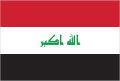
- National flag
- National anthem
- Mawtini (موطني)1:45
- Title (in Arabic)
- موطني
- Title (in Arabic, Romanized)
- Mawtini
- Title (in English, translated)
- My Homeland
- Lyrics
1مَــوطِــنِــي مَــوطِــنِــي الجـلالُ والجـمالُ والسَّــنَاءُ والبَهَاءُ فـــي رُبَــاكْ فــي رُبَـــاكْ والحـياةُ والنـجاةُ والهـناءُ والرجـاءُ فــي هـــواكْ فــي هـــواكْ هـــــلْ أراكْ هـــــلْ أراكْ سـالِماً مُـنَـعَّـماً و غانما مكرما سالما منعما و غانما مكرما هـــــلْ أراكْ فـي عُـــلاكْ تبـلُـغُ السِّـمَـاكْ تبـلـغُ السِّـمَاك مَــوطِــنِــي مَــوطِــنِــي
2مَــوطِــنِــي مَــوطِــنِــي الشبابُ لنْ يكِلَّ هَمُّهُ أنْ تستَقِـلَّ أو يَبيدْ نَستقي منَ الـرَّدَى ولنْ نكونَ للعِــدَى كالعَـبـيـــــدْ كالعَـبـيـــــدْ لا نُريــــــدْ لا نُريــــــدْ ذُلَّـنَـا المُـؤَبَّـدا وعَيشَـنَا المُنَكَّـدا ذُلَّـنَـا المُـؤَبَّـدا وعَيشَـنَا المُنَكَّـدا لا نُريــــــدْ بـلْ نُعيــــدْ مَـجـدَنا التّـليـدْ مَـجـدَنا التّليـدْ مَــوطِــنــي مَــوطِــنِــي
3مَــوطِــنِــي مَــوطِــنِــي الحُسَامُ و اليَـرَاعُ لا الكـلامُ والنزاعُ رَمْــــــزُنا رَمْــــــزُنا مَـجدُنا و عـهدُنا وواجـبٌ منَ الوَفا يهُــــــزُّنا يهُــــــزُّنا عِـــــــزُّنا عِـــــــزُّنا غايةٌ تُـشَــرِّفُ و رايـةٌ ترَفـرِفُ يا هَـــنَــاكْ فـي عُـــلاكْ قاهِراً عِـــداكْ قاهِـراً عِــداكْ مَــوطِــنِــي مَــوطِــنِــي
Source: - Citizens
- Iraqis
- Official name:Constitution of the Republic of Iraq ↗ - Iraqi House of Representatives
- Official name, Citizens:The World Factbook: Iraq - CIA
- National anthem:nationalanthems.info ↗
Geography
- Location
- Total area
- 438,317 km²
- Land area
- 437,367 km²
- Water area
- 950 km²
- Land borders
- 3,809 km(6 countries)
- Iran
- 1,599 km
- Saudi Arabia
- 811 km
- Syria
- 599 km
- Turkey (Türkiye)
- 367 km
- Kuwait
- 254 km
- Jordan
- 179 km
Source:- The World Factbook: Iraq - CIA
- Coastline
- 58 km
- Terrain
Mostly broad plains; reedy marshes along Iranian border in south with large flooded areas; mountains along borders with Iran and Turkey - Mean elevation
- 312 m
- Highest point
- 3,611 mCheekha Dar (Kurdish for "Black Tent")
- Lowest point
- 0 mPersian Gulf
- Climate
Mostly desert mild to cool winters with dry, hot, cloudless summers; northern mountainous regions along Iranian and Turkish borders experience cold winters with occasionally heavy snows that melt in early spring, sometimes causing extensive flooding in central and southern Iraq - Avg. temperature
- 23.1 °C
- Avg. daily range
- 16.6 to 29.5 °C
- Annual precipitation
- 218 mm
Temperature °CMeanDaily rangePrecipitation mmMonthly climate normals Month Avg. high, °C Mean, °C Avg. low, °C Precipitation, mm January 14.5 9.3 4.7 40 February 17.2 11.7 6.4 33 March 22.5 16.5 10.4 34 April 28.6 22.4 15.6 23 May 35 28.6 21.3 9 June 40.1 33.3 25.6 0 July 42.6 35.7 28.1 0 August 42.6 35.4 27.7 0 September 38.8 31.3 23.8 1 October 32.2 25.1 18.5 12 November 22.4 16.3 10.9 31 December 16.4 10.9 6.2 34 Country-wide averages over 1991–2020.
Sources:- The World Factbook: Iraq - CIA
- Climate Change Knowledge Portal (ERA5 reanalysis) ↗ - World Bank
- Weather
- Loading
- Land use2023
- Arable11.4%Perm. crops1.2%Pasture9.2%Forest1.6%Other76.5%
- Arable land
- 4,969,000 hectares (11.4%)
- Permanent crops
- 523,400 hectares (1.2%)
- Permanent meadows & pastures
- 3,985,000 hectares (9.2%)
- Forest
- 705,758 hectares (1.6%)
- Other land
- 33,229,842 hectares (76.5%)
Source: - Major rivers
- (the Tigris and Euphrates join to form the Shatt al Arab)
- Major lakes
- Lake Hammar1,940 km²
- Natural hazards2026
- River floods9.6Very high#5/191Drought7.5Very high#10/191Epidemics6.2High#47/191Earthquakes5.1High#70/191Coastal floods4.6Medium#73/191Tsunamis0.0Very lowTropical cyclones0.0Very low
Scores out of 10, ranks out of 191 countries.
Source:- INFORM Risk Index ↗ - European Commission Joint Research Centre
- Location, Land borders, Coastline, Terrain, Mean elevation, Highest point, Lowest point, Climate, Major rivers, Major lakes:The World Factbook: Iraq - CIA
- Climate:Climate Change Knowledge Portal (ERA5 reanalysis) ↗ - World Bank
- Land use:FAOSTAT Land Use domain ↗ - FAO
- Natural hazards:INFORM Risk Index ↗ - European Commission Joint Research Centre
Demographics
- Population change2026
- +2.10% per year+986,663 people/yearWorld Rank39thof 237
- Birth rate
- 25.0 per 1,000 population
- Death rate
- 4.2 per 1,000 population
- Net migration rate
- −0.3 per 1,000 population
- 2026
- 21.1 yearsWorld Rank188thof 237
- Age structure2026
- 0-14 years35.4%15-64 years61.1%65 years +3.5%
- Share aged 65 and over
- 3.5%
- Share aged under 18
- 42.0%
- Total dependency ratio
- 64
- Youth dependency ratio
- 58
- Elderly dependency ratio
- 6
- Sex ratio
- 1.01 male / female
MaleAgeFemalePopulation by age group, % of total population Age Male Female 80+ 0.2% 0.3% 70-79 0.7% 1.0% 60-69 1.6% 2.0% 50-59 3.4% 3.6% 40-49 4.9% 5.0% 30-39 6.9% 6.8% 20-29 8.9% 8.6% 10-19 11.6% 11.1% 0-9 12.0% 11.4% - 2026
- 1.03 above the replacement level for Iraq ()3.13 births per womanreplacement 2.101234World Rank50thof 237
- 1.47 daughters per woman0.47 above replacement, long-run each generation larger than the lastreplacement 1.000.511.5
- 2026
- +20.8 per 1,000 populationfor every 1,000 people, 20.8 more births than deaths a year
- 2026
- −0.3 per 1,000 population
- Urbanization2026
- 70.0% live in cities33,618,994 urban residents
- Largest cities2024
- Baghdad, Mosul, Basra, KirkukRankCity or Urban CenterPopulation (2024 census)1Baghdad7,837,4632Mosul1,529,3843Basra1,293,0524Kirkuk1,249,1975Erbil1,001,2196Najaf830,6647Sulaymaniyah828,8508Kerbala784,2199Nasiriyah704,97610Amara668,356Source:
- Central Organization for Statistics and Information Technology, Iraq (2024 census), via City Population by Thomas Brinkhoff ↗
- Population distribution
- Population is concentrated in the north, center, and eastern parts of the country, with many of the larger urban agglomerations found along extensive parts of the Tigris and Euphrates Rivers; much of the western and southern areas are either lightly populated or uninhabited.
- Ethnic groups
- Based on a 1987 government estimate, the most recent reliable data.Arab75-80%Kurdish15-20%Other5.0%
Other includes Turkmen, Yezidi, Shabak, Kaka'i, Bedouin, Romani, Assyrian, Circassian, Sabaean-Mandaean, Persian.
Source:- The World Factbook: Iraq - CIA
- Religions2015
- Muslim95-98%Christian1.0%Other1-4%
- Muslim
- 95-98%
- Shia
- 61-64%
- Sunni
- 29-34%
The Christian population has fallen at least 50% and perhaps as much as 90% since 2003, according to US Embassy estimates, with many fleeing to Syria, Jordan, and Lebanon.Christians include Catholic, Orthodox, Protestant, Assyrian Church of the East.Islam is the official religion.The last census was in 1997.
Source:- The World Factbook: Iraq - CIA
- Languages
- Arabic (العربية), Central Kurdish (Sorani) (کوردیی ناوەندی)
- Population, Population change, Median age, Age structure, Total fertility rate, Net reproduction rate, Natural change, Net migration rate:UN World Population Prospects ↗
- Urbanization:UN World Urbanization Prospects ↗
- Largest cities:Central Organization for Statistics and Information Technology, Iraq (2024 census), via City Population by Thomas Brinkhoff ↗
- Population distribution, Ethnic groups, Religions:The World Factbook: Iraq - CIA
Government & Administration
- Form of state
- RepublicThe constitutional text describes Iraq as "a single federal, independent and fully sovereign state".
- System of government
- ParliamentaryThe Constitution describes the system of government as "republican, representative, parliamentary, and democratic" (Art. 1).Source:
- Territorial organisation
- Federal
- Official websites
- Government (in Arabic)
- President
- Parliament
- Capital
- Baghdad7.8 million people(2024)
- National holidays
- 15 days in 2026
- ThuJan 1New Year's Day
- TueJan 6Army Day
- MonMar 16Commemoration of the Saddam Baath crimes against the Iraqi people
- FriMar 20Eid al-Fitr (estimated)
- SatMar 21Eid al-Fitr (estimated)Nowruz
- SunMar 22Eid al-Fitr (estimated)
- FriMay 1Labor Day
- TueMay 26Day of Arafah (estimated)
- WedMay 27Eid al-Adha (estimated)
- ThuMay 28Eid al-Adha (estimated)
- FriMay 29Eid al-Adha (estimated)
- ThuJun 4Eid al-Ghadir (estimated)
- TueJun 16Islamic New Year (estimated)
- ThuJun 25Ashura (estimated)
- TueAug 25Prophet's Birthday (estimated)
Nationwide public holidays only, excluding regional, bank and government-only days.
- Time
- ASTArabian Standard TimeUTC+3
- Currency
- Iraqi Dinar (IQD)
- Entry requirements
- Official visa and entry information
- Calling code
- +964
- Internet TLD
- .iq
- ISO 3166-1 codes
- IQ, IRQ
- Infrastructure
- Railways2,272 km
- Passengers carried
- 5,434,292 by the country's airlines(2019)
- Heliports
- 10
- Aircraft departures
- 60,540 by the country's airlines(2019)
- Air freight
- 0 million tonne-km(2019)
- Aircraft registration prefix
- YI
Sources:- The World Factbook: Iraq - CIA
- World Development Indicators ↗ - World Bank
- Flag carrier
- Iraqi AirwaysState-owned
- 2025
- 28 / 100World Rank136thof 182Confidence interval
Corruption index score by year Year Score Lower bound Upper bound 2012 18 14 22 2013 16 12 20 2014 16 12 20 2015 16 12 20 2016 17 14 20 2017 18 14 22 2018 18 14 22 2019 20 15.1 24.9 2020 21 16.9 25.1 2021 23 16.4 29.6 2022 23 16.5 29.5 2023 23 16.2 29.8 2024 26 18.7 33.3 2025 28 19.5 36.5 Source:- Corruption Perceptions Index 2025 ↗ - Transparency International, CC BY 4.0
- Form of state, System of government, Territorial organisation:Constitution of the Republic of Iraq, English text ↗ - Council of Representatives of Iraq
- National holidays:Open World Holidays Framework (vacanza/holidays) ↗
- Infrastructure:The World Factbook: Iraq - CIA
- Infrastructure:World Development Indicators ↗ - World Bank
- Corruption Perceptions Index:Corruption Perceptions Index 2025 ↗ - Transparency International, CC BY 4.0
Economy
- Upper middle income
- GDP growth (real)2026
- −16% per yearWorld Rank194thof 195
- GDP per capita (PPP)2026
- GDP per capita (nominal)
- $5,258 (124th in the world)
Source:- 2025
- Services52.3% of GDPIndustry45.4% of GDPAgriculture3.4% of GDPManufacturing4%part of industry
- Households
- +46.4%
- Government
- +22.2%
- Investment
- +19.1%
- Exports
- +39.8%
- Imports
- −37.4%
The shape of the economyGDP by end useThe five add up to 90.1% of GDP, not 100. The gap is in the source data.
Source:- World Development Indicators ↗ - World Bank
- Inflation2026
- 3.5%up 3.2 percentage points3.2pp from 2025
- Labor force2024
- 12.1 million (26% of population)World Rank49thof 187
- Labor force participation2024
- 41.6% of people aged 15+
- Unemployment2024
- 15.3%
- Youth unemployment2024
- 31.7% ages 15 to 24
- Labor productivity2024
- $36.5 per hour worked at PPP
- Budget balance2026
- 15.1% of GDP deficit
- Current account
- 10.8% of GDP, $26.5 billion deficit
Source: - Debt2024
- Central government debt42.9% of GDP
- Trade2024
- Goods$101 billion90.8%
- Services$10.2 billion9.2%
- Total exports
- $111.2 billion
- Change from 2023
- up 3.1 percent on the previous year3.1%
Sources:- World Development Indicators ↗ - World Bank
- The World Factbook: Iraq - CIA
- 2024
- −1.55World Rank130thof 145
- Projected GDP growth
- +3.4% a year over the next 10 years
Source:- Atlas of Economic Complexity ↗ - Harvard Growth Lab
- Agricultural products2024
- Dates, Rye, Wheat, and 7 more
- 1Dates64.9×
- 2Rye29.9×
- 3Wheat7.2×
- 4Cantaloupes and other melons4.9×
- 5Grapes3.8×
- 6Watermelons3×
- 7Tomatoes2.7×
- 8Oranges2.6×
- 9Cucumbers and gherkins1.8×
- 10Meat of chickens (fresh or chilled)1.6×
ProductSource:- FAOSTAT ↗ - Food and Agriculture Organization
- Gold reserves2024
- 163 tonnesWorth $13.6 billion, 14% of total official reserves by value
- Industries
- petroleum, chemicals, textiles, leather, construction materials, food processing, fertilizer, metal fabrication/processing
- Income level, GDP by sector, Trade, Gold reserves:World Development Indicators ↗ - World Bank
- GDP (nominal), GDP growth (real), GDP per capita (PPP), Inflation, Budget balance:IMF World Economic Outlook ↗
- Labor force, Labor force participation, Unemployment, Youth unemployment, Labor productivity:ILOSTAT ↗ - International Labour Organization
- Debt:IMF Global Debt Database ↗
- Trade, Industries:The World Factbook: Iraq - CIA
- Economic Complexity Index:Atlas of Economic Complexity ↗ - Harvard Growth Lab
- Agricultural products:FAOSTAT ↗ - Food and Agriculture Organization
Cost of Living
- Cost of living index
- Loading
- Monthly costs (excluding rent)
- Loading
- Rent
- Loading
- Buying an apartment
- Loading
- 2024
- IQD 350,000 per month, gross$269 (USD), $626 (PPP)
- Minimum wage:ILOSTAT ↗ - International Labour Organization
Society
- 2023
- 0.695MediumWorld Rank126thof 193IraqWorld
Human Development Index by year Year Iraq World 1990 0.531 0.608 1991 0.504 0.611 1992 0.532 0.614 1993 0.550 0.617 1994 0.547 0.620 1995 0.538 0.625 1996 0.557 0.631 1997 0.565 0.636 1998 0.580 0.641 1999 0.589 0.646 2000 0.592 0.651 2001 0.598 0.657 2002 0.600 0.662 2003 0.582 0.669 2004 0.604 0.675 2005 0.609 0.681 2006 0.611 0.688 2007 0.618 0.694 2008 0.634 0.698 2009 0.644 0.701 2010 0.650 0.707 2011 0.656 0.713 2012 0.664 0.717 2013 0.668 0.721 2014 0.671 0.726 2015 0.675 0.731 2016 0.676 0.735 2017 0.681 0.739 2018 0.689 0.741 2019 0.693 0.745 2020 0.680 0.742 2021 0.687 0.742 2022 0.695 0.752 2023 0.695 0.756 Source:- Human Development Report ↗ - United Nations Development Programme
- 2023
- 29.8
- Mean years of schooling2023
- 6.8 years
- Expected for a child today
- 12.4 years
Source:- Human Development Report ↗ - United Nations Development Programme
- Literacy2021
- 84.1% of adults
- Internet users2024
- 81.5% of the population
- Households with Internet access
- 87.3%
Source:- ITU DataHub ↗ - International Telecommunication Union
- Mobile subscriptions2024
- 46.1 million
- Fixed telephone lines
- 5,276,116
- Fixed broadband
- 17.6 subscriptions per 100 people
Counts subscriptions, not people.
Source:- ITU DataHub ↗ - International Telecommunication Union
- Credit-card ownership2024
- 10% of adults
- Debit-card ownership
- 24%
- Account at a bank or mobile-money provider
- 30%
- Mobile-money account
- 12%
- Made or received a digital payment
- 25%
Source:- Global Findex Database ↗ - World Bank
- Refugees hosted2025
- 315,885 people
- Asylum seekers
- 22,184
- Stateless persons
- 233
- Internally displaced persons
- 1,183,000997,000 due to conflicts, 186,000 due to disasters
- Refugees from Iraq abroad
- 292,822
Sources:- Refugee Data Finder ↗ - UN Refugee Agency
- Global Internal Displacement Database ↗ - Internal Displacement Monitoring Centre
- Inbound tourists2013latest available
- 892,000 visitor arrivals(overnight and same-day)Official tourism site
- $4.6 billion(2023)
- $10.6 billion(2023)
Overnight and same-day visits are not published separately. Arrivals count trips, not people.
Source:- UN Tourism Data Dashboard ↗ - UN Tourism
- UNESCO World Heritage Sites
- 6 sites5 cultural1 mixed
Site Type Ashur (Qal'at Sherqat) Cultural Babylon Cultural Erbil Citadel Cultural Hatra Cultural Samarra Archaeological City Cultural The Ahwar (Marshland) of Southern Iraq: Refuge of Biodiversity and the Relict Landscape of the Mesopotamian Cities Mixed Source:- The World Factbook: Iraq - CIA
- Human Development Index, Mean years of schooling:Human Development Report ↗ - United Nations Development Programme
- Income inequality (Gini):World Development Indicators ↗ - World Bank
- Literacy:UIS Data Browser ↗ - UNESCO Institute for Statistics
- Internet users, Mobile subscriptions:ITU DataHub ↗ - International Telecommunication Union
- Credit-card ownership:Global Findex Database ↗ - World Bank
- Refugees hosted:Refugee Data Finder ↗ - UN Refugee Agency
- Refugees hosted:Global Internal Displacement Database ↗ - Internal Displacement Monitoring Centre
- Inbound tourists:UN Tourism Data Dashboard ↗ - UN Tourism
- UNESCO World Heritage Sites:The World Factbook: Iraq - CIA
Crime & Safety
- Travel advisory (US)
- Loading
- Active humanitarian crisisAug 2026
- High6.9 out of 10Conflict and violence, Political and economic crisisSeverity by monthSep 2024 to Aug 2026What the score is made ofImpact of the crisis7.7Conditions of people affected7.4Complexity of the crisis5.6
Data reliability as rated by INFORM: High. Last updated Aug 31, 2026.
Source:- INFORM Severity Index ↗ - European Commission Joint Research Centre
- Homicide rate2013
- 9.5 per 100,000 peopleMedium by global standards
- Crime rates
- 1 offence category
Offence Per 100,000 Count Year Homicide (victims) 9.5 3,339 2013 A low figure can also mean weak recording.
Source:- UNODC Data Portal ↗ - UN Office on Drugs and Crime
- Prison population2021
- 171.1 per 100,000 people
- Persons held
- 73,715
Source:- UNODC Data Portal ↗ - UN Office on Drugs and Crime
- Active humanitarian crisis:INFORM Severity Index ↗ - European Commission Joint Research Centre
- Homicide rate, Crime rates, Prison population:UNODC Data Portal ↗ - UN Office on Drugs and Crime
Health
- Life expectancy2026
- 72.6 years
- Health expenditure2023
- 5.5% of GDP$333 per person
- Physicians2022
- 1.02 per 1,000 population
- Hospital beds2018
- 1.1 per 1,000 population
- Infant mortality2026
- 18.0 per 1,000 live births
- Maternal mortality2023
- 66 per 100,000 live births
- Alcohol consumption2022
- 0.6 litres of pure alcohol per adult per year
- Tobacco use2015latest available
- 20.8% of adults
- Men
- 38.2%
- Women
- 3.3%
Source:- Global Health Observatory ↗ - World Health Organization
- Alcohol and Tobacco Spending2023
- 4.3% of household spendingWorld Rank27thof 105
- World median
- 3.1%
Source:- The World Factbook: Iraq - CIA
- Road traffic deaths2019
- 27.3 per 100,000 population
- Life expectancy, Infant mortality:UN World Population Prospects ↗
- Health expenditure, Physicians, Hospital beds, Road traffic deaths:World Development Indicators ↗ - World Bank
- Maternal mortality:Maternal mortality estimates ↗ - UN Maternal Mortality Estimation Inter-agency Group
- Alcohol consumption, Tobacco use:Global Health Observatory ↗ - World Health Organization
- Alcohol and Tobacco Spending:The World Factbook: Iraq - CIA
Environment
- CO₂ emissions2024
- 238.7 Mt per yearup 2.4 percent on the previous year2.4% from 2023
- CO₂ per capita
- 5.2 t per personWorld Rank54thof 207
- Share of global CO₂
- 0.60%
- Methane (CH₄)
- 163.2 Mt CO₂-eq
- Nitrous oxide (N₂O)
- 6.93 Mt CO₂-eq
- Fluorinated gases
- 4.51 Mt CO₂-eq
- All greenhouse gases
- 413.3 Mt CO₂-eq
Source:- Emissions Database for Global Atmospheric Research (EDGAR) ↗ - European Commission, Joint Research Centre
- 2024
- 34.3 µg/m³ of PM2.52.9 years of life expectancy lost against the WHO guidelineMost polluted17thof 236
- WHO guideline
- 5 µg/m³
- National standard
- 10 µg/m³
- Life expectancy gain if the national standard were met
- 2.4 years
Source:- Air Quality Life Index ↗ - Energy Policy Institute at the University of Chicago
- Environmental issues
- habitat loss from wetland draining
- inadequate potable water
- soil degradation (salination) and erosion
- desertification
- air, soil, and groundwater pollution from military and industries
- water pollution from oil refineries and factory and sewage discharges
- soil pollution from fertilizer and chemicals
- air pollution in urban areas
Source:- The World Factbook: Iraq - CIA
- International agreements
- 18 of 20 landmark treaties in forceParty to 59 multilateral environmental agreements
Treaty Standing Joined Climate Paris Agreement in force 2021 UN Framework Convention on Climate Change in force 2009 Kyoto Protocol in force 2009 Ozone layer Montreal Protocol in force 2008 Vienna Convention (Ozone Layer) in force 2008 Biodiversity Convention on Biological Diversity in force 2010 CITES in force 2014 Convention on Migratory Species (Bonn) in force 2016 Cartagena Protocol on Biosafety in force 2014 Nagoya Protocol not a party Land and heritage Ramsar Convention on Wetlands in force 2008 World Heritage Convention in force 1975 UN Convention to Combat Desertification in force 2010 Chemicals and waste Basel Convention in force 2011 Rotterdam Convention (PIC) in force 2017 Stockholm Convention (POPs) in force 2016 Minamata Convention on Mercury in force 2021 Oceans UN Convention on the Law of the Sea in force 1994 High Seas Treaty (BBNJ) not a party MARPOL 73/78 in force 2018 Source:- International Environmental Agreements Database ↗ - Université Laval
- CO₂ emissions:Emissions Database for Global Atmospheric Research (EDGAR) ↗ - European Commission, Joint Research Centre
- Air pollution:Air Quality Life Index ↗ - Energy Policy Institute at the University of Chicago
- Environmental issues:The World Factbook: Iraq - CIA
- International agreements:International Environmental Agreements Database ↗ - Université Laval
Food & Water
- No access to safe drinking water2022
- 13.4% of the population
- Renewable water2022
- 90 billion m³ per year
- Per person
- 2,039 m³ per year
- Dependency ratio
- 61% originates outside the country
- Annual water withdrawal
- 42 billion m³ per year
- Withdrawn for agriculture
- 73%
- Water stress
- 60% of available freshwater withdrawn
Source:- AQUASTAT ↗ - Food and Agriculture Organization
- Undernourishment2022
- 16% of the population7 million people
- Obesity2024
- 39.7% of adults
- Men
- 31.2%
- Women
- 47.6%
Source:- Global Health Observatory ↗ - World Health Organization
- Underweight children2018
- 3.9% of children under five
- No access to safe drinking water, Renewable water:AQUASTAT ↗ - Food and Agriculture Organization
- Undernourishment:Food security indicators (FAOSTAT) ↗ - Food and Agriculture Organization
- Obesity:Global Health Observatory ↗ - World Health Organization
- Underweight children:World Development Indicators ↗ - World Bank
Energy
- Energy consumption2024
- 3.08 EJ per yeartotal primary energy
- Per capita
- 66.8 GJ per person
- Share of world total
- 0.48%
- Supply
- Surplusproduces 3.4× what it consumes, 2024
Source:- International Energy Statistics ↗ - U.S. Energy Information Administration
- Electricity2024
- Imports only, 7.1 TWh imported, nothing exported in 2024150 TWh generated per year
- Generation
- 150 TWh per year
- Consumption
- 67 TWh per year
- Imports
- 7.1 TWh per year
Source:- International Energy Statistics ↗ - U.S. Energy Information Administration
- Oil, gas & coal
- Surplusproduces 4.3× what it consumes, 2024Oil reserves2025145 billion barrelsWorld Rank5thof 99Exports20184 million b/d
Oil imports and exports count crude oil only.
- Energy consumption, Electricity, Oil, gas & coal:International Energy Statistics ↗ - U.S. Energy Information Administration
- Oil, gas & coal:Worldwide Oil and Gas Survey ↗ - Oil & Gas Journal
Defense
- Military expenditure2024
- 2.4% of GDP$6.2 billion, 4.9% of government spending
- Military personnel2025
- estimated 200,000active armed forces personnel under the Ministry of Defense (Army, Aviation Command, Air/Air Defense, Navy, Special Forces); approximately 20,000–25,000 National-Level Security Forces; Ministry of Peshmerga: estimated 150,000 active personnel; Popular Mobilization Forces: estimated 200,000 militia
- Military service2025
- Voluntaryno conscription; ages 18+
- Nuclear weapons2026
- None - no nuclear arsenal
- Military expenditure:SIPRI Military Expenditure Database ↗ - Stockholm International Peace Research Institute
- Military expenditure:World Development Indicators ↗ - World Bank
- Military personnel, Military service:The World Factbook: Iraq - CIA
- Nuclear weapons:Status of World Nuclear Forces ↗ - Federation of American Scientists


