

National Identity
- Official name
- Kingdom of Spain
- Official name (in Spanish)
- Reino de España
- Name etymology
derivation of the name España is uncertain; the Basque words ezpain or espan ("edge," as in a river bank) are possible sources, or the Punic word span, meaning "rabbit;" some academics tie it to the god Hesperus from Greco-Roman mythology
Sources:- Spanish Constitution ↗ - The Moncloa - Official website of the President of the Government and the Council of Ministers
- The World Factbook: Spain - CIA
- Coat of arms
- National flag
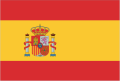
Translated from the Spanish State Agency Official State Gazette One. The flag of Spain, in accordance with the provisions of Article Four of the Spanish Constitution, consists of three horizontal stripes, red, yellow and red, the yellow being twice as wide as each of the red ones.
Unofficial translation by WorldometerTranslated from the Spanish State Agency Official State Gazette The flag of Spain symbolises the nation; it is a sign of the sovereignty, independence, unity and integrity of the homeland and represents the higher values expressed in the Constitution.
Unofficial translation by WorldometerTranslated from the Communication Department of the Spanish Army On ascending the throne, the great organiser Charles III observed that most countries used ensigns in which the colour white predominated (Spain, France, Great Britain, Sicily, Tuscany...) and, since they were frequently at war with one another, regrettable confusions occurred at sea, [...] for this reason, he instructed his Minister of the Navy to present him with several models of flags, with the sole condition that they be visible at great distances. The Minister called a competition, selecting twelve sketches from those submitted, which he showed to the King. The Sovereign chose two of them, in which he altered the dimensions of the stripes, declaring them regulation, the first for the Navy and the second for the Merchant Navy.
Unofficial translation by WorldometerTranslated from the Communication Department of the Spanish Army By Royal Decree of 28 May 1785, he ordered:
"In order to avoid the drawbacks and harm which, as experience has shown, may be caused by the National Flag used by my Navy and other Spanish vessels, being mistaken at long distances or in calm winds for those of other nations, I have resolved that henceforth my warships shall use a Flag divided lengthwise into three stripes, of which the upper and the lower shall be red and each of a width of one quarter of the whole, and the middle one yellow,
Unofficial translation by WorldometerTranslated from the Communication Department of the Spanish Army Under the reign of Isabella II the use of the Bicolour Flag was extended to the Army, thus proceeding to unify the Spanish flag. By Royal Decree of 13 October 1843 the replacement of all the ensigns of the Army by new red-and-yellow ones was ordered,
Unofficial translation by WorldometerTranslated from the Communication Department of the Spanish Army On 14 April 1931 the Monarchy was overthrown and the Second Republic proclaimed, and from the very first moment tricolour flags, red, yellow and purple, were already to be seen, symbolising the new regime, instead of the previous red-and-yellow flag, then considered monarchist.
Unofficial translation by WorldometerTranslated from the Communication Department of the Spanish Army Finally, and following the restoration of the House of Bourbon to the Spanish Throne, in the person of H.M. Juan Carlos I, the Spanish Constitution was published in 1978, whose Article 4, in its paragraph 1, states:
"The Flag of Spain consists of three horizontal stripes, red, yellow and red, the yellow being twice as wide as each of the red ones".
Unofficial translation by WorldometerSources:- boe.es ↗ - the Spanish State Agency Official State Gazette
- ejercito.defensa.gob.es ↗ - the Communication Department of the Spanish Army
- National anthem
- Himno Nacional Español0:35
- Title (in Spanish)
- Himno Nacional Español
- Title (in English, translated)
- National Anthem of Spain
- Alternate title (in Spanish)
- Marcha Real
- Alternate title (in English, translated)
- Royal March
- Alternate title (in Spanish)
- Marcha Granadera
- Alternate title (in English, translated)
- March of the Grenadiers
- Full version
- 1:02
The anthem is officially without lyrics.
Source: - Citizens
- Spaniards
- Official name:Spanish Constitution ↗ - The Moncloa - Official website of the President of the Government and the Council of Ministers
- Official name, Citizens:The World Factbook: Spain - CIA
- National flag:boe.es ↗ - the Spanish State Agency Official State Gazette
- National flag:ejercito.defensa.gob.es ↗ - the Communication Department of the Spanish Army
- National anthem:nationalanthems.info ↗
Geography
- Location
- Southwestern Europe, bordering the Mediterranean Sea, North Atlantic Ocean, Bay of Biscay, and Pyrenees Mountains; southwest of France
- Total area
- 505,370 km²
- Land area
- 498,980 km²
- Water area
- 6,390 km²
- Land borders
- 1,952.7 km(5 countries)
- Coastline
- 4,964 km
- Terrain
Large, flat to dissected plateau surrounded by rugged hills; Pyrenees Mountains in north - Mean elevation
- 660 m
- Highest point
- 3,718 mPico de Teide (Tenerife) on Canary Islands
- Lowest point
- 0 mAtlantic Ocean
- Climate
Temperate clear, hot summers in interior, more moderate and cloudy along coast; cloudy, cold winters in interior, partly cloudy and cool along coast - Avg. temperature
- 14.2 °C
- Avg. daily range
- 9.3 to 19.2 °C
- Annual precipitation
- 647 mm
Temperature °CMeanDaily rangePrecipitation mmMonthly climate normals Month Avg. high, °C Mean, °C Avg. low, °C Precipitation, mm January 10.5 6.3 2.8 61 February 12.1 7.4 3.2 51 March 15.2 10.1 5.3 60 April 17.2 12.2 7.2 68 May 21.1 16 10.6 61 June 26 20.4 14.5 36 July 29.3 23.3 16.9 21 August 29.2 23.2 17 27 September 24.9 19.3 14 47 October 19.8 14.9 10.5 74 November 14 9.8 6.1 73 December 11.1 7.1 3.7 68 Country-wide averages over 1991–2020.
Sources:- The World Factbook: Spain - CIA
- Climate Change Knowledge Portal (ERA5 reanalysis) ↗ - World Bank
- Weather
- Loading
- Land use2023
- Arable23.0%Perm. crops10.2%Pasture19.8%Forest38.2%Other12.3%
- Arable land
- 11,496,755 hectares (23.0%)
- Permanent crops
- 5,109,757 hectares (10.2%)
- Permanent meadows & pastures
- 9,885,842 hectares (19.8%)
- Forest
- 19,072,492 hectares (38.2%)
- Other land
- 6,124,586 hectares (12.3%)
Reported categories cover 103.4% of the land area.
Source: - Natural hazards2026
- River floods6.4High#59/191Coastal floods4.9High#65/191Tsunamis4.6Medium#60/191Drought3.5Low#82/191Epidemics3.4Low#145/191Earthquakes2.9Low#102/191Tropical cyclones0.0Very low
Scores out of 10, ranks out of 191 countries.
Source:- INFORM Risk Index ↗ - European Commission Joint Research Centre
- Location, Land borders, Coastline, Terrain, Mean elevation, Highest point, Lowest point, Climate, Major rivers:The World Factbook: Spain - CIA
- Climate:Climate Change Knowledge Portal (ERA5 reanalysis) ↗ - World Bank
- Land use:FAOSTAT Land Use domain ↗ - FAO
- Natural hazards:INFORM Risk Index ↗ - European Commission Joint Research Centre
Demographics
- Population change2026
- −0.08% per year−39,165 people/yearWorld Rank181stof 237
- Birth rate
- 6.8 per 1,000 population
- Death rate
- 9.6 per 1,000 population
- Net migration rate
- +1.8 per 1,000 population
- 2026
- 46.3 yearsWorld Rank14thof 237
- Age structure2026
- 0-14 years12.3%15-64 years65.5%65 years +22.2%
- Share aged 65 and over
- 22.2%
- Share aged under 18
- 15.5%
- Total dependency ratio
- 53
- Youth dependency ratio
- 19
- Elderly dependency ratio
- 34
- Sex ratio
- 0.96 male / female
MaleAgeFemalePopulation by age group, % of total population Age Male Female 80+ 2.5% 4.1% 70-79 4.2% 5.1% 60-69 6.5% 7.0% 50-59 8.1% 8.0% 40-49 7.5% 7.4% 30-39 5.7% 5.6% 20-29 5.4% 5.2% 10-19 5.2% 4.9% 0-9 3.9% 3.7% - 2026
- 0.86 below the replacement level for Spain ()1.24 births per womanreplacement 2.10123World Rank214thof 237
- 0.60 daughters per woman0.40 below replacement, long-run each generation smaller than the lastreplacement 1.000.511.5
- 2026
- −2.8 per 1,000 populationfor every 1,000 people, 2.8 more deaths than births a year
- 2026
- +1.8 per 1,000 population
- Urbanization2026
- 80.7% live in 38,628,790 urban residents
- Largest cities2025
- Madrid, Barcelona, Valencia, ZaragozaRankCityPopulation (2025 register)1Madrid3,477,4972Barcelona1,713,2473Valencia841,5584Zaragoza699,0075Sevilla688,7146Málaga597,1737Murcia477,6318Palma de Mallorca443,1969Las Palmas de Gran Canaria384,02310Alicante365,586Source:
- National Statistics Institute, Spain (2025 register), via City Population by Thomas Brinkhoff ↗
- Population distribution
- With the notable exception of Madrid, Sevilla, and Zaragoza, the largest urban agglomerations are found along the Mediterranean and Atlantic coasts; numerous smaller cities are spread throughout the interior; very dense settlement around the capital of Madrid, as well as the port city of Barcelona.
- Ethnic groups2021
- Figures count country of birth, not ethnicity.Spanish84.8%Moroccan1.7%Romanian1.2%Other12.3%
- Religions2021
- Roman Catholic58.2%Atheist16.2%Agnostic10.8%Other2.7%Non-believer10.5%Unspecified1.7%
- Languages
- Spanish (Español)
- Population, Population change, Median age, Age structure, Total fertility rate, Net reproduction rate, Natural change, Net migration rate:UN World Population Prospects ↗
- Urbanization:UN World Urbanization Prospects ↗
- Largest cities:National Statistics Institute, Spain (2025 register), via City Population by Thomas Brinkhoff ↗
- Population distribution, Ethnic groups, Religions:The World Factbook: Spain - CIA
Government & Administration
- Form of state
- Constitutional monarchyThe Constitution calls the political form of the Spanish State "the parliamentary Monarchy", with a hereditary Crown (Art. 1.3).Source:
- System of government
- ParliamentaryThe King proposes a candidate who must win the Congress of Deputies' confidence before appointment; the Government answers jointly to the Congress, can be removed by a censure motion, and the King decrees dissolution on the Prime Minister's proposal.
- Territorial organisation
- Unitary
- Official websites
- Government
- King (in Spanish)
- Parliament
- Capital
- Madrid3.5 million people(2025)
- National holidays
- 8 days in 2026
- ThuJan 1New Year's Day
- TueJan 6Epiphany
- FriApr 3Good Friday
- FriMay 1Labor Day
- SatAug 15Assumption Day
- MonOct 12National Day
- TueDec 8Immaculate Conception
- FriDec 25Christmas Day
Nationwide public holidays only, excluding regional, bank and government-only days.
- Time
- CETCentral European TimeUTC+1 (UTC+2 in summer)
Spain spans multiple time zones, the capital's is shown here. All 2 time zones
- Currency
- Euro (EUR)
- Entry requirements
- Official visa and entry information (in Spanish)
- Calling code
- +34
- Internet TLD
- .es
- ISO 3166-1 codes
- ES, ESP
- Infrastructure
- Passengers carried
- 94,101,520 by the country's airlines(2023)
- Heliports
- 162
- Aircraft departures
- 662,492 by the country's airlines(2023)
- Air freight
- 1,130.9 million tonne-km(2023)
- Aircraft registration prefix
- EC
Sources:- The World Factbook: Spain - CIA
- World Development Indicators ↗ - World Bank
- Flag carrier
- IberiaPrivately owned (IAG)
- Passenger rail
- Renfe
- 2025
- 55 / 100World Rank49thof 182
Significant declinerDown 10 points since 2012, when it scored 65.
Confidence intervalCorruption index score by year Year Score Lower bound Upper bound 2012 65 60 69 2013 59 51 67 2014 60 54 66 2015 58 51 65 2016 58 51 65 2017 57 51 63 2018 58 51 65 2019 62 56.8 67.2 2020 62 58.7 65.3 2021 61 57.2 64.8 2022 60 56 64 2023 60 56.1 63.9 2024 56 52 60 2025 55 50.8 59.2 Source:- Corruption Perceptions Index 2025 ↗ - Transparency International, CC BY 4.0
- Form of state, System of government, Territorial organisation:Constitución Española (BOE-A-1978-31229), texto consolidado ↗ - Agencia Estatal Boletín Oficial del Estado
- National holidays:Open World Holidays Framework (vacanza/holidays) ↗
- Infrastructure:The World Factbook: Spain - CIA
- Infrastructure:World Development Indicators ↗ - World Bank
- Corruption Perceptions Index:Corruption Perceptions Index 2025 ↗ - Transparency International, CC BY 4.0
Economy
- High income
- GDP growth (real)2026
- +2.5% per yearWorld Rank112thof 195
- GDP per capita (PPP)2026
- GDP per capita (nominal)
- $41,756 (36th in the world)
Source:- 2025
- Services68.4% of GDPIndustry19.6% of GDPAgriculture2.7% of GDPManufacturing10.6%part of industry
- Households
- +55.6%
- Government
- +19.2%
- Investment
- +21.4%
- Exports
- +36.6%
- Imports
- −32.8%
The shape of the economyGDP by end useSource:- World Development Indicators ↗ - World Bank
- Inflation2026
- 3.7%up 1 percentage points1pp from 2025
- Labor force2024
- 24.1 million (50% of population)World Rank28thof 187
- Labor force participation2024
- 57.8% of people aged 15+
- Unemployment2024
- 11.4%
- Youth unemployment2024
- 26.6% ages 15 to 24
- Labor productivity2024
- $66.9 per hour worked at PPP
- Labor cost2025
- €26.40 per hour$29.83 (USD), $43.43 (PPP)
- Budget balance2026
- 2.4% of GDP deficit
- Current account
- 2.6% of GDP, $53.5 billion surplus
Source: - Debt2024
- Government debt101.8% of GDPHousehold debt43.7% of GDPCompany debt80.3% of GDPInterest on debt2.4% of GDPCentral government debt93.6% of GDP
- Trade2025
- Goods$443.4 billion63.4%
- Services$255.5 billion36.6%
- Total exports
- $698.9 billion
- Change from 2024
- up 9.3 percent on the previous year9.3%
Sources:- World Development Indicators ↗ - World Bank
- The World Factbook: Spain - CIA
- 2024
- +0.82World Rank31stof 145
- Projected GDP growth
- +1.3% a year over the next 10 years
Source:- Atlas of Economic Complexity ↗ - Harvard Growth Lab
- Agricultural products2024
- Olives, Grapes, Barley, and 7 more
- 1Olives44.2×
- 2Grapes9.6×
- 3Barley7.1×
- 4Oats7×
- 5Peaches and nectarines6.7×
- 6Oranges5.9×
- 7Lemons and limes5.4×
- 8Meat of pig with the bone (fresh or chilled)5.4×
- 9Tangerines and mandarins (including clementines)4.7×
- 10Chillies and peppers (green)4.6×
ProductSource:- FAOSTAT ↗ - Food and Agriculture Organization
- Gold reserves2025
- 282 tonnesWorth $39.5 billion, 31% of total official reserves by value
- Industries
- textiles and apparel (including footwear), food and beverages, metals and metal manufactures, chemicals, shipbuilding, automobiles, machine tools, tourism, clay and refractory products, footwear, pharmaceuticals, medical equipment
- Income level, GDP by sector, Trade, Gold reserves:World Development Indicators ↗ - World Bank
- GDP (nominal), GDP growth (real), GDP per capita (PPP), Inflation, Budget balance:IMF World Economic Outlook ↗
- Labor force, Labor force participation, Unemployment, Youth unemployment, Labor productivity, Labor cost:ILOSTAT ↗ - International Labour Organization
- Debt:IMF Global Debt Database ↗
- Debt:IMF Public Finances in Modern History ↗
- Trade, Industries:The World Factbook: Spain - CIA
- Economic Complexity Index:Atlas of Economic Complexity ↗ - Harvard Growth Lab
- Agricultural products:FAOSTAT ↗ - Food and Agriculture Organization
Cost of Living
- Cost of living index
- Loading
- Monthly costs (excluding rent)
- Loading
- Rent
- Loading
- Buying an apartment
- Loading
- Average gross salary2025
- €3,163 per month$3,574 (USD), $5,203 (PPP)
- Median
- €2,649 per month($2,993)
- Men
- €3,453 per month($3,902)
- Women
- €2,851 per month($3,222)
Source:- ILOSTAT ↗ - International Labour Organization
- 2025
- €1,381 per month, gross$1,561 (USD), $2,272 (PPP)
- Share of the average gross salary
- 44%
Source:- ILOSTAT ↗ - International Labour Organization
- Average gross salary, Minimum wage:ILOSTAT ↗ - International Labour Organization
Society
- 2023
- 0.918Very highWorld Rank28thof 193SpainWorld
Human Development Index by year Year Spain World 1990 0.766 0.608 1991 0.774 0.611 1992 0.781 0.614 1993 0.789 0.617 1994 0.798 0.620 1995 0.804 0.625 1996 0.811 0.631 1997 0.816 0.636 1998 0.821 0.641 1999 0.825 0.646 2000 0.833 0.651 2001 0.839 0.657 2002 0.844 0.662 2003 0.846 0.669 2004 0.852 0.675 2005 0.857 0.681 2006 0.862 0.688 2007 0.864 0.694 2008 0.865 0.698 2009 0.867 0.701 2010 0.875 0.707 2011 0.879 0.713 2012 0.881 0.717 2013 0.886 0.721 2014 0.890 0.726 2015 0.895 0.731 2016 0.900 0.735 2017 0.902 0.739 2018 0.905 0.741 2019 0.910 0.745 2020 0.901 0.742 2021 0.912 0.742 2022 0.911 0.752 2023 0.918 0.756 Source:- Human Development Report ↗ - United Nations Development Programme
- 2023
- 33.4
- Mean years of schooling2023
- 10.8 years
- Expected for a child today
- 17.8 years
Source:- Human Development Report ↗ - United Nations Development Programme
- Literacy2021
- 99.7% of adults
- Education expenditure2022
- 4.6% of GDP
- Share of government spending
- 9.9%
Source:- World Development Indicators ↗ - World Bank
- Internet users2024
- 95.8% of the population
- Households with Internet access
- 96.8%
Source:- ITU DataHub ↗ - International Telecommunication Union
- Mobile subscriptions2024
- 62.4 million
- Fixed telephone lines
- 18,228,373
- Fixed broadband
- 39.2 subscriptions per 100 people
Counts subscriptions, not people.
Source:- ITU DataHub ↗ - International Telecommunication Union
- Credit-card ownership2021
- 57% of adults
- Debit-card ownership
- 83%
- Account at a bank or mobile-money provider
- 98%
- Made or received a digital payment
- 98%
Source:- Global Findex Database ↗ - World Bank
- Refugees hosted2025
- 471,081 people
- Asylum seekers
- 276,450
- Stateless persons
- 10,694
- Internally displaced persons
- 30All due to disasters
- Refugees from Spain abroad
- 95
Sources:- Refugee Data Finder ↗ - UN Refugee Agency
- Global Internal Displacement Database ↗ - Internal Displacement Monitoring Centre
- Inbound tourists2024
- Official tourism site93.8 million arrivalsup 12% against 201912% above 2019World Rank1stof 139
- Per resident
- 2 arrivals per resident
- Same-day visitors
- 43.9 million arrivals
- $106.7 billion
- Spending per arrival
- $1,138
- 4.6% tourism direct GDP(2022)
- Domestic trips
- 155.7 million overnight trips by residents
- Residents' trips abroad
- 21.3 million overnight trips
- $32.5 billion
- Hotel beds
- 3 million
- Average hotel stay
- 4.1 nights
Overnight arrivals by year2010 to 2024A tourist stays at least one night. Arrivals count trips, not people.
Source:- UN Tourism Data Dashboard ↗ - UN Tourism
- UNESCO World Heritage Sites
- 50 sites44 cultural4 natural2 mixed
Site Type Cave of Altamira and Paleolithic Cave Art of Northern Spain Cultural Works of Antoni Gaudí Cultural Santiago de Compostela (Old Town) Cultural Historic City of Toledo Cultural Archaeological Ensemble of Mérida Cultural Tower of Hercules Cultural Doñana National Park Natural Pyrénées - Mont Perdu Mixed Alhambra, Generalife, and Albayzín in Granada Cultural Old City of Salamanca Cultural Teide National Park Natural Historic Walled Town of Cuenca Cultural Old Town of Segovia and its Aqueduct Cultural Historic Cordoba Cultural Royal Site of Saint Lorenzo de El Escorial Cultural Cathedral, Alcázar, and Archivo de Indias in Seville The Factbook names 16 of the 50 sites.
Source:- The World Factbook: Spain - CIA
- Human Development Index, Mean years of schooling:Human Development Report ↗ - United Nations Development Programme
- Income inequality (Gini), Education expenditure:World Development Indicators ↗ - World Bank
- Literacy:UIS Data Browser ↗ - UNESCO Institute for Statistics
- Internet users, Mobile subscriptions:ITU DataHub ↗ - International Telecommunication Union
- Credit-card ownership:Global Findex Database ↗ - World Bank
- Refugees hosted:Refugee Data Finder ↗ - UN Refugee Agency
- Refugees hosted:Global Internal Displacement Database ↗ - Internal Displacement Monitoring Centre
- Inbound tourists:UN Tourism Data Dashboard ↗ - UN Tourism
- UNESCO World Heritage Sites:The World Factbook: Spain - CIA
Crime & Safety
- Travel advisory (US)
- Loading
- Active humanitarian crisisAug 2026
- Low3.5 out of 10International displacementSeverity by monthSep 2024 to Aug 2026What the score is made ofImpact of the crisis5.2Conditions of people affected2.8Complexity of the crisis3.0
Data reliability as rated by INFORM: Very high. Last updated Aug 31, 2026.
Source:- INFORM Severity Index ↗ - European Commission Joint Research Centre
- Homicide rate2024
- Very low by global standards0.7 per 100,000 peopleWorld Rank93rdof 115
- Crime rates
- 7 offence categories
Offence Per 100,000 Count Year Homicide (victims) 0.7 349 2024 Serious assault 55.3 26,483 2023 Sexual violence 39.9 19,119 2023 Kidnapping 0.3 122 2023 Burglary 310.9 148,712 2022 Theft 379.9 181,687 2022 Vehicle theft 50.3 24,043 2022 A low figure can also mean weak recording.
Source:- UNODC Data Portal ↗ - UN Office on Drugs and Crime
- Prison population2023
- 118.3 per 100,000 people
- Persons held
- 56,698
Source:- UNODC Data Portal ↗ - UN Office on Drugs and Crime
- Active humanitarian crisis:INFORM Severity Index ↗ - European Commission Joint Research Centre
- Homicide rate, Crime rates, Prison population:UNODC Data Portal ↗ - UN Office on Drugs and Crime
Health
- Life expectancy2026
- 84.1 years
- Health expenditure2023
- 9.2% of GDP$3,107 per person
- Physicians2022
- 4.29 per 1,000 population
- Hospital beds2023
- 2.9 per 1,000 population
- Infant mortality2026
- 2.1 per 1,000 live births
- Maternal mortality2023
- 3 per 100,000 live births
- Alcohol consumption2022
- 11 litres of pure alcohol per adult per year
- Tobacco use2022
- 28.1% of adults
- Men
- 29.9%
- Women
- 26.4%
Source:- Global Health Observatory ↗ - World Health Organization
- Alcohol and Tobacco Spending2023
- 4.0% of household spendingWorld Rank30thof 105
- World median
- 3.1%
Source:- The World Factbook: Spain - CIA
- Road traffic deaths2019
- 3.9 per 100,000 population
- Life expectancy, Infant mortality:UN World Population Prospects ↗
- Health expenditure, Physicians, Hospital beds, Road traffic deaths:World Development Indicators ↗ - World Bank
- Maternal mortality:Maternal mortality estimates ↗ - UN Maternal Mortality Estimation Inter-agency Group
- Alcohol consumption, Tobacco use:Global Health Observatory ↗ - World Health Organization
- Alcohol and Tobacco Spending:The World Factbook: Spain - CIA
Environment
- CO₂ emissions2024
- 220.1 Mt per yeardown 0.4 percent on the previous year0.4% from 2023
- CO₂ per capita
- 4.7 t per personWorld Rank59thof 207
- Share of global CO₂
- 0.56%
- Methane (CH₄)
- 42.8 Mt CO₂-eq
- Nitrous oxide (N₂O)
- 18.9 Mt CO₂-eq
- Fluorinated gases
- 3.87 Mt CO₂-eq
- All greenhouse gases
- 285.6 Mt CO₂-eq
Source:- Emissions Database for Global Atmospheric Research (EDGAR) ↗ - European Commission, Joint Research Centre
- 2024
- 7.6 µg/m³ of PM2.50.3 years of life expectancy lost against the WHO guidelineMost polluted158thof 236
- WHO guideline
- 5 µg/m³
- National standard
- 10 µg/m³
Source:- Air Quality Life Index ↗ - Energy Policy Institute at the University of Chicago
- Environmental issues
- pollution of the Mediterranean Sea from raw sewage and effluents from oil and gas production
- drought
- air pollution
- deforestation
- desertification
Source:- The World Factbook: Spain - CIA
- International agreements
- 20 of 20 landmark treaties in forceParty to 174 multilateral environmental agreements
Treaty Standing Joined Climate Paris Agreement in force 2017 UN Framework Convention on Climate Change in force 1994 Kyoto Protocol in force 2005 Ozone layer Montreal Protocol in force 1989 Vienna Convention (Ozone Layer) in force 1988 Biodiversity Convention on Biological Diversity in force 1994 CITES in force 1986 Convention on Migratory Species (Bonn) in force 1985 Cartagena Protocol on Biosafety in force 2003 Nagoya Protocol in force 2014 Land and heritage Ramsar Convention on Wetlands in force 1982 World Heritage Convention in force 1982 UN Convention to Combat Desertification in force 1996 Chemicals and waste Basel Convention in force 1994 Rotterdam Convention (PIC) in force 2004 Stockholm Convention (POPs) in force 2004 Minamata Convention on Mercury in force 2022 Oceans UN Convention on the Law of the Sea in force 1997 High Seas Treaty (BBNJ) in force 2026 MARPOL 73/78 in force 1984 Source:- International Environmental Agreements Database ↗ - Université Laval
- CO₂ emissions:Emissions Database for Global Atmospheric Research (EDGAR) ↗ - European Commission, Joint Research Centre
- Air pollution:Air Quality Life Index ↗ - Energy Policy Institute at the University of Chicago
- Environmental issues:The World Factbook: Spain - CIA
- International agreements:International Environmental Agreements Database ↗ - Université Laval
Food & Water
- No access to safe drinking water2022
- 0% of the population
- Renewable water2022
- 112 billion m³ per year
- Per person
- 2,331 m³ per year
- Dependency ratio
- 0% originates outside the country
- Annual water withdrawal
- 29 billion m³ per year
- Withdrawn for agriculture
- 65%
- Water stress
- 43% of available freshwater withdrawn
Source:- AQUASTAT ↗ - Food and Agriculture Organization
- Obesity2024
- 15.3% of adults
- Men
- 17.5%
- Women
- 13%
Source:- Global Health Observatory ↗ - World Health Organization
- No access to safe drinking water, Renewable water:AQUASTAT ↗ - Food and Agriculture Organization
- Obesity:Global Health Observatory ↗ - World Health Organization
Energy
- Energy consumption2024
- Per capita
- 109.6 GJ per person
- Share of world total
- 0.82%
- Supply
- Deficitproduces 23% of what it consumes, 2024
Source:- International Energy Statistics ↗ - U.S. Energy Information Administration
- Electricity2024
- Net exporter, net 10 TWh in 2024, 4.4% of consumption267 TWh generated per year
- Generation
- 267 TWh per year
- Consumption
- 233 TWh per year
- Imports
- 14 TWh per year
- Exports
- 25 TWh per year
- Net
- +10 TWh per year
Source:- International Energy Statistics ↗ - U.S. Energy Information Administration
- Oil, gas & coal
- Deficitproduces 5.8% of what it consumes, 2025Oil reserves2025150 million barrelsWorld Rank62ndof 99Imports20201.1 million b/d
Oil imports and exports count crude oil only.
- Energy consumption, Electricity, Oil, gas & coal:International Energy Statistics ↗ - U.S. Energy Information Administration
- Oil, gas & coal:Worldwide Oil and Gas Survey ↗ - Oil & Gas Journal
Defense
- Military expenditure2024
- 1.4% of GDP$24.6 billion, 3.2% of government spending
- Military personnel2025
- approximately 120,000active-duty military personnel; approximately 80,000 Guardia Civil
- Military service2026
- Voluntaryno conscription, but the Spanish Government retains the right to mobilize citizens 19–25 in a national emergency; men and women 18+, upper age limits depend on branch of service, roles, specialties; 24–36 month initial obligation; voluntary reserves 18–58
As of 2024, women comprised about 13% of the military's full-time personnel; they serve in all branches, including combat arms.The military recruits foreign nationals with residency in Spain from countries of its former empire, including Argentina, Costa Rica, Bolivia, Colombia, Chile, Cuba, Dominican Republic, Ecuador, El Salvador, Equatorial Guinea, Guatemala, Honduras, Mexico, Nicaragua, Panama, Paraguay, Peru, Uruguay, and Venezuela.
Source:- The World Factbook: Spain - CIA
- Space program2025
- Spanish Space Agency (AEE; became operational in 2023); Center for the Development of Industrial Technology (CDTI)
Space program dates back to the 1940s; manufactures and operates communications, remote sensing (RS), and scientific/technology satellites; has developed sounding rockets; conducts research and development in a broad range of space-related capabilities, including astrobiology, astronomy, imaging/RS, meteorology, optics, propulsion, robotics, satellites (particularly micro- and nano-satellites), and satellite launch vehicles; program is integrated into the ESA; also participates in EU space programs; hosts the European Space Astronomy Center (ESOC) and the ESA’s Space Surveillance and Tracking Data Centre (ESAC); cooperates with foreign space agencies and industries, including the US; has an active commercial space industry
- Launch sites
- El Arenosillo Test Center/Range (Andalusia)
- 1960s
- Began working with the US/NASA and the European Space Research Organization (ESRO), the forerunner of the ESA; sounding rocket program (ended in the 1990s)
- 1974
- First satellite (IntaSat) launched by US
- 1990s
- Satellite launch vehicle (SLV) development program (canceled in 2000)
- 1992
- First communications satellite (Hispasat 1A) launched on European rocket
- 1998
- First astronaut in space on US Space Shuttle
- 2018
- First synthetic-aperture-radar, remote-sensing/reconnaissance satellite (Paz) launched by US
- 2023
- Spanish built Miuri-1 becomes first European private rocket to reach space; joined US-led Artemis Accords for space and lunar exploration
- 2025
- Communications satellite (SpainSat NG 1) with advanced security technology launched by US
Key milestones
the CDTI coordinates the activities of the commercial space sector note 2: prior to the establishment of the AEE, the National Institute of Aerospace Technology (Instituto Nacional de Técnica Aeroespacial or INTA, established 1942), a public research organization that depends on the Ministry of Defense, acted as Spain’s space agency
Source:- The World Factbook: Spain - CIA
- Nuclear weapons2026
- None - no nuclear arsenal
- Military expenditure:SIPRI Military Expenditure Database ↗ - Stockholm International Peace Research Institute
- Military expenditure:World Development Indicators ↗ - World Bank
- Military personnel, Military service, Space program:The World Factbook: Spain - CIA
- Nuclear weapons:Status of World Nuclear Forces ↗ - Federation of American Scientists


