

National Identity
- Official name
- Kingdom of Morocco
- Official name (in Arabic)
- المملكة المغربية
- Official name (in Arabic, Romanized)
- Al-Mamlakah al-Maghribiyyah
- Official name (in Standard Moroccan Tamazight)
- ⵜⴰⵎⵎⴰⵍⴰⴽⵜ ⵜⴰⵎⵖⵔⵉⴱⵉⵢⵜ
- Official name (in Standard Moroccan Tamazight, Romanized)
- Tammmalakt Tamghribiyt
- Name etymology
the English name of Morocco derives from, respectively, the Spanish and Portuguese names Marruecos and Marrocos, which stem from Marrakesh, the Latin name for the former capital of ancient Morocco; the Arabic name, Al Maghrib, translates as "The West"
Sources:- The Constitution - 2011 Edition ↗ - Embassy of the Kingdom of Morocco in Paris - France - Ministry of Foreign Affairs, African Cooperation and Moroccans Residing Abroad
- The World Factbook: Morocco - CIA
- Coat of arms
- National flag
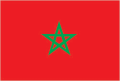
Translated from the Parliament of the Kingdom of Morocco The flag of the Kingdom is the red standard, at the centre of which is a green five-pointed star.
Unofficial translation by WorldometerTranslated from Medi1News According to some historians, the red colour refers to blood, as a metaphor for resistance and readiness to give one's life to protect the banner, and it also symbolises the martyrs of the homeland; as for the green five-pointed star, its colour refers to growth, fertile land and hope, and it is also said that it symbolises the five pillars of Islam.
Unofficial translation by WorldometerTranslated from Medi1News The current Moroccan flag has completed a century since its adoption as the official flag of the Kingdom of Morocco, specifically on 17 November 1915, when Sultan Moulay Youssef issued a royal dahir distinguishing the Moroccan banner from those of the other Arab and Islamic countries, by specifying a red background at the centre of which is a green five-pointed star.
Unofficial translation by WorldometerTranslated from Medi1News Whereas the banner of Our holy ancestors resembled certain banners, particularly those used in maritime signalling, Our Sharifian judgement has deemed it fit to distinguish Our fortunate banner by placing the five-pointed Seal of Solomon at its centre in green
Unofficial translation by WorldometerTranslated from Medi1News It was Kaddour Benghabrit, who oversaw Makhzen affairs at the time, who designed the current flag, and he drew its meanings from the word "Maroc", which is derived from the word Marrakesh, the Red City.
Unofficial translation by WorldometerSources:- parlement.ma ↗ - the Parliament of the Kingdom of Morocco
- medi1news.com ↗ - Medi1News
- National anthem
- Hymne Chérifien (النشيد الشريف)1:08
- Title (in Arabic)
- النشيد الشريف
- Title (in French)
- Hymne Chérifien
- Title (in English, translated)
- Hymn of the Sharif
- Lyrics
منبت الأحرار مشرق الأنوار منتدى السؤدد وحماه دمت منتداه وحماه عشت في الأوطان للعلى عنوان ملء كل جنان ذكرى كل لسان بالروح بالجسد هب فتاك لبي نداك في فمي وفي دمي هواك ثار نور ونار اخوتي هيا للعلى سعيا نشهد الدنيا أنا هنا نحيا بشعار الله الوطن الملك
Source: - Citizens
- Moroccans
- Official name:The Constitution - 2011 Edition ↗ - Embassy of the Kingdom of Morocco in Paris - France - Ministry of Foreign Affairs, African Cooperation and Moroccans Residing Abroad
- Official name, Citizens:The World Factbook: Morocco - CIA
- National flag:parlement.ma ↗ - the Parliament of the Kingdom of Morocco
- National flag:medi1news.com ↗ - Medi1News
- National anthem:nationalanthems.info ↗
Geography
- Location
- Northern Africa, bordering the North Atlantic Ocean and the Mediterranean Sea, between Algeria and Mauritania
- Total area
- 446,550 km²
- Land area
- 446,300 km²
- Water area
- 250 km²
- Land borders
- 3,523.5 km(3 countries)
- Algeria
- 1,941 km
- Mauritania
- 1,564 km
- Spain
- 18.5 kmCeuta 8 kmMelilla 10.5 km
an additional 75-meter border segment exists between Morocco and the Spanish exclave of Penon de Velez de la Gomera
Source:- The World Factbook: Morocco - CIA
- Coastline
- 2,945 km
- Terrain
Mountainous northern coast (Rif Mountains) and interior (Atlas Mountains) bordered by large plateaus with intermontane valleys, and fertile coastal plains; the south is mostly low, flat desert with large areas of rocky or sandy surfaces - Mean elevation
- 909 m
- Highest point
- 4,165 mJebel Toubkal
- Lowest point
- −59 mSebkha Tah
- Climate
Mediterranean in the north, becoming more extreme in the interior; in the south, hot, dry desert; rain is rare; cold offshore air currents produce fog and heavy dew - Avg. temperature
- 18.5 °C
- Avg. daily range
- 13 to 24.4 °C
- Annual precipitation
- 285 mm
Temperature °CMeanDaily rangePrecipitation mmMonthly climate normals Month Avg. high, °C Mean, °C Avg. low, °C Precipitation, mm January 15.7 10 5.1 29 February 17.3 11.6 6.5 31 March 20.2 14.5 9 34 April 22.8 17 11.3 29 May 26.3 20.4 14.4 22 June 30.5 24.2 17.9 10 July 34.2 27.7 21.1 5 August 33.7 27.4 21.2 10 September 29.5 23.5 18 19 October 25.2 19.6 14.4 31 November 19.9 14.4 9.6 35 December 16.6 11.1 6.5 30 Country-wide averages over 1991–2020.
Sources:- The World Factbook: Morocco - CIA
- Climate Change Knowledge Portal (ERA5 reanalysis) ↗ - World Bank
- Weather
- Loading
- Land use2023
- Arable15.4%Perm. crops4.3%Pasture47.1%Forest12.8%Other20.3%
- Arable land
- 6,874,052 hectares (15.4%)
- Permanent crops
- 1,914,214 hectares (4.3%)
- Permanent meadows & pastures
- 21,000,000 hectares (47.1%)
- Forest
- 5,694,712 hectares (12.8%)
- Other land
- 9,059,122 hectares (20.3%)
Source: - Major rivers
- 1Draa1,100km
- Natural hazards2026
- Drought6.4High#19/191River floods5.0High#99/191Coastal floods5.0High#60/191Tsunamis4.5Medium#61/191Earthquakes4.4Medium#81/191Epidemics3.5Low#141/191Tropical cyclones0.0Very low
Scores out of 10, ranks out of 191 countries.
Source:- INFORM Risk Index ↗ - European Commission Joint Research Centre
- Location, Land borders, Coastline, Terrain, Mean elevation, Highest point, Lowest point, Climate, Major rivers:The World Factbook: Morocco - CIA
- Climate:Climate Change Knowledge Portal (ERA5 reanalysis) ↗ - World Bank
- Land use:FAOSTAT Land Use domain ↗ - FAO
- Natural hazards:INFORM Risk Index ↗ - European Commission Joint Research Centre
Demographics
- Population change2026
- +0.86% per year+331,671 people/yearWorld Rank108thof 237
- Birth rate
- 15.8 per 1,000 population
- Death rate
- 5.9 per 1,000 population
- Net migration rate
- −1.6 per 1,000 population
- 2026
- 30.1 yearsWorld Rank134thof 237
- Age structure2026
- 0-14 years24.8%15-64 years66.5%65 years +8.8%
- Share aged 65 and over
- 8.8%
- Share aged under 18
- 30.0%
- Total dependency ratio
- 50
- Youth dependency ratio
- 37
- Elderly dependency ratio
- 13
- Sex ratio
- 1.02 male / female
MaleAgeFemalePopulation by age group, % of total population Age Male Female 80+ 0.4% 0.7% 70-79 1.9% 2.1% 60-69 3.8% 4.0% 50-59 5.2% 5.2% 40-49 6.7% 6.7% 30-39 7.6% 7.3% 20-29 7.7% 7.3% 10-19 8.7% 8.3% 0-9 8.3% 7.9% - 2026
- 0.06 above the replacement level for Morocco ()2.16 births per womanreplacement 2.10123World Rank98thof 237
- 1.03 daughters per woman0.03 above replacement, long-run each generation larger than the lastreplacement 1.000.511.5
- 2026
- +9.9 per 1,000 populationfor every 1,000 people, 9.9 more births than deaths a year
- 2026
- −1.6 per 1,000 population
- Urbanization2026
- 63.5% live in cities24,603,408 urban residents
- Largest cities2024
- Casablanca, Tangier, Fes, MarrakeshRankCity or Urban PlacePopulation (2024 census)1Casablanca3,218,0362Tangier1,275,4283Fes1,182,9634Marrakesh1,014,8135Sale945,1016Meknes556,5127Rabat515,6198Kenitra507,7369Oujda506,22410Agadir504,768Source:
- High Commission for Planning, Morocco (2024 census), via City Population by Thomas Brinkhoff ↗
- Population distribution
- The highest population density is found along the Atlantic and Mediterranean coasts; a number of densely populated agglomerations are scattered through the Atlas Mountains.
- Ethnic groups
- Excludes the former Western Sahara.Arab-Amazigh99.0%Other1.0%
- Religions2020
- Excludes the former Western Sahara.Muslim99.0%Other1.0%
Islam is the official religion and virtually all Muslims are Sunni, with Shia at less than 0.1%.The Jewish community numbers about 3,000-3,500.Other includes Christian, Jewish, and Baha'i.
Source:- The World Factbook: Morocco - CIA
- Languages
- Arabic (العربية), Standard Moroccan Tamazight (ⵜⴰⵎⴰⵣⵉⵖⵜ)
- Population, Population change, Median age, Age structure, Total fertility rate, Net reproduction rate, Natural change, Net migration rate:UN World Population Prospects ↗
- Urbanization:UN World Urbanization Prospects ↗
- Largest cities:High Commission for Planning, Morocco (2024 census), via City Population by Thomas Brinkhoff ↗
- Population distribution, Ethnic groups, Religions:The World Factbook: Morocco - CIA
Government & Administration
- Form of state
- Constitutional monarchyThe Crown is hereditary from father to son by male primogeniture, unless the King designates another son; Article 1 calls Morocco "a constitutional, democratic, parliamentary and social monarchy" (Arts. 1, 43).
- System of government
- ParliamentaryThe King appoints the Head of Government from the party that came first in Chamber of Representatives elections; the government needs that Chamber's confidence, and both the King and the Head of Government may dissolve (Arts. 47, 51, 88, 103–105).
- Territorial organisation
- Unitary
- Official websites
- Capital
- Rabat515,619 people(2024)
- National holidays
- 17 days in 2026
- ThuJan 1New Year's Day
- SunJan 11Proclamation of Independence Day
- TueJan 13Amazigh New Year
- FriMar 20Eid al-Fitr (estimated)
- SatMar 21Eid al-Fitr (estimated)
- FriMay 1Labor Day
- WedMay 27Eid al-Adha (estimated)
- ThuMay 28Eid al-Adha (estimated)
- TueJun 16Islamic New Year (estimated)
- ThuJul 30Throne Day
- FriAug 14Oued Ed-Dahab Day
- ThuAug 20Revolution Day
- FriAug 21Youth Day
- TueAug 25Prophet's Birthday (estimated)
- WedAug 26Prophet's Birthday (estimated)
- FriNov 6Green March
- WedNov 18Independence Day
Nationwide public holidays only, excluding regional, bank and government-only days.
- Time
- Currency
- Moroccan Dirham (MAD)
- Entry requirements
- Official visa and entry information
- Calling code
- +212
- Internet TLD
- .ma
- ISO 3166-1 codes
- MA, MAR
- Infrastructure
- Passengers carried
- 9,354,197 by the country's airlines(2023)
- Heliports
- 17
- Aircraft departures
- 81,776 by the country's airlines(2023)
- Air freight
- 92.6 million tonne-km(2023)
- Aircraft registration prefix
- CN
Sources:- The World Factbook: Morocco - CIA
- World Development Indicators ↗ - World Bank
- Flag carrier
- Royal Air MarocState-owned
- 2025
- 39 / 100World Rank91stof 182Confidence interval
Corruption index score by year Year Score Lower bound Upper bound 2012 37 32 43 2013 37 32 42 2014 39 33 45 2015 36 30 42 2016 37 34 40 2017 40 36 44 2018 43 37 49 2019 41 35.8 46.2 2020 40 36.4 43.6 2021 39 34.9 43.1 2022 38 35.1 40.9 2023 38 35.2 40.8 2024 37 34.5 39.5 2025 39 36 42 Source:- Corruption Perceptions Index 2025 ↗ - Transparency International, CC BY 4.0
- Form of state, System of government, Territorial organisation:Dahir n° 1-11-91 du 27 chaabane 1432 (29 juillet 2011) portant promulgation du texte de la constitution, Bulletin Officiel n° 5964 bis du 30 juillet 2011, French text ↗ - High Authority for Audiovisual Communication of Morocco
- National holidays:Open World Holidays Framework (vacanza/holidays) ↗
- Infrastructure:The World Factbook: Morocco - CIA
- Infrastructure:World Development Indicators ↗ - World Bank
- Corruption Perceptions Index:Corruption Perceptions Index 2025 ↗ - Transparency International, CC BY 4.0
Economy
- Lower middle income
- GDP growth (real)2026
- +4.5% per yearWorld Rank43rdof 195
- GDP per capita (PPP)2026
- GDP per capita (nominal)
- $5,141 (126th in the world)
Source:- 2025
- Services52.3% of GDPIndustry25.2% of GDPAgriculture10.5% of GDPManufacturing14.9%part of industry
- Households
- +59.3%
- Government
- +18%
- Investment
- +31.9%
- Exports
- +42%
- Imports
- −51.1%
The shape of the economyGDP by end useSource:- World Development Indicators ↗ - World Bank
- Inflation2026
- 0.9%up 0.1 percentage points0.1pp from 2025
- Labor force2024
- 12.5 million (33% of population)World Rank47thof 187
- Labor force participation2024
- 44.1% of people aged 15+
- Unemployment2024
- 9.1%
- Youth unemployment2024
- 22.4% ages 15 to 24
- Labor productivity2024
- $13.6 per hour worked at PPP
- Budget balance2026
- 3.9% of GDP deficit
- Current account
- 4.9% of GDP, $9.7 billion deficit
Source: - Debt2024
- Central government debt70% of GDPHousehold debt25.5% of GDPCompany debt35.8% of GDPInterest on debt2.1% of GDP
- Trade2025
- Goods$43.7 billion56.5%
- Services$33.6 billion43.5%
- Total exports
- $77.4 billion
- Change from 2024
- up 14.4 percent on the previous year14.4%
Sources:- World Development Indicators ↗ - World Bank
- The World Factbook: Morocco - CIA
- 2024
- −0.06World Rank86thof 145
- Projected GDP growth
- +3.2% a year over the next 10 years
Source:- Atlas of Economic Complexity ↗ - Harvard Growth Lab
- Agricultural products2024
- Onions and shallots (green), Olives, Plums and sloes, and 7 more
- 1Onions and shallots (green)33.6×
- 2Olives21.6×
- 3Plums and sloes9.7×
- 4Tangerines and mandarins (including clementines)8.4×
- 5Oranges5.5×
- 6Peaches and nectarines5.1×
- 7Tomatoes4.6×
- 8Apples4.4×
- 9Cantaloupes and other melons4.4×
- 10Onions and shallots (dry)4.3×
ProductSource:- FAOSTAT ↗ - Food and Agriculture Organization
- Gold reserves2025
- 22.1 tonnesWorth $3.1 billion, 6% of total official reserves by value
- Industries
- automotive parts, phosphate mining and processing, aerospace, food processing, leather goods, textiles, construction, energy, tourism
- Income level, GDP by sector, Trade, Gold reserves:World Development Indicators ↗ - World Bank
- GDP (nominal), GDP growth (real), GDP per capita (PPP), Inflation, Budget balance:IMF World Economic Outlook ↗
- Labor force, Labor force participation, Unemployment, Youth unemployment, Labor productivity:ILOSTAT ↗ - International Labour Organization
- Debt:IMF Global Debt Database ↗
- Debt:IMF Public Finances in Modern History ↗
- Trade, Industries:The World Factbook: Morocco - CIA
- Economic Complexity Index:Atlas of Economic Complexity ↗ - Harvard Growth Lab
- Agricultural products:FAOSTAT ↗ - Food and Agriculture Organization
Cost of Living
- Cost of living index
- Loading
- Monthly costs (excluding rent)
- Loading
- Rent
- Loading
- Buying an apartment
- Loading
- 2024
- MAD 3,120 per month, gross$314 (USD), $773 (PPP)
- Minimum wage:ILOSTAT ↗ - International Labour Organization
Society
- 2023
- 0.710HighWorld Rank120thof 193MoroccoWorld
Human Development Index by year Year Morocco World 1990 0.451 0.608 1991 0.457 0.611 1992 0.461 0.614 1993 0.468 0.617 1994 0.480 0.620 1995 0.484 0.625 1996 0.495 0.631 1997 0.500 0.636 1998 0.507 0.641 1999 0.517 0.646 2000 0.528 0.651 2001 0.539 0.657 2002 0.550 0.662 2003 0.560 0.669 2004 0.567 0.675 2005 0.573 0.681 2006 0.579 0.688 2007 0.586 0.694 2008 0.593 0.698 2009 0.598 0.701 2010 0.607 0.707 2011 0.619 0.713 2012 0.629 0.717 2013 0.639 0.721 2014 0.648 0.726 2015 0.659 0.731 2016 0.665 0.735 2017 0.674 0.739 2018 0.680 0.741 2019 0.687 0.745 2020 0.683 0.742 2021 0.690 0.742 2022 0.704 0.752 2023 0.710 0.756 Source:- Human Development Report ↗ - United Nations Development Programme
- 2013latest available
- 39.5
- Mean years of schooling2023
- 6.2 years
- Expected for a child today
- 15.1 years
Source:- Human Development Report ↗ - United Nations Development Programme
- Literacy2014
- 64.3% of adults
- Education expenditure2023
- 6% of GDP
- Share of government spending
- 22.8%
Source:- World Development Indicators ↗ - World Bank
- Internet users2024
- 91.2% of the population
- Households with Internet access
- 89.2%
Source:- ITU DataHub ↗ - International Telecommunication Union
- Mobile subscriptions2024
- 58.3 million
- Fixed telephone lines
- 3,036,587
- Fixed broadband
- 7.3 subscriptions per 100 people
Counts subscriptions, not people.
Source:- ITU DataHub ↗ - International Telecommunication Union
- Credit-card ownership2024
- 1% of adults
- Debit-card ownership
- 27%
- Account at a bank or mobile-money provider
- 44%
- Mobile-money account
- 6%
- Made or received a digital payment
- 32%
Source:- Global Findex Database ↗ - World Bank
- Refugees hosted2025
- 6,942 people
- Asylum seekers
- 12,412
- Internally displaced persons
- 260(2024)All due to disasters
- Refugees from Morocco abroad
- 11,049
Sources:- Refugee Data Finder ↗ - UN Refugee Agency
- Global Internal Displacement Database ↗ - Internal Displacement Monitoring Centre
- Inbound tourists2022
- Official tourism site10.9 million arrivalsdown 16% against 201916% below 2019World Rank27thof 139
- Per resident
- 2.9 arrivals per 10 residents
- Same-day visitors
- 99,000 arrivals
- $12.1 billion(2023)
- Share of GDP
- 7.1% tourism direct GDP(2019, latest available)
- Domestic trips
- 23.6 million overnight trips by residents(2014, latest available)
- Residents' trips abroad
- 2 million overnight trips
- $3.3 billion(2023)
- Hotel beds
- 289,321
- Average hotel stay
- 3.2 nights
Overnight arrivals by year2010 to 2022A tourist stays at least one night. Arrivals count trips, not people.
Source:- UN Tourism Data Dashboard ↗ - UN Tourism
- UNESCO World Heritage Sites
- 9 sites9 cultural
Site Medina of Fez Medina of Marrakesh Ksar of Ait-Ben-Haddou Historic City of Meknes Archaeological Site of Volubilis Medina of Tétouan (formerly known as Titawin) Medina of Essaouira (formerly Mogador) Portuguese City of Mazagan (El Jadida) Historic and Modern Rabat Source:- The World Factbook: Morocco - CIA
- Human Development Index, Mean years of schooling:Human Development Report ↗ - United Nations Development Programme
- Income inequality (Gini), Education expenditure:World Development Indicators ↗ - World Bank
- Literacy:UIS Data Browser ↗ - UNESCO Institute for Statistics
- Internet users, Mobile subscriptions:ITU DataHub ↗ - International Telecommunication Union
- Credit-card ownership:Global Findex Database ↗ - World Bank
- Refugees hosted:Refugee Data Finder ↗ - UN Refugee Agency
- Refugees hosted:Global Internal Displacement Database ↗ - Internal Displacement Monitoring Centre
- Inbound tourists:UN Tourism Data Dashboard ↗ - UN Tourism
- UNESCO World Heritage Sites:The World Factbook: Morocco - CIA
Crime & Safety
- Travel advisory (US)
- Loading
- Active humanitarian crisisAug 2026
- Low3.5 out of 10International displacementSeverity by monthSep 2024 to Aug 2026What the score is made ofImpact of the crisis4.2Conditions of people affected2.0Complexity of the crisis5.2
Data reliability as rated by INFORM: High. Last updated Aug 31, 2026.
Source:- INFORM Severity Index ↗ - European Commission Joint Research Centre
- Homicide rate2024
- Low by global standards1.7 per 100,000 peopleWorld Rank66thof 115
- Crime rates
- 7 offence categories
Offence Per 100,000 Count Year Homicide (victims) 1.7 635 2024 Serious assault 120.1 45,280 2023 Sexual violence 16.5 6,206 2023 Kidnapping 1.4 529 2023 Burglary 36.3 13,548 2022 Theft 90.8 33,890 2022 Vehicle theft 5.9 2,217 2022 A low figure can also mean weak recording.
Source:- UNODC Data Portal ↗ - UN Office on Drugs and Crime
- Prison population2023
- 272.2 per 100,000 people
- Persons held
- 102,653
Source:- UNODC Data Portal ↗ - UN Office on Drugs and Crime
- Active humanitarian crisis:INFORM Severity Index ↗ - European Commission Joint Research Centre
- Homicide rate, Crime rates, Prison population:UNODC Data Portal ↗ - UN Office on Drugs and Crime
Health
- Life expectancy2026
- 75.9 years
- Health expenditure2023
- 6.1% of GDP$232 per person
- Physicians2021
- 0.74 per 1,000 population
- Hospital beds2023
- 0.7 per 1,000 population
- Infant mortality2026
- 12.8 per 1,000 live births
- Maternal mortality2023
- 70 per 100,000 live births
- Alcohol consumption2022
- 0.6 litres of pure alcohol per adult per year
- Tobacco use2015latest available
- 14.8% of adults
- Men
- 28.1%
- Women
- 1.5%
Source:- Global Health Observatory ↗ - World Health Organization
- Alcohol and Tobacco Spending2023
- 2.1% of household spendingWorld Rank69thof 105
- World median
- 3.1%
Source:- The World Factbook: Morocco - CIA
- Road traffic deaths2019
- 17 per 100,000 population
- Life expectancy, Infant mortality:UN World Population Prospects ↗
- Health expenditure, Physicians, Hospital beds, Road traffic deaths:World Development Indicators ↗ - World Bank
- Maternal mortality:Maternal mortality estimates ↗ - UN Maternal Mortality Estimation Inter-agency Group
- Alcohol consumption, Tobacco use:Global Health Observatory ↗ - World Health Organization
- Alcohol and Tobacco Spending:The World Factbook: Morocco - CIA
Environment
- CO₂ emissions2024
- 70 Mt per year
- CO₂ per capita
- 1.8 t per personWorld Rank128thof 207
- Share of global CO₂
- 0.18%
- Methane (CH₄)
- 31 Mt CO₂-eq
- Nitrous oxide (N₂O)
- 5.67 Mt CO₂-eq
- Fluorinated gases
- 2.05 Mt CO₂-eq
- All greenhouse gases
- 108.7 Mt CO₂-eq
Source:- Emissions Database for Global Atmospheric Research (EDGAR) ↗ - European Commission, Joint Research Centre
- 2024
- 9.9 µg/m³ of PM2.50.5 years of life expectancy lost against the WHO guidelineMost polluted135thof 236
- WHO guideline
- 5 µg/m³
Source:- Air Quality Life Index ↗ - Energy Policy Institute at the University of Chicago
- Environmental issues
- in the north: land degradation and desertification, with soil erosion from farming, overgrazing, and vegetation removal
- water and soil pollution from industrial-waste dumping
- in the south: desertification
- overgrazing
- sparse water
data does not include former Western Sahara
Source:- The World Factbook: Morocco - CIA
- International agreements
- 19 of 20 landmark treaties in forceParty to 104 multilateral environmental agreements
Treaty Standing Joined Climate Paris Agreement in force 2016 UN Framework Convention on Climate Change in force 1996 Kyoto Protocol in force 2005 Ozone layer Montreal Protocol in force 1996 Vienna Convention (Ozone Layer) in force 1996 Biodiversity Convention on Biological Diversity in force 1995 CITES in force 1976 Convention on Migratory Species (Bonn) in force 1993 Cartagena Protocol on Biosafety in force 2011 Nagoya Protocol in force 2022 Land and heritage Ramsar Convention on Wetlands in force 1980 World Heritage Convention in force 1976 UN Convention to Combat Desertification in force 1997 Chemicals and waste Basel Convention in force 1996 Rotterdam Convention (PIC) in force 2011 Stockholm Convention (POPs) in force 2004 Minamata Convention on Mercury signed 2014, not ratified Oceans UN Convention on the Law of the Sea in force 2007 High Seas Treaty (BBNJ) in force 2026 MARPOL 73/78 in force 1994 Source:- International Environmental Agreements Database ↗ - Université Laval
- CO₂ emissions:Emissions Database for Global Atmospheric Research (EDGAR) ↗ - European Commission, Joint Research Centre
- Air pollution:Air Quality Life Index ↗ - Energy Policy Institute at the University of Chicago
- Environmental issues:The World Factbook: Morocco - CIA
- International agreements:International Environmental Agreements Database ↗ - Université Laval
Food & Water
- No access to safe drinking water2022
- 14.6% of the population
- Renewable water2022
- 29 billion m³ per year
- Per person
- 777 m³ per year
- Dependency ratio
- 0% originates outside the country
- Annual water withdrawal
- 10 billion m³ per year
- Withdrawn for agriculture
- 88%
- Water stress
- 51% of available freshwater withdrawn
Source:- AQUASTAT ↗ - Food and Agriculture Organization
- Undernourishment2022
- 6.4% of the population2.4 million people
- Obesity2024
- 21.6% of adults
- Men
- 13.2%
- Women
- 29.9%
Source:- Global Health Observatory ↗ - World Health Organization
- Underweight children2019
- 3% of children under five
- No access to safe drinking water, Renewable water:AQUASTAT ↗ - Food and Agriculture Organization
- Undernourishment:Food security indicators (FAOSTAT) ↗ - Food and Agriculture Organization
- Obesity:Global Health Observatory ↗ - World Health Organization
- Underweight children:World Development Indicators ↗ - World Bank
Energy
- Energy consumption2024
- Per capita
- 26 GJ per person
- Share of world total
- 0.15%
- Supply
- Deficitproduces 4% of what it consumes, 2024
Source:- International Energy Statistics ↗ - U.S. Energy Information Administration
- Electricity2024
- Net importer, net 2.5 TWh in 2024, 6.9% of consumption42 TWh generated per year
- Generation
- 42 TWh per year
- Consumption
- 37 TWh per year
- Imports
- 2.9 TWh per year
- Exports
- 0.4 TWh per year
- Net
- −2.5 TWh per year
Source:- International Energy Statistics ↗ - U.S. Energy Information Administration
- Oil, gas & coal
- No meaningful productionproduces under 2% of what it consumes, 2024Oil reserves2025684,000 barrelsWorld Rank98thof 99
Oil imports and exports count crude oil only.
- Energy consumption, Electricity, Oil, gas & coal:International Energy Statistics ↗ - U.S. Energy Information Administration
- Oil, gas & coal:Worldwide Oil and Gas Survey ↗ - Oil & Gas Journal
Defense
- Military expenditure2024
- 3.5% of GDP$5.5 billion, 10.7% of government spending
- Military personnel2025
- estimated 220,000active Armed Forces
- Army
- 175,000
- Navy
- 10,000
- Air Force
- 15,000
- Gendarmerie
- 20,000
Source:- The World Factbook: Morocco - CIA
- Military service2025
- Conscriptionmen and women 19–25, 12 months, compulsory and voluntary
- Nuclear weapons2026
- None - no nuclear arsenal
- Military expenditure:SIPRI Military Expenditure Database ↗ - Stockholm International Peace Research Institute
- Military expenditure:World Development Indicators ↗ - World Bank
- Military personnel, Military service:The World Factbook: Morocco - CIA
- Nuclear weapons:Status of World Nuclear Forces ↗ - Federation of American Scientists


