

National Identity
- Official name
- Italian Republic
- Official name (in Italian)
- Repubblica Italiana
- Name etymology
derivation is unclear; traditionally said to come from the Vitali, a tribe that settled in what is now Calabria, and whose name is believed to be linked to the Latin word vitulus, or "calf;" alternatively, the name may derive from a local ruler known to the Romans as Italus
Sources:- Italian Costitution ↗ - Italian Goverment - Presidency of the Council of Ministers
- The World Factbook: Italy - CIA
- National emblem
- National flag
- “Italianness”, as the ethnic and cultural individuality of our people;
- the “sovereignty” of the State, “as an instrument for protecting the needs and aspirations of individuals and of the legally organised community”;
- the “sentiment of Italian union”, as awareness of a bond that mutually links all members of the community, without distinction of faith or ideology.
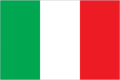
Translated from the Chamber of Deputies of the Italian Republic The flag of the Republic is the Italian tricolour: green, white and red, in three vertical bands of equal size.
Unofficial translation by WorldometerTranslated from the Italian Ministry of the Interior The size of the flag must in any case respect the proportion of 2 parts in height for every 3 parts in width (2:3)
Unofficial translation by WorldometerTranslated from the Presidency of the Council of Ministers of Italy Taking a look at the explanatory report accompanying the aforementioned law, the emblematic value of the three functions recognised to the Tricolour emerges [...]
Unofficial translation by WorldometerTranslated from the Presidency of the Italian Republic The Italian tricolour as national flag was born in Reggio Emilia on 7 January 1797, when the Parliament of the Cispadane Republic, on the proposal of the deputy Giuseppe Compagnoni, decreed "that the Cispadane Standard or Flag of Three Colours Green, White, and Red be made universal, and that these three Colours also be used in the Cispadane Cockade, which must be worn by all".
Unofficial translation by WorldometerTranslated from the Presidency of the Italian Republic In particular, the regimental banners of the Lombard Legion bore, precisely, the colours white, red and green, deeply rooted in the collective heritage of that region:: white and red, in fact, appeared in the very ancient municipal coat of arms of Milan (red cross on a white field), while green had been, since 1782, the uniforms of the Milanese Civic Guard. The same colours were then also adopted in the standards of the Italian Legion, which gathered the soldiers from the lands of Emilia and Romagna, and this was probably the reason that led the Cispadane Republic to confirm them in its own flag.
Unofficial translation by WorldometerTranslated from the Presidency of the Council of Ministers of Italy In July 1797 the Cispadane Republic and the Transpadane Republic merged into the Cisalpine Republic, which adopted the tricolour with vertical bands of green, white and red
Unofficial translation by WorldometerTranslated from the Presidency of the Italian Republic And when the season of '48 and of the granting of Constitutions opened, that flag became the symbol of a by then national uprising, from Milan to Venice, from Rome to Palermo. On 23 March 1848 Charles Albert addressed to the populations of Lombardy–Venetia the famous proclamation that announced the First War of Independence and that ends with these words:"(…) the better to show by outward signs the sentiment of Italian union, We wish that Our Troops(…) bear the Shield of Savoy superimposed on the Italian tricolour Flag."
Unofficial translation by WorldometerTranslated from the Presidency of the Italian Republic On 17 March 1861 the Kingdom of Italy was proclaimed and its flag continued to be, by custom, that of the First War of Independence.
Unofficial translation by WorldometerTranslated from the Presidency of the Italian Republic After the birth of the Republic, a presidential legislative decree of 19 June 1946 established the provisional form of the new flag, confirmed by the Constituent Assembly in the sitting of 24 March 1947 and included in Article 12 of our Constitutional Charter.
Unofficial translation by WorldometerSources:- conoscere.camera.it ↗ - the Chamber of Deputies of the Italian Republic
- www1.interno.gov.it ↗ - the Italian Ministry of the Interior
- presidenza.governo.it ↗ - the Presidency of the Council of Ministers of Italy
- quirinale.it ↗ - the Presidency of the Italian Republic
- National anthem
- Il Canto degli Italiani1:39
- Title (in Italian)
- Il Canto degli Italiani
- Title (in English, translated)
- The Song of the Italians
- Unofficial title (in Italian)
- L’Inno di Mameli
- Unofficial title (in English, translated)
- Mameli’s Hymn
- Unofficial title (in Italian)
- Fratelli D’Italia
- Unofficial title (in English, translated)
- Brothers of Italy
- Lyrics
1Fratelli d’Italia L’Italia s’è desta, Dell’elmo di Scipio S’è cinta la testa. Dov’è la Vittoria? Le porga la chioma, Ché schiava di Roma Iddio la creò
Fratelli d’Italia L’Italia s’è desta, Dell’elmo di Scipio S’è cinta la testa. Dov’è la Vittoria? Le porga la chioma, Ché schiava di Roma Iddio la creò
ChorusStringiamci a coorte Siam pronti alla morte Siam pronti alla morte L’Italia chiamò.
Stringiamci a coorte Siam pronti alla morte Siam pronti alla morte L’Italia chiamò! (Sì!)
2Noi siamo da secoli Calpesti, derisi, Perché non siam popolo, Perché siam divisi. Raccolgaci un’unica Bandiera, una speme: Di fonderci insieme Già l’ora suonò.
3Uniamoci, amiamoci, l’Unione, e l’amore Rivelano ai Popoli Le vie del Signore; Giuriamo far libero Il suolo natìo: Uniti per Dio Chi vincer ci può?
Stringiamci a coorte4Dall’Alpi a Sicilia Dovunque è Legnano, Ogn’uom di Ferruccio Ha il core, ha la mano, I bimbi d’Italia Si chiaman Balilla, Il suon d’ogni squilla I Vespri suonò.
5Son giunchi che piegano Le spade vendute: Già l’Aquila d’Austria Le penne ha perdute. Il sangue d’Italia, Il sangue Polacco, Bevé, col cosacco, Ma il cor le bruciò.
Stringiamci a coorteSource: - Citizens
- Italians
- Official name:Italian Costitution ↗ - Italian Goverment - Presidency of the Council of Ministers
- Official name, Citizens:The World Factbook: Italy - CIA
- National flag:conoscere.camera.it ↗ - the Chamber of Deputies of the Italian Republic
- National flag:www1.interno.gov.it ↗ - the Italian Ministry of the Interior
- National flag:presidenza.governo.it ↗ - the Presidency of the Council of Ministers of Italy
- National flag:quirinale.it ↗ - the Presidency of the Italian Republic
- National anthem:nationalanthems.info ↗
Geography
- Location
- Southern Europe, a peninsula extending into the central Mediterranean Sea, northeast of Tunisia
- Total area
- 301,340 km²
- Land area
- 294,140 km²
- Water area
- 7,200 km²
- Land borders
- 1,836.4 km(6 countries)
- Switzerland
- 698 km
- France
- 476 km
- Austria
- 404 km
- Slovenia
- 218 km
- San Marino
- 37 km
- Holy See (Vatican City)
- 3.4 km(Vatican City)
Source:- The World Factbook: Italy - CIA
- Coastline
- 7,600 km
- Terrain
Mostly rugged and mountainous; some plains, coastal lowlands - Mean elevation
- 538 m
- Highest point
- 4,748 mMont Blanc (Monte Bianco) de Courmayeur (a secondary peak of Mont Blanc)
- Lowest point
- 0 mMediterranean Sea
- Climate
Predominantly Mediterranean alpine in far north; hot, dry in south - Avg. temperature
- 13.1 °C
- Avg. daily range
- 9.3 to 17.1 °C
- Annual precipitation
- 1,010 mm
Temperature °CMeanDaily rangePrecipitation mmMonthly climate normals Month Avg. high, °C Mean, °C Avg. low, °C Precipitation, mm January 7.9 4.4 1.3 72 February 9 5.1 1.6 72 March 12.2 8.2 4.3 80 April 15.4 11.4 7.3 92 May 19.9 15.7 11.4 88 June 24.3 20 15.4 73 July 27 22.5 17.7 58 August 27.1 22.5 17.9 64 September 22.6 18.3 14.3 92 October 18.1 14.1 10.6 109 November 12.8 9.4 6.3 121 December 8.7 5.4 2.5 89 Country-wide averages over 1991–2020.
Sources:- The World Factbook: Italy - CIA
- Climate Change Knowledge Portal (ERA5 reanalysis) ↗ - World Bank
- Weather
- Loading
- Land use2023
- Arable24.0%Perm. crops8.1%Pasture12.2%Forest31.8%Other24.0%
- Arable land
- 7,084,477 hectares (24.0%)
- Permanent crops
- 2,399,590 hectares (8.1%)
- Permanent meadows & pastures
- 3,603,490 hectares (12.2%)
- Forest
- 9,396,980 hectares (31.8%)
- Other land
- 7,087,463 hectares (24.0%)
Source: - Natural hazards2026
- Earthquakes7.7Very high#34/191Coastal floods6.4High#31/191River floods6.2High#63/191Tsunamis6.1High#33/191Drought2.7Low#114/191Epidemics2.6Very low#167/191Tropical cyclones0.0Very low
Scores out of 10, ranks out of 191 countries.
Source:- INFORM Risk Index ↗ - European Commission Joint Research Centre
- Location, Land borders, Coastline, Terrain, Mean elevation, Highest point, Lowest point, Climate:The World Factbook: Italy - CIA
- Climate:Climate Change Knowledge Portal (ERA5 reanalysis) ↗ - World Bank
- Land use:FAOSTAT Land Use domain ↗ - FAO
- Natural hazards:INFORM Risk Index ↗ - European Commission Joint Research Centre
Demographics
- Population change2026
- −0.37% per year−220,094 people/yearWorld Rank195thof 237
- Birth rate
- 6.4 per 1,000 population
- Death rate
- 11.4 per 1,000 population
- Net migration rate
- +1.0 per 1,000 population
- 2026
- 48.6 yearsWorld Rank7thof 237
- Age structure2026
- 0-14 years11.4%15-64 years63.0%65 years +25.6%
- Share aged 65 and over
- 25.6%
- Share aged under 18
- 14.3%
- Total dependency ratio
- 59
- Youth dependency ratio
- 18
- Elderly dependency ratio
- 41
- Sex ratio
- 0.96 male / female
MaleAgeFemalePopulation by age group, % of total population Age Male Female 80+ 3.1% 4.9% 70-79 5.0% 5.9% 60-69 7.0% 7.5% 50-59 7.9% 8.1% 40-49 6.4% 6.3% 30-39 5.6% 5.4% 20-29 5.5% 5.0% 10-19 4.8% 4.5% 0-9 3.6% 3.4% - 2026
- 0.88 below the replacement level for Italy ()1.22 births per womanreplacement 2.10123World Rank218thof 237
- 0.59 daughters per woman0.41 below replacement, long-run each generation smaller than the lastreplacement 1.000.511.5
- 2026
- −4.9 per 1,000 populationfor every 1,000 people, 4.9 more deaths than births a year
- 2026
- +1.0 per 1,000 population
- Urbanization2026
- 69.8% live in cities41,111,256 urban residents
- Largest cities2026
- Rome, Milan, Naples, TurinRankCityPopulation (2026 estimate)1Rome2,745,0622Milan1,362,8633Naples905,0504Turin855,6545Palermo626,2736Genoa566,2477Bologna391,4738Florence361,6259Bari316,24810Catania296,984Source:
- Italian National Institute of Statistics (2026 estimate), via City Population by Thomas Brinkhoff ↗
- Population distribution
- A fairly even population distribution exists throughout most of the country, with coastal areas, the Po River Valley, and urban centers (particularly Milan, Rome, and Naples) attracting larger and denser populations.
- Ethnic groups
- Italian
Includes small clusters of German-, French- and Slovene-Italians in the north, and Albanian-, Croat- and Greek-Italians in the south.
Source:- The World Factbook: Italy - CIA
- Religions2020
- Christian80.8%Muslim4.9%Unaffiliated13.4%Other0.9%
Christians are overwhelmingly Roman Catholic with very small groups of Jehovah's Witnesses and Protestants.
Source:- The World Factbook: Italy - CIA
- Languages
- Italian (Italiano)
- Population, Population change, Median age, Age structure, Total fertility rate, Net reproduction rate, Natural change, Net migration rate:UN World Population Prospects ↗
- Urbanization:UN World Urbanization Prospects ↗
- Largest cities:Italian National Institute of Statistics (2026 estimate), via City Population by Thomas Brinkhoff ↗
- Population distribution, Ethnic groups, Religions:The World Factbook: Italy - CIA
Government & Administration
- Form of state
- RepublicThe President of the Republic is elected by Parliament in joint session, joined by three delegates from each Region and one from Valle d'Aosta; the Constitution calls Italy "a democratic Republic, founded on labour" (Arts. 1, 83).
- System of government
- ParliamentaryThe President appoints the President of the Council of Ministers and, on his proposal, the ministers; the Government must win and keep the confidence of both Chambers, and the President may dissolve one or both after consulting their Presiding Officers (Arts. 88, 92, 94).
- Territorial organisation
- Unitary
- Official websites
- Government
- President (in Italian, English available)
- Parliament (in Italian)
- Capital
- Rome2.7 million people(2026)
- National holidays
- 13 days in 2026
- ThuJan 1New Year's Day
- TueJan 6Epiphany
- SunApr 5Easter Sunday
- MonApr 6Easter Monday
- SatApr 25Liberation Day
- FriMay 1Labor Day
- TueJun 2Republic Day
- SatAug 15Assumption Of Mary Day
- SunOct 4Saint Francis of Assisi, Patron Saint of Italy
- SunNov 1All Saints' DayNational Unity Day
- TueDec 8Immaculate Conception
- FriDec 25Christmas Day
- SatDec 26Saint Stephen's Day
Nationwide public holidays only, excluding regional, bank and government-only days.
- Time
- Currency
- Euro (EUR)
- Entry requirements
- Official visa and entry information
- Calling code
- +39
- Internet TLD
- .it
- ISO 3166-1 codes
- IT, ITA
- Infrastructure
- Passengers carried
- 20,264,734 by the country's airlines(2023)
- Heliports
- 163
- Aircraft departures
- 185,458 by the country's airlines(2023)
- Air freight
- 1,121 million tonne-km(2023)
- Aircraft registration prefix
- I
Sources:- The World Factbook: Italy - CIA
- World Development Indicators ↗ - World Bank
- Flag carrier
- ITA AirwaysPartly state-owned (MEF, Lufthansa Group)
- Passenger rail
- Trenitalia
- 2025
- 53 / 100World Rank52ndof 182
Significant improverUp 11 points since 2012, when it scored 42.
Confidence intervalCorruption index score by year Year Score Lower bound Upper bound 2012 42 38 46 2013 43 39 47 2014 43 39 47 2015 44 40 48 2016 47 42 53 2017 50 44 56 2018 52 47 57 2019 53 47.7 58.3 2020 53 49.5 56.5 2021 56 53.6 58.4 2022 56 53.2 58.8 2023 56 53.3 58.7 2024 54 51.3 56.7 2025 53 50.1 55.9 Source:- Corruption Perceptions Index 2025 ↗ - Transparency International, CC BY 4.0
- Form of state, System of government, Territorial organisation:Costituzione della Repubblica Italiana, Gazzetta Ufficiale n. 298 del 27 dicembre 1947, testo vigente ↗ - Istituto Poligrafico e Zecca dello Stato (Normattiva)
- National holidays:Open World Holidays Framework (vacanza/holidays) ↗
- Infrastructure:The World Factbook: Italy - CIA
- Infrastructure:World Development Indicators ↗ - World Bank
- Corruption Perceptions Index:Corruption Perceptions Index 2025 ↗ - Transparency International, CC BY 4.0
Economy
- High income
- GDP growth (real)2026
- +0.8% per yearWorld Rank172ndof 195
- GDP per capita (PPP)2026
- GDP per capita (nominal)
- $45,886 (29th in the world)
Source:- 2025
- Services64.5% of GDPIndustry22.6% of GDPAgriculture2.1% of GDPManufacturing15%part of industry
- Households
- +57.6%
- Government
- +18.3%
- Investment
- +22.2%
- Exports
- +32.2%
- Imports
- −30.3%
The shape of the economyGDP by end useSource:- World Development Indicators ↗ - World Bank
- Inflation2026
- 3.3%up 1.7 percentage points1.7pp from 2025
- Labor force2024
- 25.9 million (44% of population)World Rank27thof 187
- Labor force participation2024
- 49.6% of people aged 15+
- Unemployment2024
- 6.5%
- Youth unemployment2024
- 20.2% ages 15 to 24
- Labor productivity2024
- $73.3 per hour worked at PPP
- Labor cost2025
- €32.00 per hour$36.16 (USD), $49.63 (PPP)
- Budget balance2026
- 2.9% of GDP deficit
- Current account
- 0.7% of GDP, $17.8 billion surplus
Source: - Debt2024
- Government debt135.3% of GDPHousehold debt36.1% of GDPCompany debt59.2% of GDPInterest on debt3.9% of GDPCentral government debt132.5% of GDP
- Trade2025
- Goods$655.3 billion79.5%
- Services$168.5 billion20.5%
- Total exports
- $823.8 billion
- Change from 2024
- up 6.7 percent on the previous year6.7%
Sources:- World Development Indicators ↗ - World Bank
- The World Factbook: Italy - CIA
- 2024
- +1.12World Rank18thof 145
- Projected GDP growth
- +0.4% a year over the next 10 years
Source:- Atlas of Economic Complexity ↗ - Harvard Growth Lab
- Agricultural products2024
- Grapes, Olives, Peaches and nectarines, and 7 more
- 1Grapes17.1×
- 2Olives15.3×
- 3Peaches and nectarines6.7×
- 4Tomatoes5.4×
- 5Cantaloupes and other melons4.6×
- 6Oranges4.6×
- 7Apples4.2×
- 8Lettuce and chicory4.2×
- 9Raw milk of cattle2.8×
- 10Tangerines and mandarins (including clementines)2.7×
ProductSource:- FAOSTAT ↗ - Food and Agriculture Organization
- Gold reserves2025
- 2,452 tonnesWorth $344.3 billion, 79% of total official reserves by value
- Industries
- tourism, machinery, iron and steel, chemicals, food processing, textiles, motor vehicles, clothing, footwear, ceramics
- Income level, GDP by sector, Trade, Gold reserves:World Development Indicators ↗ - World Bank
- GDP (nominal), GDP growth (real), GDP per capita (PPP), Inflation, Budget balance:IMF World Economic Outlook ↗
- Labor force, Labor force participation, Unemployment, Youth unemployment, Labor productivity, Labor cost:ILOSTAT ↗ - International Labour Organization
- Debt:IMF Global Debt Database ↗
- Debt:IMF Public Finances in Modern History ↗
- Trade, Industries:The World Factbook: Italy - CIA
- Economic Complexity Index:Atlas of Economic Complexity ↗ - Harvard Growth Lab
- Agricultural products:FAOSTAT ↗ - Food and Agriculture Organization
Cost of Living
- Cost of living index
- Loading
- Monthly costs (excluding rent)
- Loading
- Rent
- Loading
- Buying an apartment
- Loading
- Average gross salary2025
- €3,534 per month$3,994 (USD), $5,481 (PPP)
- Median
- €3,123 per month($3,529)
- Men
- €3,958 per month($4,473)
- Women
- €3,033 per month($3,427)
Source:- ILOSTAT ↗ - International Labour Organization
- Average gross salary:ILOSTAT ↗ - International Labour Organization
Society
- 2023
- 0.915Very highWorld Rank29thof 193ItalyWorld
Human Development Index by year Year Italy World 1990 0.787 0.608 1991 0.792 0.611 1992 0.800 0.614 1993 0.806 0.617 1994 0.816 0.620 1995 0.823 0.625 1996 0.829 0.631 1997 0.836 0.636 1998 0.840 0.641 1999 0.845 0.646 2000 0.849 0.651 2001 0.856 0.657 2002 0.862 0.662 2003 0.866 0.669 2004 0.874 0.675 2005 0.876 0.681 2006 0.881 0.688 2007 0.885 0.694 2008 0.885 0.698 2009 0.884 0.701 2010 0.887 0.707 2011 0.890 0.713 2012 0.887 0.717 2013 0.887 0.721 2014 0.890 0.726 2015 0.889 0.731 2016 0.894 0.735 2017 0.897 0.739 2018 0.902 0.741 2019 0.906 0.745 2020 0.899 0.742 2021 0.908 0.742 2022 0.905 0.752 2023 0.915 0.756 Source:- Human Development Report ↗ - United Nations Development Programme
- 2023
- 34.3
- Mean years of schooling2023
- 10.8 years
- Expected for a child today
- 16.7 years
Source:- Human Development Report ↗ - United Nations Development Programme
- Literacy2019
- 99.3% of adults
- Education expenditure2022
- 4.1% of GDP
- Share of government spending
- 7.4%
Source:- World Development Indicators ↗ - World Bank
- Internet users2024
- 89.2% of the population
- Households with Internet access
- 86.2%
Source:- ITU DataHub ↗ - International Telecommunication Union
- Mobile subscriptions2024
- 78.7 million
- Fixed telephone lines
- 20,302,078
- Fixed broadband
- 31.8 subscriptions per 100 people
Counts subscriptions, not people.
Source:- ITU DataHub ↗ - International Telecommunication Union
- Credit-card ownership2021
- 58% of adults
- Debit-card ownership
- 82%
- Account at a bank or mobile-money provider
- 97%
- Made or received a digital payment
- 96%
Source:- Global Findex Database ↗ - World Bank
- Refugees hosted2025
- 314,167 people
- Asylum seekers
- 220,800
- Stateless persons
- 3,000
- Internally displaced persons
- 33All due to disasters
- Refugees from Italy abroad
- 209
Sources:- Refugee Data Finder ↗ - UN Refugee Agency
- Global Internal Displacement Database ↗ - Internal Displacement Monitoring Centre
- Inbound tourists2024
- Official tourism site57.7 million arrivalsdown 11% against 201911% below 2019World Rank3rdof 139
- Per resident
- 9.7 arrivals per 10 residents
- Same-day visitors
- 30.5 million arrivals
- $61.4 billion
- Spending per arrival
- $1,064
- Share of GDP
- 5.7% tourism direct GDP(2019, latest available)
- Domestic trips
- 38.1 million overnight trips by residents
- Residents' trips abroad
- 34.6 million overnight trips
- $44.4 billion
- 3.2 nights
Overnight arrivals by year2010 to 2024A tourist stays at least one night. Arrivals count trips, not people.
Source:- UN Tourism Data Dashboard ↗ - UN Tourism
- UNESCO World Heritage Sites
- 61 sites55 cultural6 natural
Site Type Historic Center of Rome Cultural Archaeological Areas of Pompeii, Herculaneum, and Torre Annunziata Cultural Venice and its Lagoon Cultural Historic Center of Florence Cultural Piazza del Duomo, Pisa Cultural Historic Centre of Naples Cultural Portovenere, Cinque Terre, and the Islands (Palmaria, Tino and Tinetto) Cultural Mount Etna Natural Cultural landscape of the Benedictine settlements in medieval Italy Cultural Church and Dominican Convent of Santa Maria delle Grazie with “The Last Supper” by Leonardo da Vinci Cultural City of Vicenza and the Palladian Villas of the Veneto Cultural Crespi d'Adda Cultural Early Christian Monuments of Ravenna Cultural Historic Centre of the City of Pienza Cultural Cathedral, Torre Civica and Piazza Grande, Modena Cultural Costiera Amalfitana Cultural Villa Romana del Casale Cultural Archaeological Area and the Patriarchal Basilica of Aquileia Cultural Cilento and Vallo di Diano National Park with the Archeological Sites of Paestum and Velia, and the Certosa di Padula Cultural Historic Centre of Urbino Cultural Villa Adriana (Tivoli) Cultural Assisi, the Basilica of San Francesco and Other Franciscan Sites Cultural City of Verona Cultural Isole Eolie (Aeolian Islands) Natural Etruscan Necropolises of Cerveteri and Tarquinia Cultural Val d'Orcia Cultural Mantua and Sabbioneta Cultural The Dolomites Natural Prehistoric Pile Dwellings around the Alps Cultural Medici Villas and Gardens in Tuscany Cultural Venetian Works of Defence between the 16th and 17th Centuries: Stato da Terra – Western Stato da Mar Cultural Padua’s fourteenth-century fresco cycles Cultural The Porticoes of Bologna Cultural Evaporitic Karst and Caves of Northern Apennines Natural Via Appia: Regina Viarum Cultural Funerary Tradition in the Prehistory of Sardinia – The domus de janas Cultural The Factbook names 36 of the 61 sites.
Source:- The World Factbook: Italy - CIA
- Human Development Index, Mean years of schooling:Human Development Report ↗ - United Nations Development Programme
- Income inequality (Gini), Education expenditure:World Development Indicators ↗ - World Bank
- Literacy:UIS Data Browser ↗ - UNESCO Institute for Statistics
- Internet users, Mobile subscriptions:ITU DataHub ↗ - International Telecommunication Union
- Credit-card ownership:Global Findex Database ↗ - World Bank
- Refugees hosted:Refugee Data Finder ↗ - UN Refugee Agency
- Refugees hosted:Global Internal Displacement Database ↗ - Internal Displacement Monitoring Centre
- Inbound tourists:UN Tourism Data Dashboard ↗ - UN Tourism
- UNESCO World Heritage Sites:The World Factbook: Italy - CIA
Crime & Safety
- Travel advisory (US)
- Loading
- Active humanitarian crisisAug 2026
- Low3.9 out of 10International displacementSeverity by monthSep 2024 to Aug 2026What the score is made ofImpact of the crisis5.5Conditions of people affected3.1Complexity of the crisis3.5
Data reliability as rated by INFORM: Very high. Last updated Aug 31, 2026.
Source:- INFORM Severity Index ↗ - European Commission Joint Research Centre
- Homicide rate2024
- Very low by global standards0.6 per 100,000 peopleWorld Rank103rdof 115
- Crime rates
- 7 offence categories
Offence Per 100,000 Count Year Homicide (victims) 0.6 336 2024 Serious assault 1.4 809 2023 Sexual violence 11.3 6,742 2023 Kidnapping 0.2 129 2023 Burglary 224.4 133,802 2022 Theft 1,417.2 844,951 2022 Vehicle theft 210.9 125,764 2022 A low figure can also mean weak recording.
Source:- UNODC Data Portal ↗ - UN Office on Drugs and Crime
- Prison population2023
- 103.5 per 100,000 people
- Persons held
- 61,568
Source:- UNODC Data Portal ↗ - UN Office on Drugs and Crime
- Active humanitarian crisis:INFORM Severity Index ↗ - European Commission Joint Research Centre
- Homicide rate, Crime rates, Prison population:UNODC Data Portal ↗ - UN Office on Drugs and Crime
Health
- Life expectancy2026
- 84.2 years
- Health expenditure2024
- 8.4% of GDP$3,398 per person
- Physicians2022
- 4.19 per 1,000 population
- Hospital beds2022
- 3.1 per 1,000 population
- Infant mortality2026
- 2.1 per 1,000 live births
- Maternal mortality2023
- 6 per 100,000 live births
- Alcohol consumption2022
- 8.3 litres of pure alcohol per adult per year
- Tobacco use2023
- 22.6% of adults
- Men
- 25.9%
- Women
- 19.3%
Source:- Global Health Observatory ↗ - World Health Organization
- Alcohol and Tobacco Spending2023
- 3.8% of household spendingWorld Rank34thof 105
- World median
- 3.1%
Source:- The World Factbook: Italy - CIA
- Road traffic deaths2019
- 5.3 per 100,000 population
- Life expectancy, Infant mortality:UN World Population Prospects ↗
- Health expenditure, Physicians, Hospital beds, Road traffic deaths:World Development Indicators ↗ - World Bank
- Maternal mortality:Maternal mortality estimates ↗ - UN Maternal Mortality Estimation Inter-agency Group
- Alcohol consumption, Tobacco use:Global Health Observatory ↗ - World Health Organization
- Alcohol and Tobacco Spending:The World Factbook: Italy - CIA
Environment
- CO₂ emissions2024
- 299.2 Mt per yeardown 1.7 percent on the previous year1.7% from 2023
- CO₂ per capita
- 5.1 t per personWorld Rank56thof 207
- Share of global CO₂
- 0.76%
- Methane (CH₄)
- 44.9 Mt CO₂-eq
- Nitrous oxide (N₂O)
- 12.9 Mt CO₂-eq
- Fluorinated gases
- 14.1 Mt CO₂-eq
- All greenhouse gases
- 371.2 Mt CO₂-eq
Source:- Emissions Database for Global Atmospheric Research (EDGAR) ↗ - European Commission, Joint Research Centre
- 2024
- 13.4 µg/m³ of PM2.50.8 years of life expectancy lost against the WHO guidelineMost polluted105thof 236
- WHO guideline
- 5 µg/m³
- National standard
- 10 µg/m³
- Life expectancy gain if the national standard were met
- 0.3 years
Source:- Air Quality Life Index ↗ - Energy Policy Institute at the University of Chicago
- Environmental issues
- air pollution from industrial emissions
- water pollution from industrial and agricultural effluents, as well as acid rain
- inadequate industrial waste treatment and disposal facilities
- International agreements
- 18 of 20 landmark treaties in forceParty to 180 multilateral environmental agreements
Treaty Standing Joined Climate Paris Agreement in force 2016 UN Framework Convention on Climate Change in force 1994 Kyoto Protocol in force 2005 Ozone layer Montreal Protocol in force 1989 Vienna Convention (Ozone Layer) in force 1988 Biodiversity Convention on Biological Diversity in force 1994 CITES in force 1979 Convention on Migratory Species (Bonn) in force 1983 Cartagena Protocol on Biosafety in force 2004 Nagoya Protocol signed 2011, not ratified Land and heritage Ramsar Convention on Wetlands in force 1977 World Heritage Convention in force 1978 UN Convention to Combat Desertification in force 1997 Chemicals and waste Basel Convention in force 1994 Rotterdam Convention (PIC) in force 2004 Stockholm Convention (POPs) in force 2022 Minamata Convention on Mercury in force 2021 Oceans UN Convention on the Law of the Sea in force 1995 High Seas Treaty (BBNJ) signed 2023, not ratified MARPOL 73/78 in force 1983 Source:- International Environmental Agreements Database ↗ - Université Laval
- CO₂ emissions:Emissions Database for Global Atmospheric Research (EDGAR) ↗ - European Commission, Joint Research Centre
- Air pollution:Air Quality Life Index ↗ - Energy Policy Institute at the University of Chicago
- Environmental issues:The World Factbook: Italy - CIA
- International agreements:International Environmental Agreements Database ↗ - Université Laval
Food & Water
- No access to safe drinking water2022
- 0% of the population
- Renewable water2022
- 191 billion m³ per year
- Per person
- 3,209 m³ per year
- Dependency ratio
- 5% originates outside the country
- Annual water withdrawal
- 34 billion m³ per year
- Withdrawn for agriculture
- 50%
- Water stress
- 30% of available freshwater withdrawn
Source:- AQUASTAT ↗ - Food and Agriculture Organization
- Obesity2024
- 14% of adults
- Men
- 14.5%
- Women
- 13.3%
Source:- Global Health Observatory ↗ - World Health Organization
- No access to safe drinking water, Renewable water:AQUASTAT ↗ - Food and Agriculture Organization
- Obesity:Global Health Observatory ↗ - World Health Organization
Energy
- Energy consumption2024
- Per capita
- 99.1 GJ per person
- Share of world total
- 0.92%
- Supply
- Deficitproduces 15% of what it consumes, 2024
Source:- International Energy Statistics ↗ - U.S. Energy Information Administration
- Electricity2024
- Net importer, net 51 TWh in 2024, 18% of consumption259 TWh generated per year
- Generation
- 259 TWh per year
- Consumption
- 290 TWh per year
- Imports
- 56 TWh per year
- Exports
- 4.9 TWh per year
- Net
- −51 TWh per year
Source:- International Energy Statistics ↗ - U.S. Energy Information Administration
- Oil, gas & coal
- Deficitproduces 11% of what it consumes, 2025Oil reserves2025578 million barrelsWorld Rank47thof 99
Oil imports and exports count crude oil only.
- Energy consumption, Electricity, Oil, gas & coal:International Energy Statistics ↗ - U.S. Energy Information Administration
- Oil, gas & coal:Worldwide Oil and Gas Survey ↗ - Oil & Gas Journal
Defense
- Military expenditure2024
- 1.6% of GDP$38 billion, 3.2% of government spending
- Military personnel2025
- approximately 170,000active-duty military personnel; approximately 105,000 Carabinieri
- Military service2025
- Voluntaryno conscription since 2004; men and women 17 or 18+; voluntary service is a minimum of 12 months with the option to extend in the Armed Forces or compete for positions in other government security organizations
Women serve in all military branches; as of 2023, women made up about 8% of the military's full-time personnel.
Source:- The World Factbook: Italy - CIA
- Space program2025
- Italian Space Agency (L’Agenzia Spaziale Italiana or ASI; established 1988)
One of the top contributors to the ESA; designs, builds, launches, and operates communications, remote sensing (RS), and scientific satellites; designs and manufactures probes, rockets, and orbital satellite launch vehicles (SLVs); researches, develops, and builds a range of other space-related technologies and participates in a wide array of international programs; hosts the ESA Center for Earth Observation; has astronaut cadre in the ESA astronaut corps; has cooperated with a variety of foreign space agencies and industries, including those of Argentina, Brazil, Canada, China, Israel, Japan, Kenya, Mexico, Russia, South Korea, Thailand, the UAE, and the US; participates in international projects such as the International Space Station; has considerable commercial space industries encompassing a wide range of capabilities
- Launch sites
- The Broglio (aka San Marco, Malindi) Space Center, located near Malindi, Kenya, served from 1967 to 1988 as an Italian and international satellite launch facility; in 2020, Italy concluded a deal with Kenya to conduct rocket launches from the site again in the future; the Italian Space Agency has utilized the site as a satellite ground station since 2004 the Italian Government has designated the Taranto-Grottaglie Airport as a future spaceport and signed framework agreements with commercial space companies that could lead to suborbital and orbital launches from what would be called the Grottaglie Spaceport
- 1964
- First domestically manufactured science satellite (San Marco-1) launched by the US
- 1977
- First domestically built telecommunications/research satellite (Sirio) launched by the US
- 1990s-2011
- Participated in US Space Shuttle program, resulting in first Italian astronaut in space (1992)
- 1998-present
- Participated in International Space Station, including the first European astronaut on the station (2001), first Italian to command it (2019-2020), and first woman to command the station (2022)
- 2012
- First launch of Italian-designed VEGA 3-stage satellite launch vehicle (SLV) for ESA
- 2020
- Signed US-led Artemis Accords for space and lunar exploration
- 2023
- First Italian all-electric satellite (MicroHETSat) built for the ESA and launched by the US; began developing a habitat for the US-led Artemis Lunar Gateway project
- 2025
- Passed a national space law to govern Italian space operations
Key milestones
Source:- The World Factbook: Italy - CIA
- Nuclear weapons2026
- None - no nuclear arsenal
- Military expenditure:SIPRI Military Expenditure Database ↗ - Stockholm International Peace Research Institute
- Military expenditure:World Development Indicators ↗ - World Bank
- Military personnel, Military service, Space program:The World Factbook: Italy - CIA
- Nuclear weapons:Status of World Nuclear Forces ↗ - Federation of American Scientists


